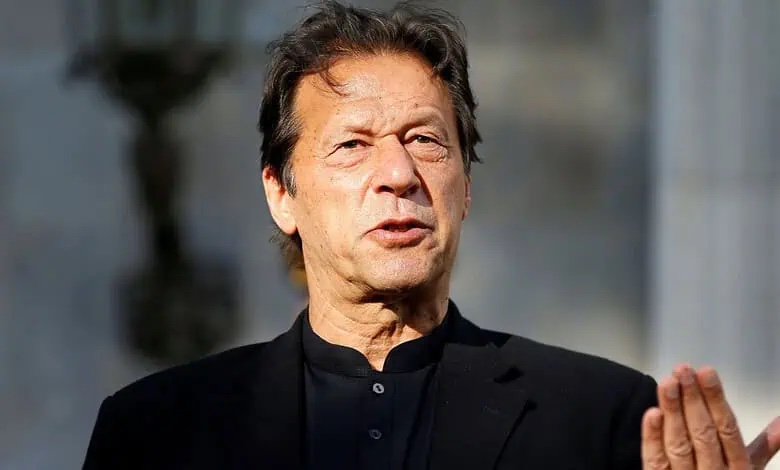
Pakistan's jailed former prime minister Imran Khan has appealed for urgent medical treatment, saying that his own health and that of his wife, Bushra Bibi, have been deteriorating in custody. In a letter published by his lawyer Salman Safdar and reported by the BBC, the 74-year-old cricketer-turned-politician wrote that "this unrelenting state is taking me to a place from which I may not return alive". The authorities in Islamabad reject the characterisation and say Khan is seen weekly by doctors who have judged his health to be satisfactory.
Khan has been in prison since August 2023 and faces more than 100 charges, ranging from corruption to selling state gifts. His wife was jailed along with him last year. Khan argues that the cases against them are politically motivated. In his letter, he wrote that doctors have told him he is "highly vulnerable to a brain haemorrhage and cardiac arrest", and that his heart has already suffered damage. He also expressed concern for Bushra Bibi, who he says suffered a detached retina in April and underwent surgery in secrecy, and whom he fears may lose her sight without further surgery.
The letter also describes the conditions of his detention. Khan says he is held in solitary confinement for up to 22 hours a day, with no visits from family and no access to books or television, and that this has taken a heavy toll on his mental health. He claims he has seen his lawyers only four times over the past year. "I have fought impossible legal battles in countless cases, and I have not stopped," he wrote. "But the system has stopped giving me justice." He added that he would only be able to prove his innocence "if I stay alive". These are the statements of a prisoner relayed through his legal team, and the BBC has not independently verified them.
The government's response was swift and categorical. Pakistan's parliamentary affairs minister, Tariq Fazal Chaudhry, disputed the claims, saying Khan is provided with all facilities in prison, including food of his own choosing, and calling him "currently the most well-accommodated prisoner in Pakistan". Authorities also say Khan was taken to a government-run hospital for an eye injection a week ago, where doctors deemed him clinically stable. Here is the central factual dispute: Khan's side describes serious and deteriorating illness and isolation, while the state describes regular medical supervision and a stable condition. With visits restricted, outsiders have limited ability to test either account.
The eyesight issue is the best-documented thread. The BBC notes that concerns over Khan's health have grown louder in the past year, with his family claiming he has lost most of his vision in his right eye after prison authorities failed to take action. The government's own mention of an eye injection at a state hospital confirms that an eye problem exists and is being treated, even if the two sides disagree about its seriousness and about whether treatment was timely. For critics, the episode illustrates why independent medical access matters; for the government, it shows that care is being provided.
Khan's significance goes far beyond his own situation. He captained Pakistan's national cricket team before entering politics and served as prime minister from 2018 to 2022. His arrest in May 2023 triggered large-scale, violent protests by supporters, who ransacked the corps commander's residence in Lahore, and at least eight people died in the unrest, after which the army was called in to restore order. Even behind bars, he remains a force in Pakistani politics. Thousands of his supporters took to the streets in early October in a march lasting several days to demand his release, and authorities later ordered a crackdown on protests and imposed a state of emergency in Khyber Pakhtunkhwa, the stronghold of his party.
International sporting figures have also weighed in. Former international cricket captains have made several appeals in recent months to Prime Minister Shehbaz Sharif, insisting that Khan be given proper medical care. Their involvement reflects Khan's profile in the sport, but it also shows that the question of his treatment has become a humanitarian cause that is, at least in part, separate from the partisan argument over whether the charges against him are justified. Even people who disagree with his politics can ask for a prisoner to receive proper medical attention.
For the government, the risks are considerable. If a high-profile prisoner were to suffer a serious medical emergency or die in custody, the political fallout would be severe, likely inflaming a movement that has already shown it can mobilise large crowds and provoke emergency measures. The authorities' repeated emphasis on weekly check-ups and hospital visits suggests they are aware of this danger and keen to establish a record of care. Transparency measures, such as allowing independent doctors, family-appointed physicians or published medical reports, would be the most direct way to settle the dispute, though the government has not announced any such step in the reporting available.
For Khan's supporters, the letter serves a political as well as a personal purpose. It reinforces their narrative of a leader who is being punished by the state and keeps attention on his case at a time when the party's protests have been met with a crackdown. It may also increase pressure on foreign governments and rights bodies to raise his treatment in their contacts with Islamabad. Whether the letter produces any concrete change, such as improved access to specialists or visits from family, will be the practical test.
It is also worth remembering the human side of the story beyond the politics. Khan is 74 years old, and the conditions he describes, long hours alone in a cell without books, television or family visits, would be difficult for anyone. Bushra Bibi's alleged eye condition adds a second medical concern within the same family. Prison medicine is a recognised area of international concern, and standards such as the principle that prisoners should have access to the health services available in the country without discrimination apply regardless of the charges. That principle does not decide the legal case against Khan, but it frames the demand his lawyer and supporters are making.
The wider lesson is about the limits of accountability when information is controlled. Two accounts of the same prisoner's health, one from his lawyer and one from a minister, cannot both be fully right, and in the absence of independent verification the public is left to judge by who they already trust. The most useful thing that could happen, whatever one thinks of Khan's politics or the cases against him, is access that would allow credible medical professionals to examine him and report their findings. Until then, the dispute over whether Imran Khan is stable or in danger will remain unresolved, and his own words about not returning alive will keep hanging over Pakistan's political debate.