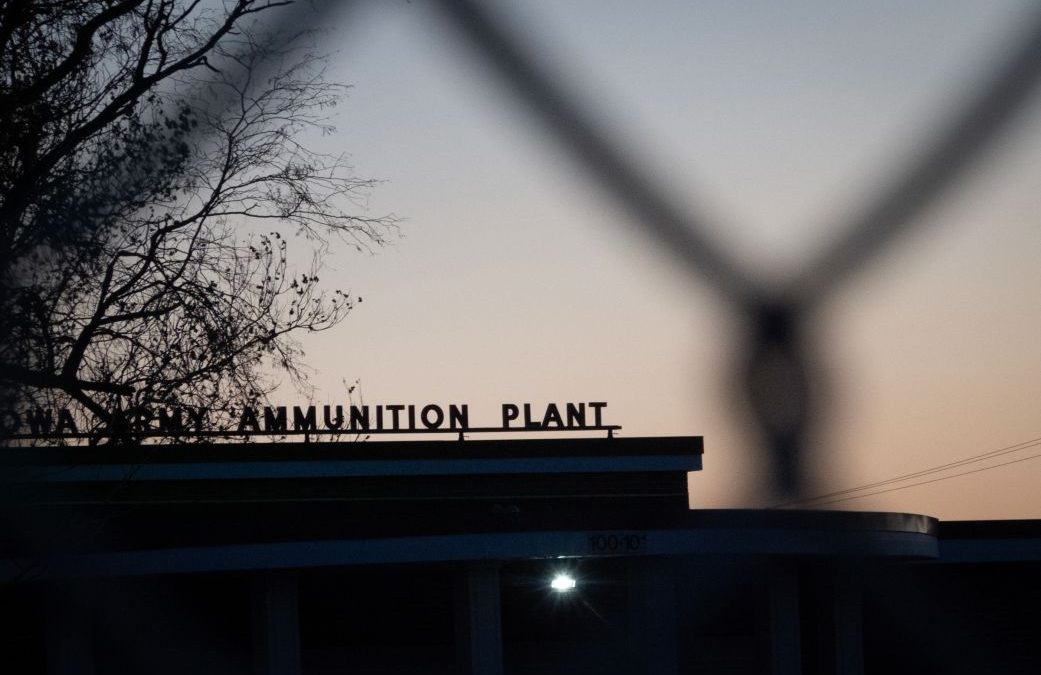
The US Army says it will go ahead with the controlled detonation of a stockpile of unstable explosives at an ammunition plant in Iowa despite a court order that had paused the operation. In a filing on Saturday, the Justice Department told the court that "Protection of human health and the environment demand action now, not delay." The Army now plans to act by 24 November under an emergency exemption, a decision that has alarmed environmental groups and local residents who say they were given too little notice and too little information.
The material in question is lead azide, a highly volatile compound used as a detonator, stored at the Iowa Army Ammunition Plant in Middletown. Earlier this year, the plant found that the material had degraded over time to the point where it was too risky to move, according to Iowa Public Radio. Military and environmental officials determined that detonating it in place was the safest way to eliminate the explosive hazard. The Environmental Protection Agency granted an emergency permit to detonate 68 drums of the material, saying the explosion risk "presented an imminent and substantial threat to human health and the environment".
The detonation was originally scheduled for Friday 20 November. The Army had warned residents to leave their homes for six hours on that day, covering the duration of the explosion and the time needed for dust to settle. An advisory told "all humans" to avoid being outside in the affected areas while the demolition took place. But the plan was paused by a court after environmental groups sued, arguing that the Army had failed to consider safer alternatives. The new filing asks the court to let the Army proceed on a revised timetable.
The Army argues that waiting is itself dangerous. In its filing, the Department of the Army said there was "an immediate risk that the lead azide at the Iowa Army Ammunition Plant will explode as temperatures are expected to drop below 30 degrees Fahrenheit (-1C) in the next several days". It said that the doors to the bunker where the barrels were stored had been removed in preparation for the detonation, and that this made the explosives more "vulnerable to temperature changes". In short, the Army says the preparations for the controlled blast have created a condition in which an unplanned explosion becomes more likely, and that the only responsible option is to complete the job quickly.
The government has not released details for the rescheduled detonation. That lack of detail is one of the key complaints of those opposing the plan. The Iowa Environmental Council, one of the groups suing, argued that many Iowans living within the risk zone were unaware that the explosion was scheduled to happen. "There is no safe level of lead exposure," the council said in a statement, adding that Iowans were given just days to prepare for the 20 November detonation. The group's central argument is about process: residents deserve adequate notice and a genuine assessment of alternatives before a toxic plume is released into the air.
The council and the Sierra Club filed the lawsuit on Thursday, which prompted the court-ordered pause. On Sunday, they filed a new motion in response to the Army's filing, asking the court to pause proceedings so they could submit additional information before the scheduled detonation. The motion includes declarations from environmental experts and local officials who support pausing the detonation, citing a lack of public notice and questioning the Army's claim that delay would cause significant risks. The court will now have to weigh a claim of imminent danger against a claim of inadequate process.
That balance is not an easy one. Lead azide is dangerous in two ways. As an explosive, it is sensitive to shock, friction and heat, and degraded stocks can become even more unpredictable. As a source of lead, its detonation would release a toxic plume, which is why the Army has told residents to stay indoors and why the BBC has reported that the detonation will create a toxic plume. Lead exposure is harmful, especially to children and pregnant women, and no level is regarded as safe. The question is whether the risk of a controlled burn, with warnings and precautions, is lower than the risk of an uncontrolled explosion.
The case also illustrates the tension between military necessity and public accountability. The Army says it has worked with the Department of Health and Human Services and the EPA to ensure the explosion is carried out in the safest possible manner. Environmental groups respond that the agencies relied on an emergency exemption that cuts short normal review and public participation. The use of such an exemption is legal in cases of imminent danger, but critics say it should not be a substitute for planning, particularly when the hazard is known to have been developing for months.
The Iowa Army Ammunition Plant, in Middletown, is a long-established facility, and residents of the surrounding area have lived with its presence for generations. Many of them are likely to be anxious about the prospect of a major detonation nearby, whether controlled or not. Local officials will be under pressure to provide clear information about where and when residents should evacuate, how air quality will be monitored, and what support will be available for those who must leave their homes, including for people who are elderly or have health conditions.
Transparency is therefore likely to be the key issue in the days ahead. Even if the court allows the Army to proceed, communities will expect details on the timing, the evacuation zones and the monitoring of lead and other contaminants. The Army has said that it is working with health and environmental authorities, and publishing the data from air monitoring after the blast would help build trust. Failure to do so would reinforce criticism that the process has been rushed and opaque.
The wider lesson concerns the long-term management of hazardous military stockpiles. When explosives are left in storage for years, they can deteriorate, and the cost and risk of dealing with them grow. The Iowa case shows how a problem that could have been addressed gradually can become an emergency, forcing decisions under time pressure and in cold weather. Whatever the court decides in the coming hours, officials will face questions about why the degraded material was allowed to reach this point and how similar stockpiles elsewhere are being monitored.
With the 24 November deadline approaching, the outcome is uncertain. A judge could allow the detonation to proceed, order further delay to hear the environmental groups' evidence, or impose conditions on how it is carried out. Whatever happens, residents near the plant will be watching, and many may need to prepare to leave their homes. The case has become a test of how the United States balances urgent safety concerns with the public's right to know and to be heard when an operation could put their health at risk.