The Bank of England kept Bank Rate at 3.75% on 17 September, but three of its nine rate-setters voted for an increase to 4%, and Governor Andrew Bailey said a rise becomes more likely the more energy prices feed into inflation.
The Bank of England’s Monetary Policy Committee voted 6-3 on 17 September 2026 to hold Bank Rate at 3.75%, according to CNBC, Quartz and a summary of the Bank’s minutes. It was the sixth consecutive hold since the rate was cut to 3.75% in December 2025.
Six members voted to hold: the Governor, Andrew Bailey, and Sarah Breeden, Swati Dhingra, Clare Lombardelli, Dave Ramsden and Alan Taylor. Three voted for a rise of 0.25 percentage points to 4%: Megan Greene, Catherine Mann and Huw Pill, according to the summary. The split shows that a third of the committee already favours tightening.
UK consumer price inflation rose to 3.1% in August, with motor fuel costs a major contributor, according to the same reports. Based on energy prices in mid-September, the Bank expects inflation to reach about 3.75% in the final quarter of 2026 and slightly above 4% in early 2027, a search summary says, compared with a target of 2%.
The numbers show the pressure in both directions. UK inflation of 3.1% is already above the 2% target, and the Bank’s forecast of just above 4% in early 2027 would be roughly double it. Bank Rate at 3.75% is 1.25 percentage points above the ECB’s deposit rate of 2.50%, a gap that is Delima News’ own calculation from the two published rates.
Bailey said in the Bank’s statement that high global energy costs had not yet fed significantly through to UK prices or wages, but that the larger the impact on inflation, the more likely it is that the Bank will need to raise Bank Rate to bring inflation back to the 2% target. Bloomberg’s headline reports it as the Bank holding rates and warning of a hike if the Iran war persists.
The decision came a day after the US Federal Reserve moved. CNBC’s headline says the Bank of England defied the Fed’s rate-hike lead, which means that the Fed raised rates at its meeting on 16 September, though the article could not be read and the size of the increase is not given here. The ECB had raised rates a week earlier, as Delima News reports.
Markets are pricing in a move. A headline from Disruption Banking on 9 October says that a Bank of England hike is 81% priced, even though the ECB is expected to hold. The article could not be reviewed, so the basis of the figure, including the date it refers to, is unknown, and it should not be read as a forecast.
The next decision is on 5 November, according to the Bank of England website as cited in a search summary.
The Bank has to weigh the same trade-off as the ECB: higher energy costs raise inflation while weakening growth.
Delima News will report the Bank’s November decision when it is announced.
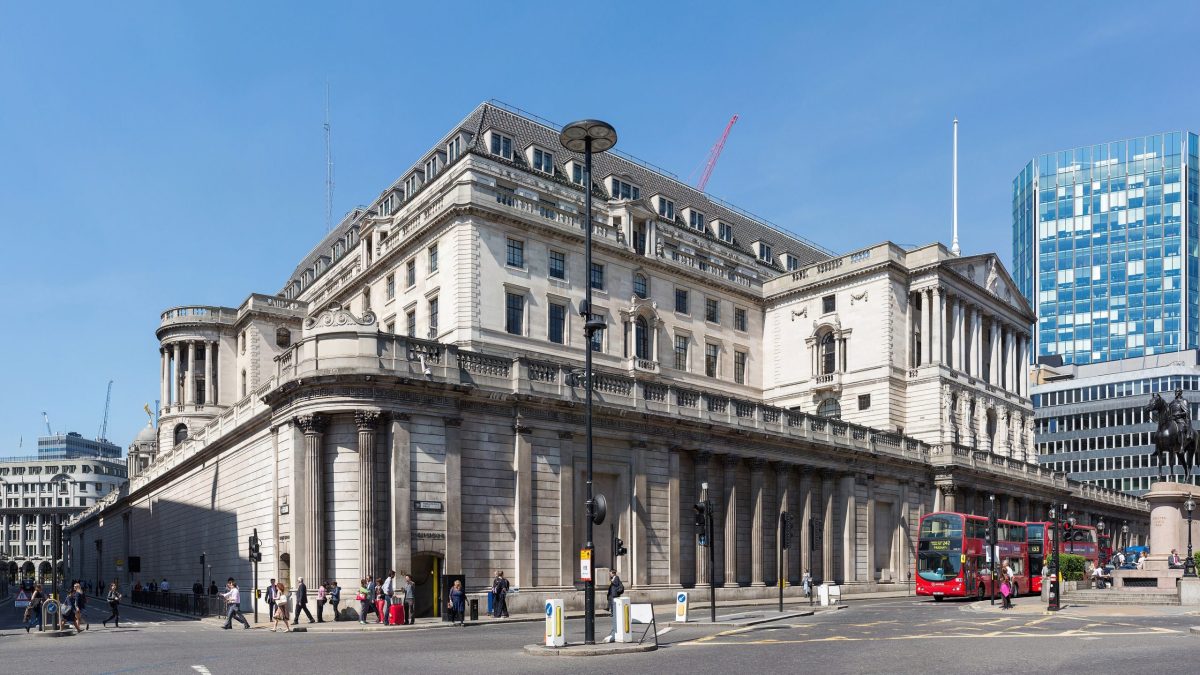
Image: The Bank of England building in London (file photo). Photo: Diliff / Wikimedia Commons (CC BY-SA 3.0)