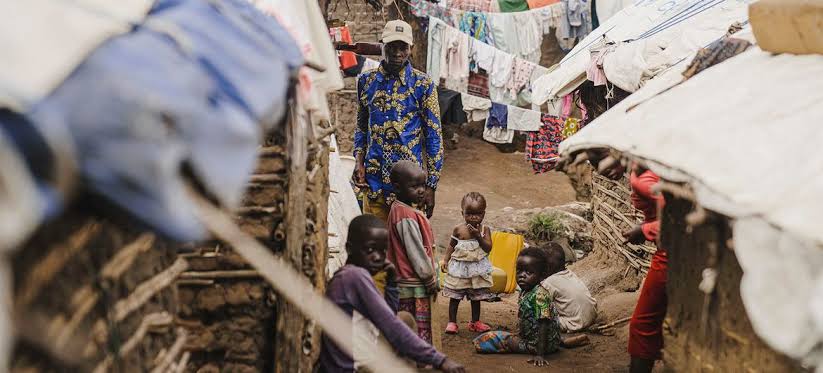
For residents of eastern Democratic Republic of the Congo, the succession of diplomatic initiatives meant to end years of conflict is becoming harder to reconcile with the violence unfolding around them. In North and South Kivu provinces, fighting between the Congolese army and the Front for the Refoundation of the Nation (FRN), an armed and political coalition led by former President Joseph Kabila, has continued despite international efforts to secure a settlement. Civilians remain exposed to attacks, displacement and the disruption of essential services, and the latest escalation has raised questions about whether negotiations in Washington and Doha can deliver security on the ground. "One meeting follows another, and they all end up being much the same," said Blaise Chasumba, a resident of Bukavu, the capital of South Kivu.
The two diplomatic tracks address different problems. The Washington Accords, signed in December 2025, seek to resolve tensions between the DRC and neighbouring Rwanda. The Doha process is intended to resolve the conflict between the Congolese government and the Congo River Alliance (AFC), which includes the Rwanda-backed M23 armed group. The distinction matters, because an agreement between Kinshasa and Kigali cannot on its own settle the confrontation between the government and armed groups operating inside the country. The Doha Framework for a Comprehensive Peace Agreement was signed by the DRC government, the AFC and M23 on 15 November 2025, and in August 2026 representatives of the two sides, together with Qatar, the United States, Togo, the African Union Commission and Switzerland, agreed on a road map and a mechanism to review implementation. Fighting has nevertheless continued.
An offensive in early November underlined how fragile the process is. FRN fighters advanced through Kahuzi-Biega National Park and along National Road 3, a strategic route linking Bukavu with areas farther north. Conflict monitoring reports said the fighters captured several localities, including Bitale and the centre of Bulambika on 8 November. The Congolese army said it had halted the advance at Bulambika and was preparing a counteroffensive, though local and military accounts differ over how much territory the fighters actually gained. The army, known by its French acronym FARDC, has blamed recent attacks in North and South Kivu on the Rwandan army and on fighters allied with the FRN, and says it is preparing operations to recover lost positions.
Rwanda denies supporting armed groups in eastern DRC, pointing instead to the presence of the Democratic Forces for the Liberation of Rwanda (FDLR) as a security threat. That dispute has been central to relations between the two countries for decades. A resolution adopted by the UN Security Council in February 2025 condemned M23's offensive and described direct support and participation by the Rwanda Defence Force, calling on Rwanda to end its support and withdraw its forces from Congolese territory. The same resolution condemned support provided by Congolese forces to armed groups, particularly the FDLR, and called for the group's neutralisation. In other words, the international community has criticised both governments, which is part of why each side can claim to be the aggrieved party in the negotiations.
The history explains why the conflict is so hard to settle. The 1994 genocide in Rwanda and the flight of former Rwandan soldiers and militia members into what was then Zaire helped create the conditions for successive wars. The emergence of armed groups linked to the genocide, including the FDLR, became a persistent source of tension between Kinshasa and Kigali. The First and Second Congo Wars, which began in 1996 and 1998, drew in several neighbouring countries, and although the conflicts formally ended, disputes over land, political representation, citizenship and control of natural resources continued to drive violence in the east. M23 emerged in 2012 after a mutiny by former members of the National Congress for the Defence of the People (CNDP), who had been integrated into the army under a peace agreement signed on 23 March 2009 and who later accused the government of failing to honour it.
The political landscape has become more complicated. The FRN was established in October 2026 under Kabila's leadership and says it has succeeded the AFC and assumed its commitments. The precise relationship between the new coalition and the earlier AFC and M23 structure is important when assessing who is actually represented at the negotiating table. If the group fighting on the ground is not the same as the group that signed in Doha, then a road map agreed in August may bind fewer fighters than diplomats assume, and each new realignment risks reopening questions that were supposedly settled.
The human cost is borne by civilians. The fighting has driven further displacement and put additional pressure on communities already struggling after years of conflict. Doctors Without Borders, known by its French initials MSF, said it had reduced its staff presence in the Bunyakiri health zone, relocating some personnel to Bitale and Bukavu as security deteriorated. In a statement sent to Al Jazeera, it reminded all parties of "the importance and the obligation to respect and ensure the protection of healthcare facilities, civilian populations and humanitarian staff, in accordance with international humanitarian law." When medical organisations pull back, the people who remain lose access to care at the moment they most need it.
The African Union has acknowledged the gap between commitments and reality. In a communique issued after a Peace and Security Council meeting on 26 October, it said implementation of commitments under the Washington and Doha processes remained limited, called for better coordination between the initiatives and urged inclusive, nationally owned dialogue. It stressed that a lasting settlement requires political dialogue involving wider sections of Congolese society, including women, young people and civil society organisations. That assessment points to the central weakness of the current approach, which is that agreements between governments and armed groups have not translated into a sustained improvement in security.
Many Congolese want more than negotiations between elites. Dieumerci Mungu Akonkwa, North Kivu coordinator for Action for Democracy and Development in the Congo, said that since the negotiations began there has been no progress on the ground. "All that is happening is that the lives of peaceful civilians are being cut short. The war continues to create displaced people, and women are being raped," he said. He called for an inclusive national dialogue, pointing to proposals put forward by Catholic and Protestant church leaders, which could bring political actors and civil society into discussions that go beyond the government and the armed groups. The challenge, as the article from Bukavu makes clear, is not only to secure commitments from the parties but to address the local disputes, weak state institutions and impunity that have helped sustain violence.
For residents, the measure of progress is simple: whether the fighting stops, essential services remain available and families can return home. Chasumba said people are also waiting for those responsible for the destruction to address their losses, and that he expects "a long-running saga, full of twists and turns." Unless the Washington and Doha tracks are better coordinated, and unless they are joined by a broader political process, the people of Bukavu and the surrounding provinces will keep hearing about diplomatic breakthroughs while the front line moves closer to their homes.