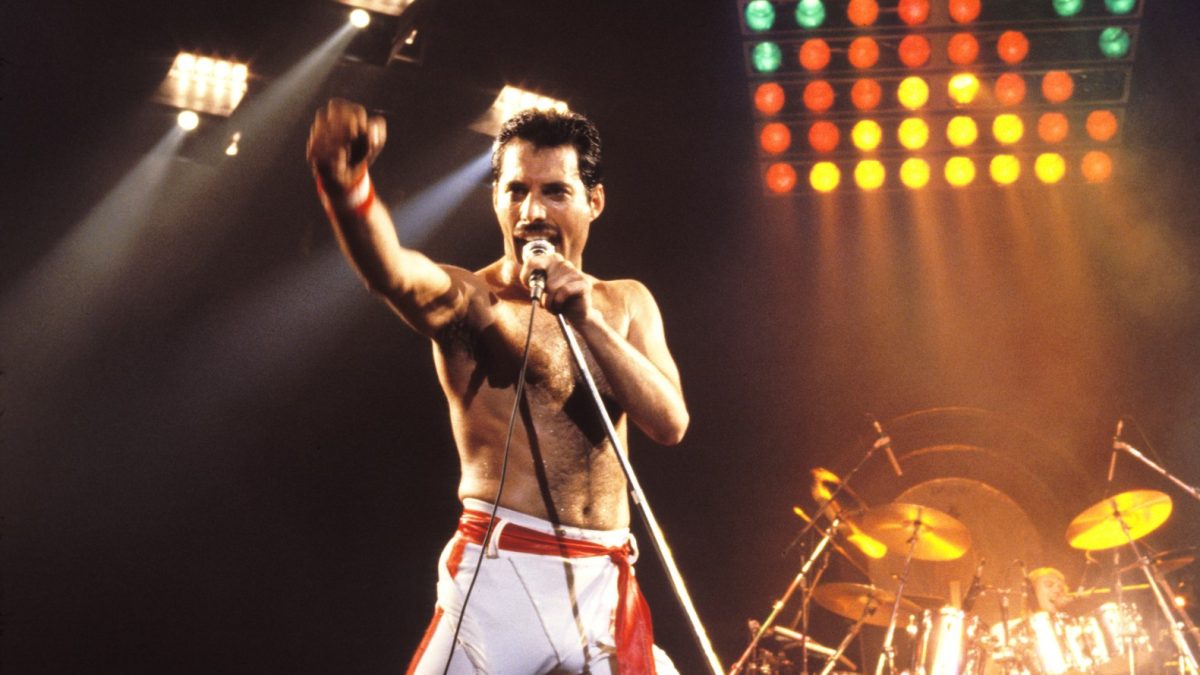
Freddie Mercury (born Farrokh Bulsara, 5 September 1946 to 24 November 1991) was a British singer and songwriter, best known as the lead vocalist of the rock band Queen. He wrote songs including "Bohemian Rhapsody", "Killer Queen" and "We Are the Champions", and is regarded as one of the greatest singers in popular music. He died of an AIDS-related illness at 45, a day after announcing his diagnosis publicly. This biography follows his life from Zanzibar to his global legacy.
Freddie Mercury at a Glance
| Full name | Farrokh Bulsara (stage name Freddie Mercury) |
| Born | 5 September 1946, Stone Town, Zanzibar |
| Died | 24 November 1991, Kensington, London, England (aged 45) |
| Profession | Singer, songwriter and record producer |
| Band | Queen (formed 1970 with Brian May and Roger Taylor; John Deacon joined 1971) |
| Best-known songs | "Bohemian Rhapsody", "Killer Queen", "Somebody to Love", "We Are the Champions", "Don't Stop Me Now" |
| Vocal range | F2 to F6 (as recorded in his biography) |
| Honours | Rock and Roll Hall of Fame (2001, as part of Queen) |
Early Life in Zanzibar and India
Mercury was born in Stone Town, Zanzibar, which was then a British protectorate, to Bomi and Jer Bulsara, who were Gujarati Parsis from India. He had a younger sister, Kashmira. From the age of eight he attended St Peter's School in Panchgani, India. In 1964 his family left Zanzibar during the revolution there and settled in Feltham, Middlesex, in England. He studied at Isleworth Polytechnic and then at Ealing Art College, where he earned a diploma in 1969.
The Formation of Queen
Mercury joined the guitarist Brian May and the drummer Roger Taylor, and Queen was formed in 1970. John Deacon joined as bass guitarist in 1971, which completed the line-up. Mercury chose his stage name and became the group's front man, and he wrote 10 of the 17 songs on the Greatest Hits album, including "Killer Queen", "Bohemian Rhapsody", "Somebody to Love" and "We Are the Champions". The six-minute "Bohemian Rhapsody", released in 1975, combined ballad, opera and hard rock in a way that was unusual for a single.
Live Aid and Solo Work
Queen's performance at Live Aid at Wembley Stadium in 1985 is often named as one of the greatest live performances in rock history. Mercury released the solo albums Mr. Bad Guy (1985) and, with the Spanish soprano Montserrat Caballé, Barcelona (1988), whose title song became the official anthem of the 1992 Barcelona Olympics.
Illness and Death
Mercury was diagnosed with AIDS in 1987 and kept it private. On 23 November 1991 he issued a statement confirming that he had the disease, and he died the next day at his home in Kensington, aged 45. A tribute concert held at Wembley Stadium in 1992 raised money for AIDS charities, and the surviving members of Queen and their manager Jim Beach set up the Mercury Phoenix Trust to fight the disease. Queen's last album with his vocals, Made in Heaven, appeared in 1995.
Personal Life
Mercury met Mary Austin in 1969 and she was his partner from 1970 to 1976. His partner from 1985 until his death was Jim Hutton.
Legacy and the Film
Queen was inducted into the Rock and Roll Hall of Fame in 2001, and in 2002 Mercury was ranked 58th in the BBC's poll of the 100 Greatest Britons. The 2018 biographical film Bohemian Rhapsody grossed more than $900 million worldwide, and Rami Malek won the Academy Award for Best Actor for playing Mercury at the 91st Academy Awards. His voice and stage presence remain widely imitated.