The far-right AfD came first in both of September’s eastern German state elections, winning 43.8% in Saxony-Anhalt and 38.2% in Mecklenburg-Vorpommern, where Chancellor Friedrich Merz’s CDU failed to win any seats.
The Alternative for Germany (AfD) won the state election in Saxony-Anhalt on 6 September 2026 with 43.8% of the vote, up from 20.8% in 2021, according to Wikipedia’s page on the election. It won 39 seats in the 83-seat parliament, three short of the 42 needed for a majority on its own. It won 38 of 41 constituency seats directly, with the Left taking the other three.
The other results in Saxony-Anhalt were the CDU on 17.2% and 15 seats, down from 37.1% and 40 seats, the SPD on 9.3% and eight seats, the Greens on 8.9% and eight, the Left on 8.6% and eight, and the new BSW on 5.3% and five seats. The FDP, on 2.6%, was eliminated. Turnout was 77.8%, the highest recorded in a state election there, and the page describes it as the first time a far-right party has been close to power in a German state since the Second World War.
The AfD faced the same barrier it has met elsewhere. All the other parties have refused to cooperate with it, a policy known as the firewall, so the page says that the election produced complex coalition scenarios with no clear majority path. The sources reviewed do not report a government agreement, so the outcome of the talks is not covered here.
Two weeks later, on 20 September, Mecklenburg-Vorpommern voted. The AfD won 38.2% and 32 seats, and the SPD, which has governed the state, won 35.5% and 29 seats, according to Wikipedia. The Left took 6.5% and five seats and the Greens 5.7% and five seats. The CDU, on 4.9%, and the BSW, on 4.8%, both fell below the 5% threshold, and the FDP won 1.0%. Turnout was 78.1%, and the parliament has 71 seats.
The CDU result was the worst in its history in a state election since the party was founded in 1945, according to France 24, and Wikipedia says that this was the first time one of the two big people’s parties, the CDU/CSU and the SPD, won no seats in a state election. The CDU’s share fell from 13% in 2021 to 4.9%.
A coalition of the SPD, the Left and the Greens is anticipated in Mecklenburg-Vorpommern, according to Wikipedia, which would give 39 seats in the 71-seat parliament and allow the incumbent Minister-President, Manuela Schwesig, to continue in office. That is a majority of only a few seats, and the page presents it as the expected outcome and not a signed deal.
On the same weekend in Berlin, according to France 24, the hard-left Die Linke pushed the CDU into second place, and the AfD also made strong gains. The report does not give the Berlin figures.
Merz said he was determined to keep the CDU-SPD coalition in office, and called the results a profound turning point and a dramatic and unprecedented result for the CDU, according to the same France 24 report. He rejected pressure to resign after 16 months in office, and the SPD said it would stay in the coalition while pushing for changes to the reform plans. The labour minister and SPD co-chair, Bärbel Bas, resigned on 12 October, as Delima News has reported.
The next federal election is not due until 2029, so the results are a test of the coalition and the firewall and not a change of national government.
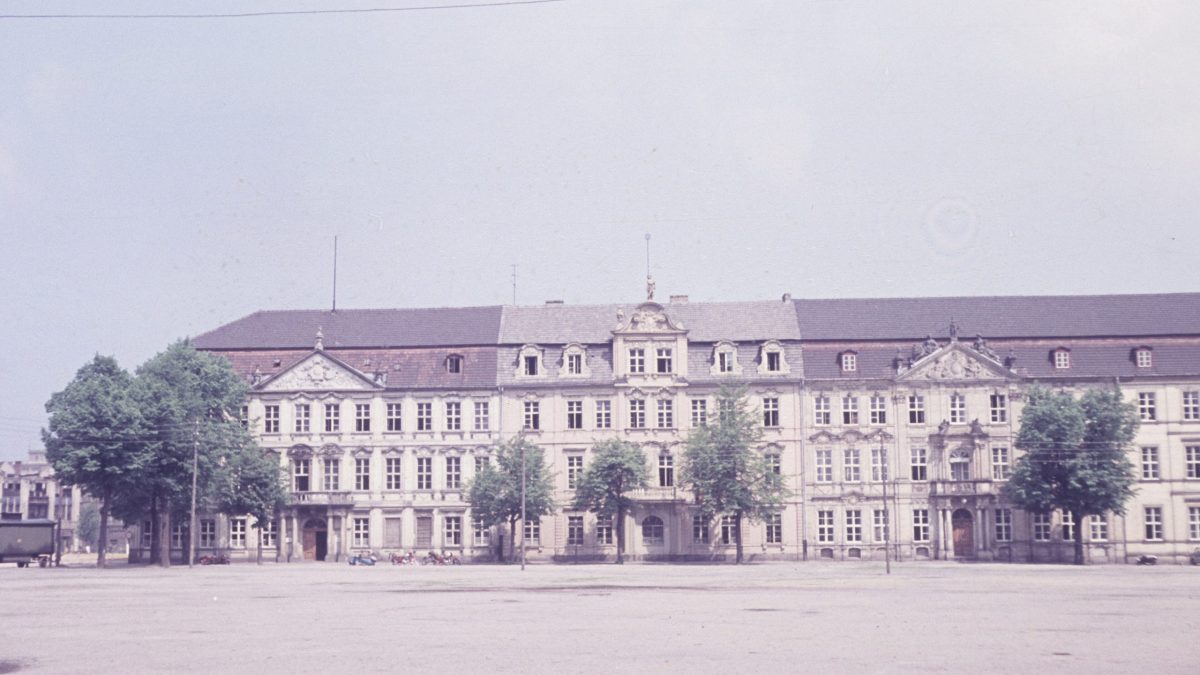
Image: The Landtag of Saxony-Anhalt in Magdeburg (file photo). Photo: Peter H. Feist / Wikimedia Commons (CC BY-SA 4.0)