Global smartphone shipments fell 20% from a year earlier in the third quarter, the lowest third-quarter level since 2012, as a shortage of memory chips pushed up costs, according to Counterpoint Research.
Global smartphone shipments declined 20% year on year in the third quarter of 2026, the weakest third quarter in 14 years, according to preliminary estimates from Counterpoint Research’s Market Monitor, as reported by 9to5Google, Quartz and Business Today. 9to5Google puts it as the weakest performance since 2012 and says that it was the last time shipments were this low, when Samsung’s latest release was the Galaxy S3.
The cause was a shortage of memory. Rising prices for DRAM and NAND flash made components more expensive, and memory supply was drawn away by the construction of AI infrastructure, which led manufacturers to cut shipments and move to more profitable product tiers, according to Counterpoint. 9to5Google calls the crisis “RAMageddon”.
Samsung kept the top position with a 23% share, even though its shipments fell 3% from a year earlier, according to the same reports, helped by sales of the Galaxy Z Fold 8. A separate report cited by 9to5Google says that Samsung currently makes no profit on Galaxy phone sales, which shows how the shortage has squeezed margins. Delima News has not seen the separate report.
Apple took 22% of shipments, up from 18% a year earlier, and crossed 20% in a third quarter for the first time, according to Counterpoint. Its shipments, however, fell 22% from a year earlier, following the absence of a base iPhone 18 model, according to 9to5Google. A larger share in a shrinking market is possible because other makers fell faster, and the figures show Apple falling 22% against a 20% market decline, which looks inconsistent with a rise in share. The sources do not explain the difference, so Delima News reports the figures as published.
Chinese makers suffered more. Xiaomi’s shipments fell by more than 30%, and its share fell from 14% to 10%, according to Counterpoint as summarised by search results. OPPO and vivo each fell by more than 20%. Another ranking, published by Technobaboy, puts Xiaomi third with a 12% share, so the sources differ on Xiaomi’s share, which may reflect different methods.
The market data is preliminary. Counterpoint calls its figures preliminary estimates, and other research firms such as IDC and Canalys publish their own numbers with different methods, as the Xiaomi example shows. The firm’s full report was not available.
The consequences for buyers are higher prices or reduced specifications. Delima News has reported that Intel and Qualcomm have raised processor prices because of the cost of advanced manufacturing and components, and that Samsung’s record profit came from higher memory prices. The same shortage that boosts memory makers’ profits is reducing the number of phones sold.
The sources reviewed do not give the number of units shipped in the quarter, so the size of the drop in absolute terms is not known. They also do not give an outlook for the fourth quarter or for 2027.
Delima News will report on the next market data when Counterpoint and other firms publish it.
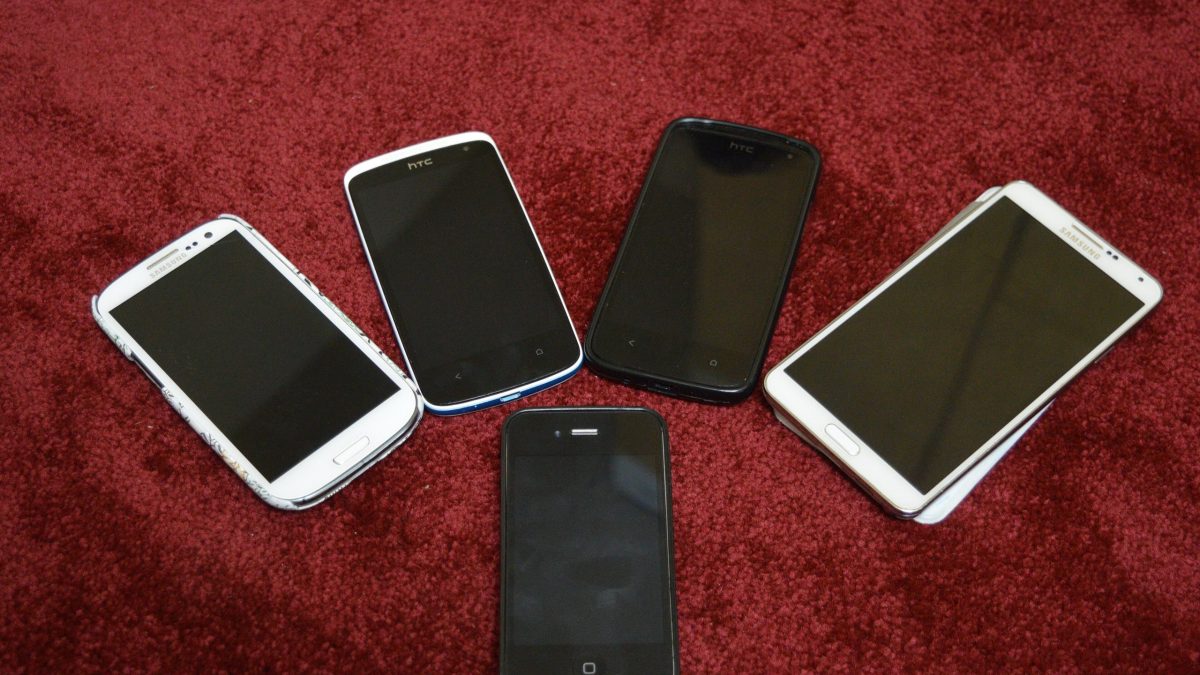
Image: Five different smartphones (file photo; a stand-in image). Photo: Kskhh / Wikimedia Commons (CC BY-SA 4.0)