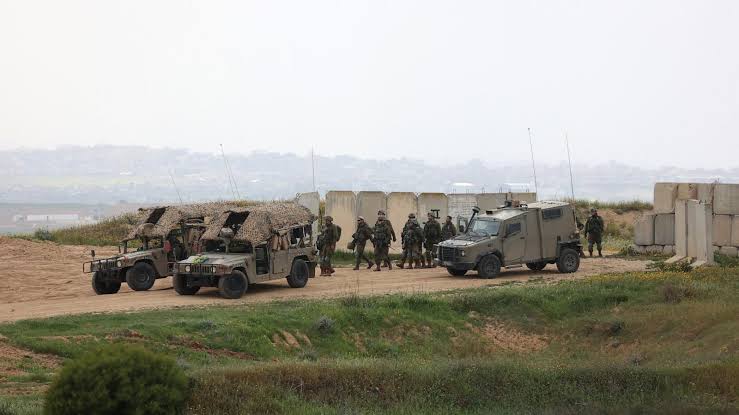
Israeli ground forces launched a rare operation on Wednesday, 18 November, in a part of central Gaza that lies outside their control, after issuing evacuation orders to residents. According to the BBC, witnesses said tanks advanced east of Nuseirat refugee camp and rolled onto the territory's main north-south road under cover of artillery strikes. The Israeli military said the operation was "targeted" and aimed at dismantling a "terror tunnel" west of the so-called Yellow Line, the boundary behind which Israel holds more than 60 percent of Gaza's territory. Hamas, which controls the rest of the territory, called the advance a "flagrant violation" of the ceasefire agreement of October 2025.
Israel's case is that the operation is a limited response to a specific threat. In a statement, the Israel Defense Forces said it had begun a joint operation with the Shin Bet security service "to dismantle a terror tunnel west of the Yellow Line that posed an immediate and direct threat to IDF troops". It added that troops are deployed in the area in accordance with the ceasefire agreement and would continue to remove any immediate threat and thwart attempts by Hamas to harm Israeli civilians or soldiers or to violate the deal. Before the push began, the Israeli military body Cogat warned people north of Nuseirat and Bureij refugee camp to stay away for their own safety and said a section of the Salah al-Din road would be closed to traffic. From this perspective, the evacuation warning and the narrow stated aim are signs of a contained action rather than a return to full-scale war. The IDF also told the BBC it had "struck several military operatives" in separate strikes that day.
The case against Israel's account comes from Hamas, from residents and from the broader record of the past thirteen months. Hamas said the advance of Israeli vehicles beyond the Yellow Line and the evacuation of residents were "a dangerous development". Residents who fled described a frightening scene. One man filmed running along Salah al-Din road, in a video verified by BBC Verify, said Israeli forces were firing randomly near people's houses and tents. A Nuseirat resident told BBC Arabic that families had left without blankets, pillows or clothes and reported "numerous casualties, including fatalities", although the IDF, asked about fatalities, offered only a general statement about the operation. The Hamas-run Civil Defence agency said three people were killed in three separate Israeli drone strikes on Wednesday, in Nuseirat, Gaza City and Deir al-Balah. These accounts are claims from the parties and could not be independently confirmed in the BBC's report.
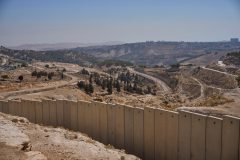
The ceasefire itself has been far from quiet. Violence has continued over the past 13 months, with near-daily Israeli strikes. The Hamas-run health ministry, whose figures the UN considers reliable, says at least 1,658 people have been killed in Israeli attacks since the ceasefire began, while the Israeli military says six of its soldiers have been killed over the same period. The BBC also reports that Israel has been building new land barriers and, according to satellite images, has moved the Yellow Line deeper into Gaza, displacing families. Against that record, Hamas's complaint that the line keeps shifting is not isolated, even if Israel insists that its actions respond to threats.
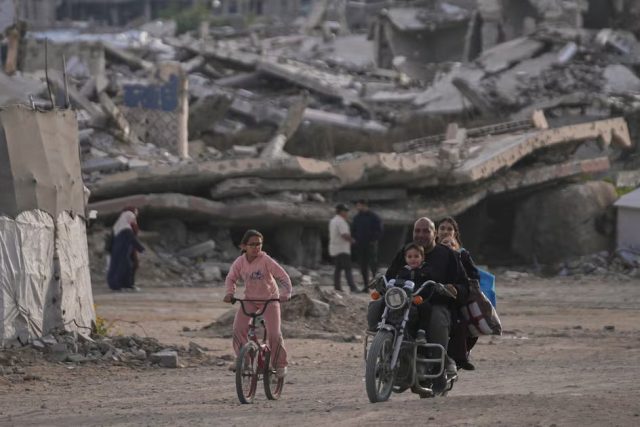
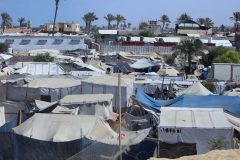
The humanitarian picture explains why each military move carries so much weight. The UN says more than 1.9 million people, about 90 percent of Gaza's population, remain displaced, with 1.4 million of them living in tents or makeshift shelters. The territory has about 2.1 million people. An estimated 82 percent of all structures have been destroyed or damaged during the war, and reconstruction has yet to begin. The war was triggered by the Hamas-led attack on southern Israel on 7 October 2023, in which about 1,200 people were killed and 251 were taken hostage, and the health ministry says more than 74,700 people have been killed in Gaza since. A new evacuation order in the crowded centre of the strip pushes people who already live in tents to move again.
Diplomacy offers little relief. The BBC says US President Donald Trump's peace plan has largely stalled. Hamas has agreed to give up its weapons in exchange for a phased withdrawal of Israeli troops from the 60 percent of Gaza they now occupy, but Israel insists that Hamas must fully disarm before any pullout. That sequencing dispute is the heart of the stalemate: each side wants the other to move first, and every incident outside the Yellow Line gives both sides evidence for their position. The UK and allies have called on Israel to allow rapid humanitarian access to Gaza, according to a related BBC report.
The immediate question is whether this is a brief operation to clear a tunnel or the start of a wider shift. Israeli statements describe a limited aim, while Hamas says the ceasefire is being violated. What is not in dispute is the cost to civilians who must move again with nothing and the absence of any reconstruction or political path. Until the question of disarmament and withdrawal is settled, operations like Wednesday's will remain a danger to a ceasefire that is already fragile, and Delima News will report further developments.