South Korea’s Kospi index fell almost 8% on 15 October, into a bear market about 21% below its September high, as Samsung Electronics and SK hynix each lost more than 9% on worries about interest rates and the funding of AI.
South Korea’s benchmark Kospi index dropped nearly 8% on Thursday, 15 October 2026, to enter a bear market, according to Bloomberg and Startup Fortune headlines and a search summary. The index is about 21% below its September high. Reports differ on the size of the fall on the day, with figures of 7.57%, over 7% and nearly 8% in different headlines, which may reflect different times in the session.
Samsung Electronics closed down 9.48% at 210,000 won and SK hynix closed down 11.06% at 1,262,000 won, according to the search summary. The Korea exchange halted trading for 20 minutes as selling deepened, according to the same summary.
The fall followed a bad week. On Tuesday, 13 October, the Kospi fell 348.89 points, or 5.46%, to close at 6,035.35 in its fifth consecutive session of losses, according to the Korea JoongAng Daily. Samsung fell 7.39% to 232,000 won and SK hynix 10.09% to 1.44 million won that day, and foreign investors sold a net 4.51 trillion won of shares.
The reasons given are several. A hotter-than-expected US consumer price reading on 14 October, with inflation at 3.7%, pushed back bets on near-term Federal Reserve rate cuts, and the sell-off hit hardest the companies that have been borrowing the most to build AI infrastructure, according to the summary. The JoongAng Daily adds concerns about the profitability of AI, competition from the Chinese chipmaker CXMT, the end of local chipmakers’ share buyback programmes and, according to an analyst at Kiwoom Securities, worries about OpenAI’s revenue.
CXMT’s plan to launch 4F² memory by year-end had already hit Samsung and SK hynix shares on 12 October, as Delima News reports in a separate article. The two companies are the biggest memory makers in South Korea and among the largest companies in the index, so their moves have a large effect on the Kospi.
The picture contrasts with the earnings news. Samsung said on 7 October that its third-quarter operating profit was an estimated 107.4 trillion won, a record, as Delima News reported, so the fall in its shares does not reflect a drop in current earnings. It reflects worry about the future, including whether AI spending can be sustained.
The won weakened by 10 against the dollar to 1,345.1 per dollar on 13 October, according to the JoongAng Daily. Japanese shares also fell that week, with the Nikkei 225 closing at 67,778 on 13 October, down 1,253 points, according to a search summary of Japanese market reports, so the sell-off was not limited to Korea.
A bear market is conventionally defined as a fall of 20% or more from a peak, and the Kospi’s 21% fall meets that test. The sources reviewed do not say what will happen next, and Delima News does not forecast the market.
Delima News will report on the markets when trading resumes.
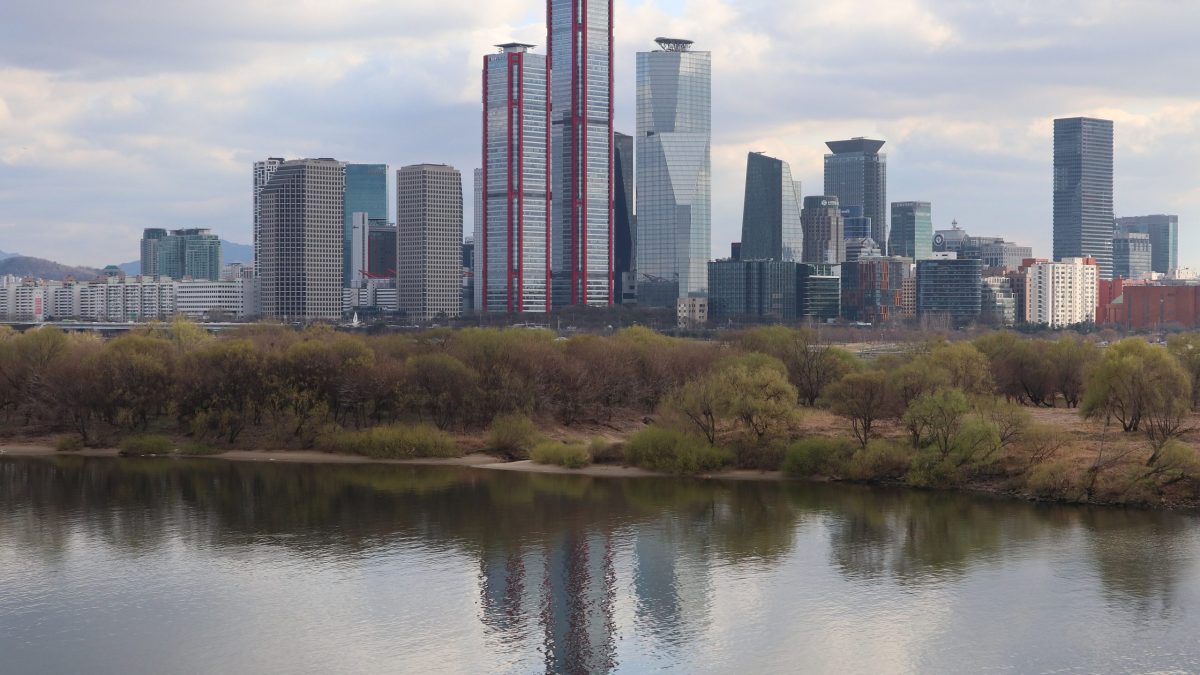
Image: The Yeouido financial district in Seoul (file photo). Photo: S h y numis / Wikimedia Commons (CC BY 4.0)