The Parti Québécois, which wants Quebec to become independent, won a minority government in the province’s 5 October election with 59 of 127 seats, while the governing Coalition Avenir Québec lost all of its seats.
The Parti Québécois (PQ) won 59 of the 127 seats in Quebec’s National Assembly in the general election of 5 October 2026 and will form a minority government, with its leader Paul St-Pierre Plamondon becoming premier, according to CBC News projections and its election results page. A majority requires 64 seats, so the PQ is five seats short.
The other results were 40 seats for the Liberals, 19 for the Conservatives and nine for Québec solidaire, according to the same summary. The governing Coalition Avenir Québec (CAQ) won no seats. The seat figures add up to 127. The CBC’s takeaway article describes the result as the PQ in power and the CAQ wiped off the map, and says that its leader, Christine Fréchette, lost her own seat.
The scale of the change is large. The PQ went from three seats in the 2022 election to 59, according to the summary, and the CAQ, which had won a large majority in 2022, lost all of the seats it held. The summary says that the CAQ had 79 seats, but that figure comes from a search summary and not from the Assembly’s own records.
The PQ is a sovereigntist party, and CNN’s headline says that the separatists who vow an independence vote won the election but fell short of a majority. Al Jazeera’s headline calls it a secessionist party. The sources reviewed do not set out the party’s timetable for a referendum, whether it would hold one in this term or what the other parties would do, so those points are not covered here.
A minority government depends on other parties to pass its budget and legislation. With 59 seats, the PQ needs at least five more votes on any motion, and the sources reviewed do not report whether the Liberals, the Conservatives or Québec solidaire have said they will support the new government. The result also does not say who the official opposition will be, though the Liberals, with 40 seats, are the largest of the others.
The sources reviewed do not report the response of the federal government in Ottawa to the election, so none is given here.
Two other Canadian provincial matters are on the calendar. A search result lists the 2026 British Columbia general election as scheduled for 24 October.
The seat arithmetic explains why the result is a minority. The four parties with seats hold 127 between them, and 59 is 46% of the Assembly, so the PQ needs the votes or the abstention of at least some of the 68 members from other parties to pass a budget. That is Delima News’ own calculation from the seat counts.
The first test for the new government will be its choice of ministers and its first legislative programme, and Delima News will report on the premier’s plans for a referendum if they are announced.
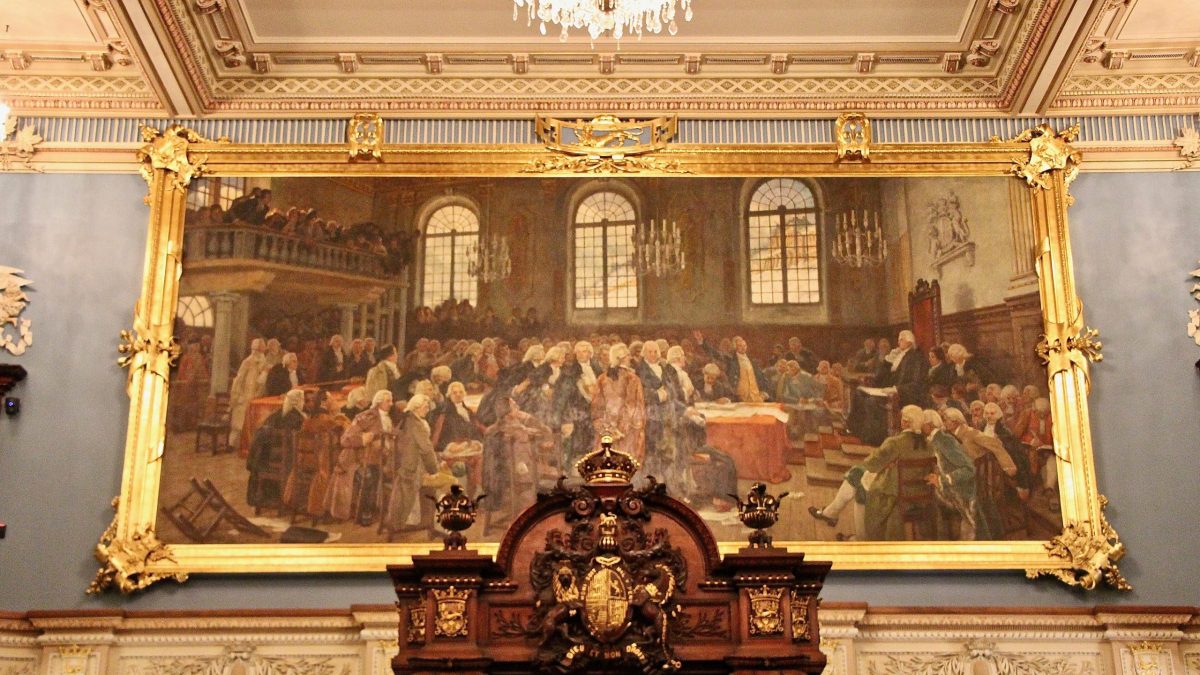
Image: The chamber of the National Assembly of Quebec (file photo). Photo: Thomas1313 / Wikimedia Commons (CC BY-SA 4.0)