Taiwan Semiconductor Manufacturing Co. reported record third-quarter profit for a sixth straight quarter on 15 October, with revenue of $46.72 billion lifted by AI chip demand and a fourth-quarter forecast above analysts’ expectations.
Taiwan Semiconductor Manufacturing Co. reported third-quarter 2026 revenue of $46.72 billion and net income of $23.86 billion on Thursday, 15 October, according to an earnings snapshot published by WTOP. Earnings per share were $4.60, compared with an average estimate of $4.45 from six analysts surveyed by Zacks, and revenue beat the $45.62 billion expected by five analysts.
CNBC’s headline says that the world’s largest contract chipmaker posted a record profit for a sixth straight quarter, beating estimates on the AI boom. Search summaries give the profit in local currency as NT$763.06 billion, an increase of 68.7% from a year earlier, and say that revenue exceeded the company’s own guidance of $44.6 billion to $45.8 billion. The CNBC article itself could not be loaded, so these figures come from summaries.
The profit was driven by demand for AI chips. According to the summaries, high-performance computing grew 22% from the previous quarter and accounted for 68% of the quarter’s revenue, and TSMC pointed to rising demand for AI accelerators, for processors used in agentic AI applications and for networking. That means that more than two-thirds of its revenue now comes from one category, which is a heavy concentration.
The company raised its forecast for the fourth quarter to revenue of $52.3 billion to $54.3 billion, according to a KuCoin summary of the results. That is about 12% to 16% more than the third quarter, on Delima News’ calculation from the two figures, and it implies that the company expects demand to continue to grow.
Gross margin fell to 66.4%, according to the same summary, because of the dilution from the ramp of its 2-nanometre technology, which accounted for 8% of wafer revenue in the quarter. A new manufacturing process usually has lower margins at the start, since the yield and the costs take time to improve, so the lower margin does not necessarily signal a weakness in demand, but the sources reviewed do not give the company’s own explanation.
The results come three days after Nvidia’s Open Compute Project announcements about the designs for AI factories, and a day after ASML, which makes the machines that TSMC uses, reported record sales. The three companies are different parts of the same supply chain, and their numbers have moved in the same direction, as Delima News reports in separate articles.
The profit report is also relevant to the market. On 8 October, shares of AI infrastructure companies fell after a report that OpenAI’s revenue was lower than the figure widely reported, and on 14 October US stocks had their worst day since July, as AI stocks led the fall. TSMC’s results show that, at least for the maker of the chips, the demand has continued to rise.
The sources reviewed do not give the company’s capital spending guidance, its full-year growth outlook or any comments on tariffs and export controls, so those are not covered here. A TSMC statement and earnings call transcript would give those details.
The next test for the company will be the delivery of the fourth-quarter figure, which is a large step up from the third.
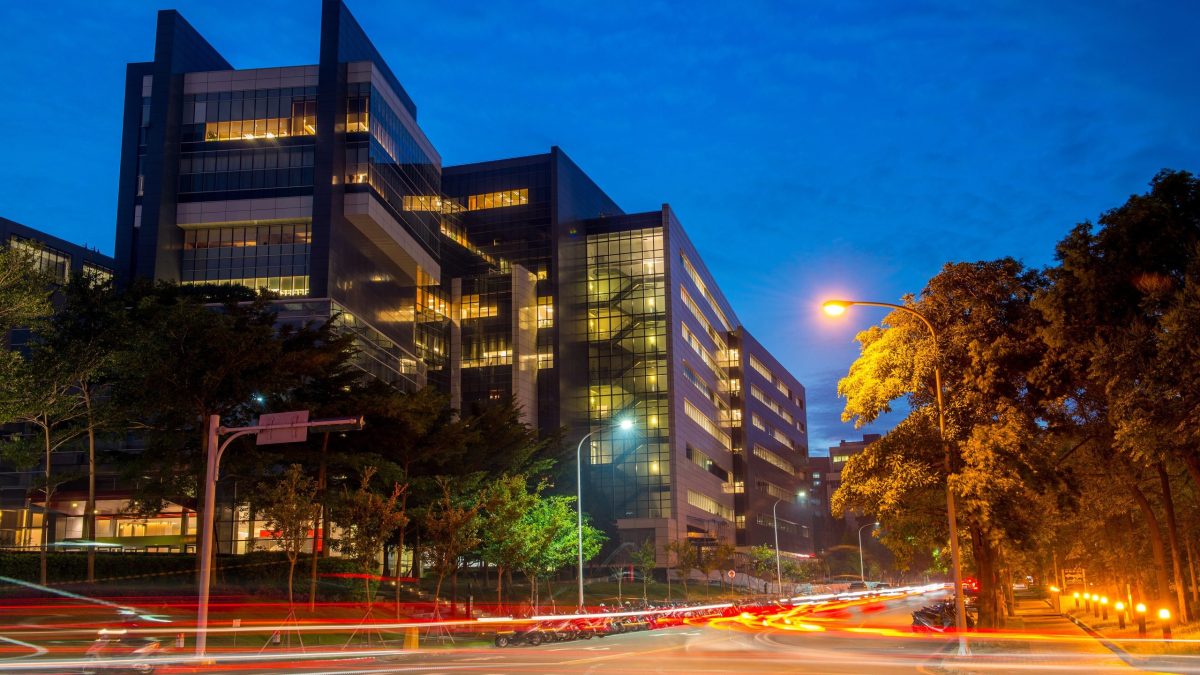
Image: TSMC’s Fab 12A (file photo). Photo: 曾 成訓 / Wikimedia Commons (CC BY 2.0)