Chancellor John Healey will present the Autumn Budget on 28 October, the first of Andy Burnham’s government, with the main tax rises ruled out and the Office for Budget Responsibility publishing its first forecasts since the Iran war pushed up energy prices.
The UK Autumn Budget 2026 will be delivered on 28 October 2026, according to Grant Thornton, the Institute for Government and other previews. The prime minister is Andy Burnham and the chancellor is John Healey, who replaced Rachel Reeves when Burnham succeeded Keir Starmer on 20 July, according to a search summary of the previews. The Burnham government has already ruled out raising the rates of income tax, employee National Insurance and VAT.
That leaves the question of where extra revenue can come from. The summary says that the Budget will be published alongside the latest economic and fiscal forecasts from the Office for Budget Responsibility, the first since the war in Iran led to rising global energy prices, and that they will set out a challenging economic context for the government.
Burnham has already made one change. In one of his first moves as prime minister he pledged to remove VAT from domestic electricity bills from 1 October, which is expected to save households about £45 a year, according to the same summary. The figure comes from a preview and not from an official costing, and Delima News could not confirm it from the government.
In his first speech as prime minister Burnham said that his government would seek to move political power away from Westminster and take a more collaborative approach. The previews say that early announcements suggest a focus on regional growth, public service reform, workforce skills and measures to support household finances.
The fiscal setting is difficult. A CNBC article of 6 October carries the headline that the UK is on “thin ice”, according to a former Bank of England chief economist, in an article about the Burnham government, Healey, tax, bonds and gilts. The page could not be read, so the economist’s name and arguments are not given here.
The economy has been growing. Monthly GDP rose 0.1% in August, according to the ONS figures reported by CNBC on 15 October, as Delima News reports in a separate article, and annual growth was 2.1%. Inflation was 3.1% in August, and the Bank of England held Bank Rate at 3.75% in September, with three of nine members voting for a rise.
Higher interest rates affect the Budget because they raise the cost of government borrowing. The sources reviewed do not give the size of the fiscal gap that Healey must fill, the current yields on gilts or the amount of headroom against the government’s fiscal rules, so no figure is given for them.
Three dates frame the decision. The ONS will publish its next labour market figures on 20 October, the Budget is on 28 October and the Bank of England decides on Bank Rate on 5 November. The latest unemployment rate, for May to July, was 4.9%, according to a search summary of the ONS. Together the releases will show how the economy is growing while borrowing costs and unemployment remain high.
Delima News will report the main measures on 28 October, after the chancellor’s speech and the OBR’s forecasts.
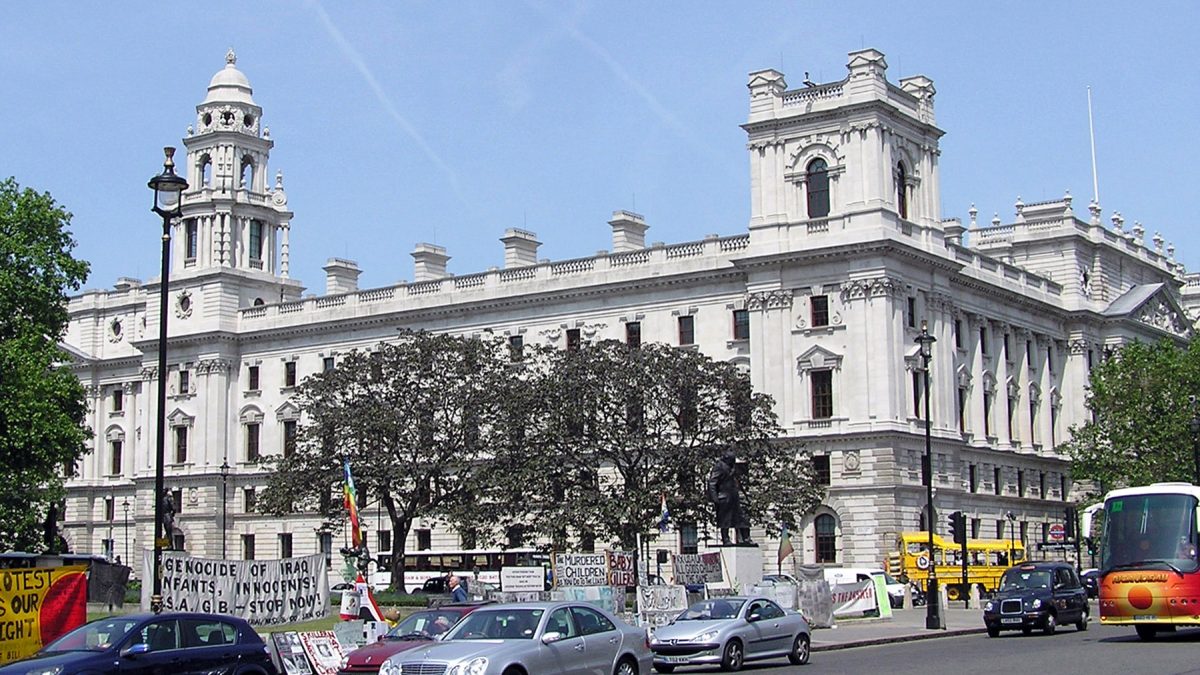
Image: The HM Treasury building in Whitehall, London (file photo). Photo: Arpingstone / Wikimedia Commons (Public domain)