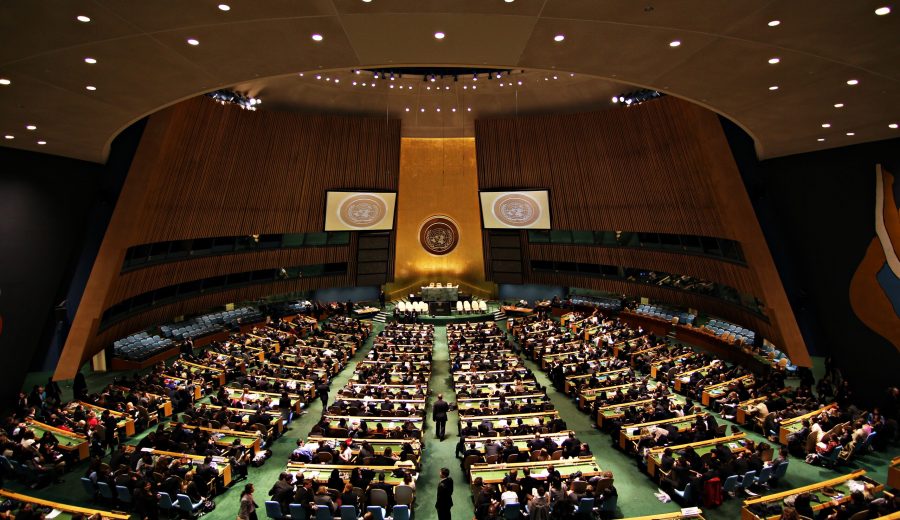
The UN General Assembly has held a formal debate on the Security Council’s latest veto, cast by China and Russia against a US-backed sanctions panel on Iran. The session was required under a rule that obliges the Assembly to meet after every veto.
The United Nations General Assembly met on Thursday, October 1, to examine the Security Council’s latest veto: one cast by China and Russia against a United States-backed panel of experts on sanctions relating to Iran’s nuclear facilities, UN News reported.
Why the Assembly Met
The debate was automatic. Under the “veto initiative”, established in 2022, the General Assembly must meet within 10 working days of any veto in the Security Council.
The veto power belongs to the Council’s five permanent members: China, France, Russia, the United Kingdom and the United States. If any one of them votes against a resolution or decision, it automatically fails.
‘No Substitute for Action’
Khalilur Rahman, president of the Assembly’s 81st session, said the initiative “cannot substitute for effective Security Council action”.
The mechanism does not overturn a veto. What it guarantees, UN News noted, is a public debate on each use in the General Assembly, where no country has a veto.
Rahman urged delegates to use the session “not to exacerbate tensions or assign blame, but to clarify positions, identify common ground for constructive solutions and chart a credible path forward”.
China’s Explanation
China’s Deputy Permanent Representative, Sun Lei, said his delegation voted against the draft to “uphold a correct sense of right and wrong”.
He attributed the impasse to the United States’ withdrawal from the 2015 Iran nuclear deal, its campaign of “maximum pressure” and what he called its “two rounds of strikes against Iran in the midst of negotiations”.
The Case for the Panel
Other delegates argued that the panel’s mandate should have been extended.
“No UN Member State should prevent the UN Security Council from functioning properly and being fully operational,” said Hedda Samson, Deputy Head of the European Union delegation.
A Pattern of Vetoes
UN News noted that vetoes in recent years have blocked multiple resolutions calling for a ceasefire in Gaza and for an end to the war that followed US and Israeli strikes on Iran in February.
Many countries have called for veto power to be removed or limited, but reform of the 15-member Council remains unfinished. At last year’s debate, the Assembly’s then president, Annalena Baerbock, called repeated use of the veto a “poster child” for global gridlock.
What Happens Next
The Assembly president will now send a summary of the discussion back to the Security Council.
Image: The UN General Assembly Hall in New York (file photo). Photo by Basil D Soufi via Wikimedia Commons, CC BY-SA 3.0.