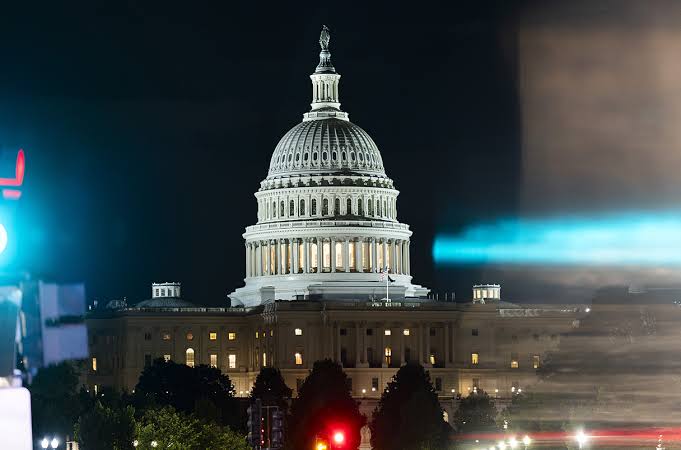
Americans vote on Tuesday, 3 November, in midterm elections that will decide control of Congress for the final two years of Donald Trump's second term. All 435 House seats, 35 Senate seats and 36 governorships are on the ballot. Republicans currently hold the House 219 to 214 with two vacancies, and the Senate 53 to 47, so Democrats need a net gain of three House seats and four Senate seats to take either chamber. The campaign has been marked by legal fights over election administration, a final weekend of rallies, and a question that polls cannot fully answer: whether a national lead for Democrats is large enough to overcome the structure of the map.
The case for a Democratic wave starts with the national numbers. NBC News reports that its polling average shows 52 percent of voters preferring Democratic control of Congress and 44 percent preferring Republican control, and a separate NBC poll of 1,000 registered voters released on 1 November found 52 percent to 45 percent. The same average puts President Trump's approval at 38 percent with 60 percent disapproving, a weak position for the party in power in a midterm year. Turnout also points to high engagement, as CBS News, citing the University of Florida's tracker, reports that more than 54 million Americans had already voted early by 2 November. Democrats are also competitive in places that were not expected to be, including Kansas, where Trump won by 16 points in 2024, and Texas, where Democrat James Talarico leads some polls.
The case against assuming a Democratic sweep is about structure. NBC notes that Republican redistricting has produced what it calls a friendly map, which complicates the three-seat path in the House. In the Senate, Democrats must flip Republican-held seats in states Trump won, some by double digits, and they also have to hold their own seats in Michigan, Georgia and New Hampshire, where a loss would make their route much steeper. Texas has not elected a Democrat to the Senate since 1998. The Michigan race also tightened at the finish when Representative Haley Stevens, who lost the Democratic primary, endorsed Republican Mike Rogers, a move Senator Chuck Schumer called a despicable betrayal. Polls in single states are also close enough that a small miss could change who controls the chamber.
The result matters well beyond Washington. Control of either chamber would let the winning party direct investigations, block or pass spending and decide which nominees are confirmed, which affects trade policy, tariffs and military action that other countries watch closely. The election has also been shadowed by disputes over process. On 1 November a federal judge in Alaska dismissed a Justice Department lawsuit that sought to block certification of the Senate result if Senator Dan Sullivan loses, finding the government lacked standing, and the Department has written to all 50 states reminding them to preserve election records for 22 months. Slow counting in Pennsylvania, which bars processing mail ballots before Election Day, may also delay the final picture.
The polls favour Democrats and the map favours Republicans, and Tuesday will show which matters more. Whoever wins, the margin will shape how Washington governs until the 2028 campaign begins.