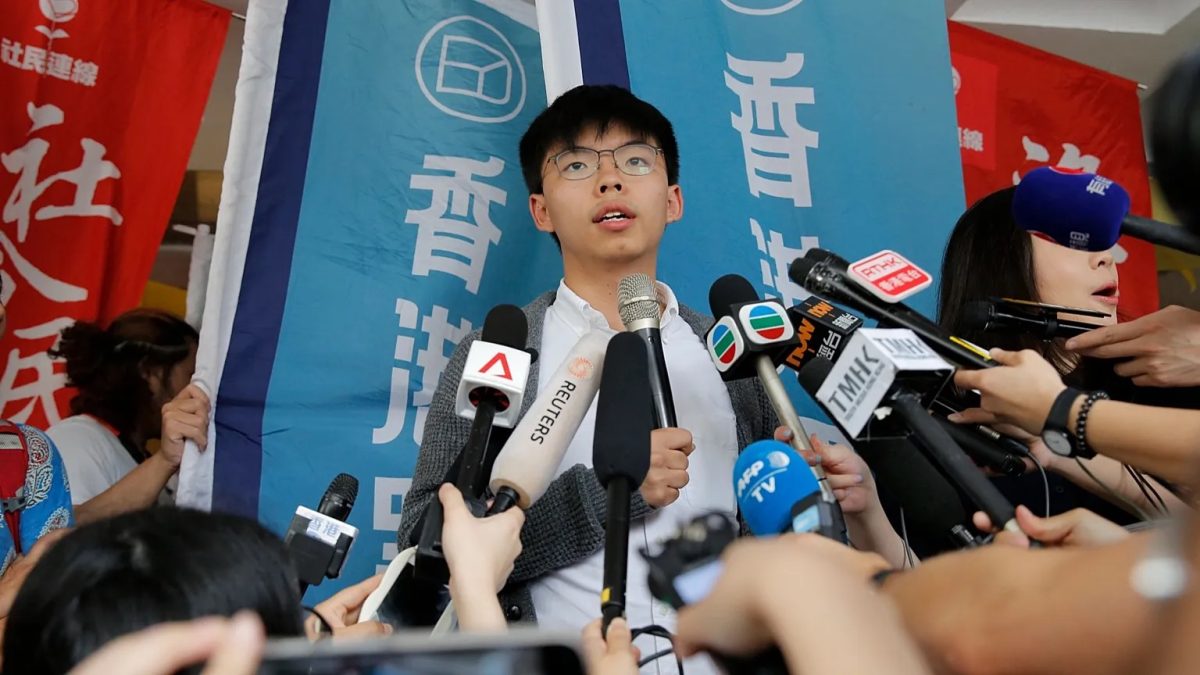
Hong Kong's High Court sentenced the pro-democracy activist Joshua Wong to 10 years in prison on 5 November 2026 after he pleaded guilty in September to conspiracy to collude with foreign forces. It is his second conviction under the national security law imposed by Beijing in 2020, making him the only activist in the city prosecuted twice under it. Wong, who turned 30 last month, became internationally known as a teenager during the 2014 Umbrella protests and has been in detention since 2020. He was already serving a term of four years and eight months for subversion and had been due for release in January 2027, so the new sentence keeps him behind bars for roughly another decade.
The case for the sentence is the one made by prosecutors, the judge and the authorities. Judge William Tam called Wong's actions grave and said he had played a real role in a scheme to encourage foreign governments to impose sanctions, blockades or other hostile measures against China. Prosecutors said the activity took place between July and late November 2020, in cooperation with the exiled activist Nathan Law. The judge considered 13 years as a starting point and reduced it to 10 because of the guilty plea, and he ruled that the sentence would run concurrently with the remaining months of the earlier one. Chief Executive John Lee said Wong and Law were among the primary culprits responsible for undermining Hong Kong's prosperity and stability, and China's foreign ministry said it firmly supports the city in safeguarding national security according to law.
Critics see the same facts very differently. Amnesty International's Sarah Brooks called the sentence another grim reminder that the national security law has become a tool to punish dissent, and Nathan Law said it showed that China is determined to crush hopes for freedom on its soil. Georgetown researcher Eric Lai observed that such charges can be used repeatedly to keep a particular political prisoner in jail. Wong has spent nearly six years in detention, and the BBC notes that he will now spend another decade behind bars, long after the protests he helped lead. The United States consulate in Hong Kong strongly condemned the ruling and called for his immediate release, while Beijing warned others against irresponsible remarks about the city's judicial affairs.
The significance extends beyond one man. BBC reporting says hundreds of campaigners and ordinary residents have been arrested under the law, and the Associated Press report carried by NPR notes that dozens of civil society groups have dissolved and critical news outlets have closed since 2019. For Hong Kong's business community, which relies on the promise of an independent legal system, the verdict raises questions about how far that independence extends. For governments that negotiate with Beijing, it is a reminder that human rights disputes over the city are far from settled.
The sentence will be defended as lawful in Hong Kong and condemned as political abroad, and both views will harden. What is clear is that Joshua Wong, once a symbol of youth protest, now stands as a symbol of how far the city's civic space has narrowed.