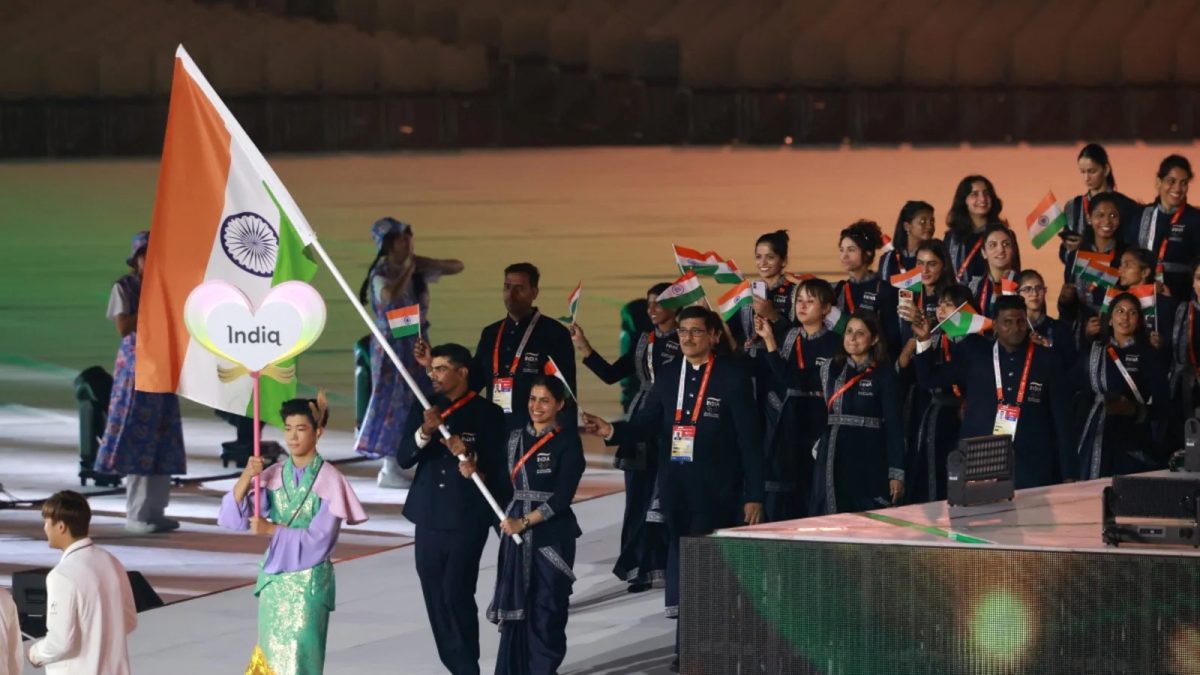
India finished fourth in the medal table at the 2026 Asian Games with 21 gold, 27 silver and 37 bronze medals, 85 in all, according to ESPN’s table, behind China, Japan and South Korea. On 3 October the men’s cricket team won the gold medal by beating Pakistan by 19 runs at Korogi Sports Park in Nisshin, scoring 211 for 6 against Pakistan’s 192 for 6. India tied with fifth-placed Uzbekistan on 21 golds and were ranked higher on silver medals, 27 to 25. The question is whether the result is a strong performance or a reminder of how far India are from the top.
The case for a strong performance is in the table. India’s total of 85 is ahead of Uzbekistan on 70, Iran and Thailand on 52 each, 33 medals behind India, and Kazakhstan on 84, and India earned 21 gold medals, the same as Uzbekistan, and more than Iran’s 19 or Thailand’s 18. In the cricket final, Abhishek Sharma scored 61 off 28 balls with seven sixes, Tilak Varma made 51 not out off 22 balls, and Shivam Dube scored 27 off 15 balls and took two wickets for 33, while Axar Patel and Washington Sundar also took two wickets each. Hasan Nawaz’s 96 off 51 balls for Pakistan was the highest score of the match, but India’s batting depth made the target too big, and Pakistan’s other top scorer, Saim Ayub, made 29 off 22.
The case for a more sober view is in the distance to the top. China won 169 gold medals and 341 in total, and Japan won 83 golds and 269 medals, while India’s 21 golds and 85 medals are a fraction of both, with the total 256 medals short of China’s and 184 short of Japan’s. Japan alone won 95 silver medals, more than three times India’s 27, and India’s largest haul was bronze, with 37. India and Uzbekistan finished level on gold and were separated only by two silver medals, and Kazakhstan, with 12 golds, finished only one medal behind India on total, with 84. South Korea, in third, won 39 golds and 150 medals, almost twice India’s total. In the cricket final India won by 19 runs against a side that scored 192 for 6, and Pakistan’s top scorer made 96, so the margin was not wide.
The result matters because medal tables are used to judge sporting systems, and the gap between India and the top three is what a federation planning for future Games will look at. A haul of 85 medals shows breadth, but 21 golds out of 85 means India converted about a quarter of its medals into titles, while China converted about half and Japan about a third. The cricket gold is important for public attention, while the wider table shows where the next investment may be needed, in the sports where India won silver or bronze rather than gold.
India have a respectable fourth place and a cricket gold to show for the Games. Closing the gap with China, Japan and South Korea will take more than that.