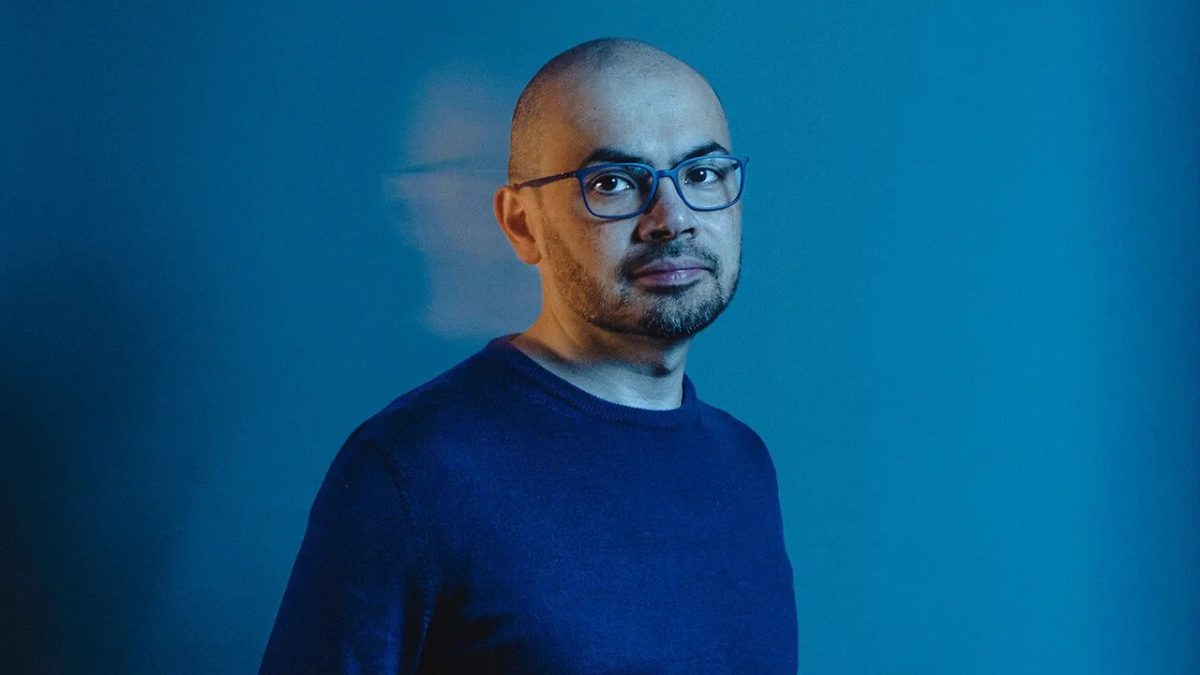
Sir Demis Hassabis (born 27 July 1976) is a British artificial intelligence researcher and entrepreneur who co-founded DeepMind and shared the 2024 Nobel Prize in Chemistry for protein structure prediction. In August 2026 he stepped down as CEO of Google DeepMind to become its chair and Alphabet's chief scientist. This biography follows his life and career up to November 2026.
Demis Hassabis at a Glance
| Full name | Sir Demis Hassabis |
| Born | 27 July 1976, London, United Kingdom |
| Age | 50 (as of November 2026) |
| Profession | AI researcher, entrepreneur and former game designer |
| Education | Queens' College, Cambridge (Computer Science, double first, 1997); PhD in cognitive neuroscience, UCL (2009) |
| Companies | Elixir Studios (founder); DeepMind (co-founder, 2010); Isomorphic Labs (CEO) |
| Current roles | Chair of Google DeepMind; chief scientist of Alphabet |
| Nobel Prize | Chemistry, 2024 (shared with John Jumper and David Baker) |
| Honours | CBE (2017); knighted (2024); Fellow of the Royal Society |
Early Life and Education
Demis Hassabis was born to a Greek Cypriot father and a Chinese Singaporean mother and grew up in North London. He was a chess prodigy, learning the game at the age of four, and he reached master standard at 13 with an Elo rating of 2300, captaining several England junior teams. He bought his first computer, a ZX Spectrum 48K, in 1984 with his chess winnings and taught himself to program from books. He completed his A-levels two years early, at 16.
Games and Cambridge
After winning a competition to work at Bullfrog Productions, Hassabis co-designed and led the programming of the 1994 game Theme Park with Peter Molyneux at the age of 17. The game sold several million copies. He turned down a seven-figure offer to stay in the games industry and went to Queens' College, Cambridge, where he completed the Computer Science Tripos with a double first in 1997. He then worked as lead AI programmer on Black & White at Lionhead Studios and, in 1998, founded Elixir Studios, which made Republic: The Revolution and Evil Genius before it was closed in 2005.
Neuroscience and DeepMind
Hassabis went back to academia and earned a PhD in cognitive neuroscience from University College London in 2009, where he studied memory and imagination. His work on patients with hippocampal damage was named by Science among the top 10 scientific breakthroughs of 2007. In 2010 he co-founded DeepMind with Shane Legg and Mustafa Suleyman, with the stated mission to "solve intelligence" and then use it to solve everything else. Google bought the company in 2014 for £400 million.
DeepMind's AlphaGo beat the European champion Fan Hui 5–0 in October 2015, beat former world champion Lee Sedol 4–1 in March 2016 and beat the top-ranked player Ke Jie 3–0 in 2017. In December 2018 the AlphaFold system won the CASP13 protein-folding competition, and in November 2020 AlphaFold 2 reached a median score of 87.0 in the hardest category at CASP14, which led the organisers to declare the problem essentially solved. DeepMind then used it to predict the structures of about 200 million proteins and made them freely available.
Nobel Prize and 2026 Move
In 2024 Hassabis and John Jumper were jointly awarded half of the Nobel Prize in Chemistry for protein structure prediction, with David Baker receiving the other half for computational protein design. He was knighted the same year, after being appointed CBE in 2017. On 5 August 2026 Alphabet announced that he would step down as CEO of Google DeepMind and become its chair and Alphabet's chief scientist, with Koray Kavukcuoglu taking over day-to-day leadership of the lab. He continues to lead Isomorphic Labs, the drug-discovery company he also founded.
Personal Life
Hassabis and his family live in North London, and he is a lifelong Liverpool FC fan. He has won the Pentamind world board-games championship five times at the London Mind Sports Olympiad. A documentary about his life, The Thinking Game, premiered at the 2024 Tribeca Festival.
Legacy
Hassabis has moved from video games to neuroscience to the centre of the artificial intelligence industry. He has argued that AI could become one of the most beneficial technologies in human history, and he has also warned of its risks and called for more research on AI safety.