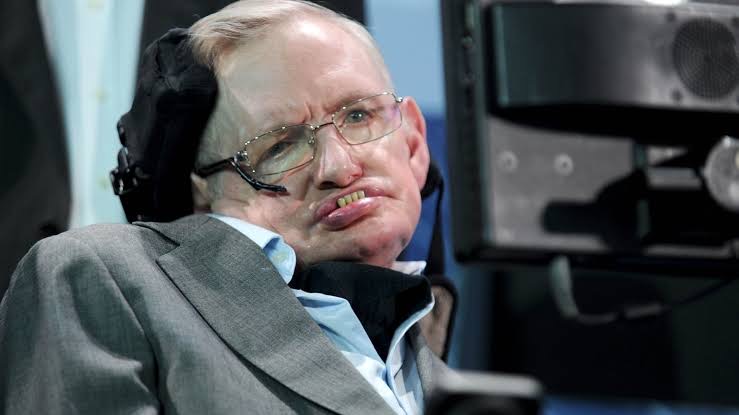
Stephen William Hawking (8 January 1942 – 14 March 2018) was an English theoretical physicist, cosmologist and author. Between 1979 and 2009 he was the Lucasian Professor of Mathematics at the University of Cambridge, one of the most prestigious academic posts in the world. He predicted that black holes emit radiation, and his book A Brief History of Time made cosmology a bestseller. He lived for more than 50 years after being diagnosed with motor neurone disease.
Stephen Hawking at a Glance
| Full name | Stephen William Hawking |
| Born | 8 January 1942, Oxford, England |
| Died | 14 March 2018, Cambridge, aged 76 |
| Profession | Theoretical physicist, cosmologist and author |
| Education | University College, Oxford (first-class BA in physics, 1962); Trinity Hall, Cambridge (PhD, 1966) |
| Post | Lucasian Professor of Mathematics, Cambridge (1979 to 2009) |
| Known for | Hawking radiation; singularity theorems with Roger Penrose; A Brief History of Time |
| Honours | Fellow of the Royal Society (1974); Wolf Prize (1988); Copley Medal (2006); Presidential Medal of Freedom (2009) |
| Spouses | Jane Wilde (married 1965; divorced 1995); Elaine Mason (married 1995; divorced 2006) |
| Children | Robert, Lucy and Timothy |
Early Life and Education
Stephen Hawking was born in Oxford to Frank and Isobel Hawking, into a family of physicians. In October 1959, at 17, he began at University College, Oxford, where he joined the boat club as a cox and received a first-class BA degree in physics. In October 1962 he began graduate work at Trinity Hall, Cambridge, and in March 1966 he obtained his PhD in applied mathematics and theoretical physics, specialising in general relativity and cosmology.
Illness
In 1963, at the age of 21, Hawking was diagnosed with an early-onset, slow-progressing form of motor neurone disease, also known as amyotrophic lateral sclerosis, which gradually paralysed him over decades. After he lost his speech, he communicated through a speech-generating device, first with a handheld switch and later by using a single cheek muscle. He said that before the diagnosis he had been bored with life.
Scientific Work
Inspired by Roger Penrose's theorem about a spacetime singularity at the centre of black holes, Hawking applied the same thinking to the whole universe and wrote his thesis on it in 1965. With Penrose he published a proof in 1970 that if the universe obeys general relativity and fits any of the standard cosmological models, it must have begun as a singularity. He was elected a Fellow of the Royal Society in 1974, one of the youngest scientists to be so honoured. In 1974 he claimed that black holes emit radiation, now known as Hawking radiation, which may continue until they exhaust their energy and evaporate. The idea was at first controversial and was widely accepted by the late 1970s as a major breakthrough in theoretical physics. In 1979 he was elected Lucasian Professor of Mathematics at Cambridge.
Writing and Public Life
Hawking's book A Brief History of Time appeared on the Sunday Times bestseller list for a record 237 weeks. In 2007 he and his daughter Lucy published the children's book George's Secret Key to the Universe. In 2002 he was ranked number 25 in the BBC's poll of the 100 Greatest Britons. He was a Fellow of the Royal Society and a lifetime member of the Pontifical Academy of Sciences.
Honours
Hawking received the Wolf Prize jointly with Penrose in 1988, the Copley Medal of the Royal Society in 2006, the Presidential Medal of Freedom, America's highest civilian honour, in 2009 and the Russian Special Fundamental Physics Prize in 2013. He also received the Gold Medal of the Royal Astronomical Society (1985), the Paul Dirac Medal (1987) and the 2015 BBVA Foundation Frontiers of Knowledge Award.
Personal Life and Death
Hawking married Jane Wilde on 14 July 1965 in St Albans, and they had three children, Robert (born 1967), Lucy (born 1970) and Timothy (born 1979). They divorced in 1995, and he married Elaine Mason in September that year, a marriage that ended in divorce in 2006. He died at his home in Cambridge on 14 March 2018, aged 76. His ashes were interred in the nave of Westminster Abbey on 15 June 2018, between the graves of Isaac Newton and Charles Darwin, with an equation for the temperature of Hawking radiation on his memorial stone.
Legacy
Hawking joined the physics of the very large and the very small, and his popular books brought black holes and the origin of the universe to millions of readers. This biography draws on [Wikipedia](https://en.wikipedia.org/wiki/Stephen_Hawking).