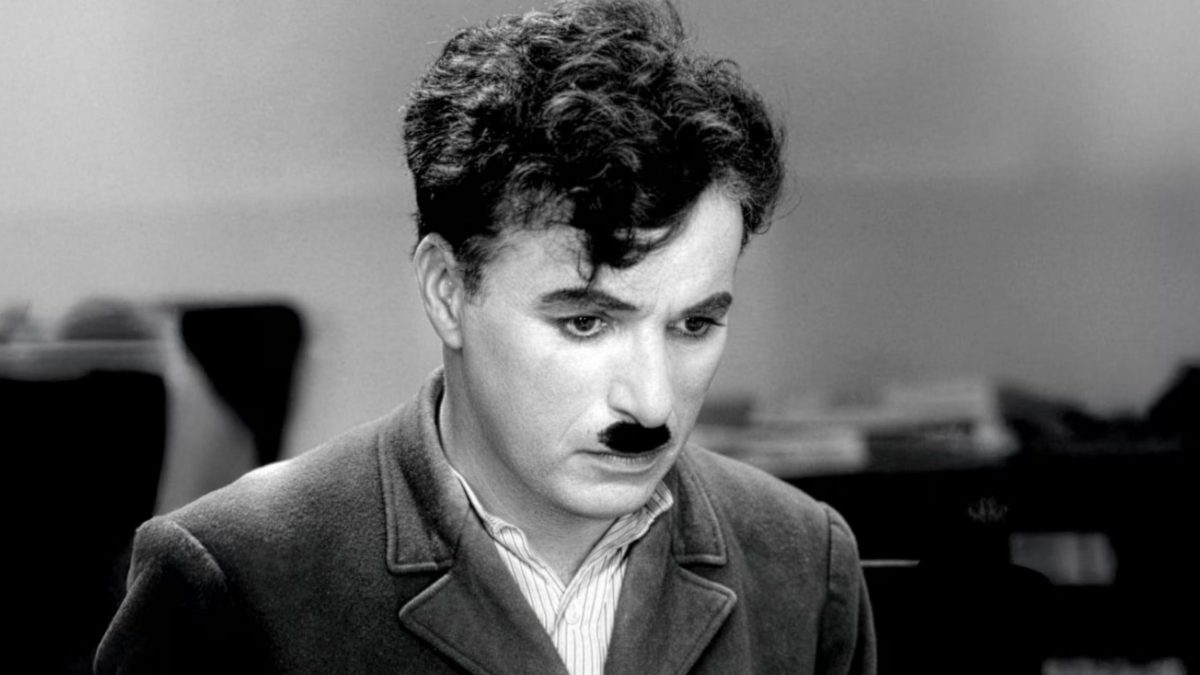
Charlie Chaplin (Sir Charles Spencer Chaplin, 16 April 1889 to 25 December 1977) was an English comic actor, filmmaker and composer who became one of the biggest stars of the silent film era. He created the character of the Tramp, which made him world famous, and he wrote, directed, produced and scored many of his own films. He co-founded the film company United Artists in 1919 and was knighted in 1975. This biography follows his life from the London slums to Hollywood and exile in Switzerland.
Charlie Chaplin at a Glance
| Full name | Sir Charles Spencer Chaplin |
| Born | 16 April 1889, London, England |
| Died | 25 December 1977, Corsier-sur-Vevey, Switzerland (aged 88) |
| Profession | Actor, director, producer, screenwriter and composer |
| Best-known films | The Kid (1921), The Gold Rush (1925), City Lights (1931), Modern Times (1936), The Great Dictator (1940) |
| Company | Co-founder of United Artists (1919) |
| Honours | Honorary Academy Award (1972); Knight Commander of the Order of the British Empire (1975) |
| Spouses | Mildred Harris, Lita Grey, Paulette Goddard, Oona O'Neill |
| Children | Eleven |
Childhood in London
Chaplin was born in London to Charles Chaplin Sr. and Hannah Chaplin, who were both music-hall entertainers. His childhood was marked by poverty, and he was sent to a workhouse twice before the age of nine. His mother was committed to a mental asylum in September 1898. He toured as a child performer with the Eight Lancashire Lads, appeared in a stage production of Sherlock Holmes, and then joined Fred Karno's comedy company, which took him to the United States.
Keystone and the Tramp
Chaplin joined Keystone Studios in 1914, and his first film appearance was in Making a Living. The Tramp, with his bowler hat, small moustache and baggy trousers, made his debut in Kid Auto Races at Venice, released on 7 February 1914. He moved to the Mutual company, which paid him $670,000 a year, and in 1917 he agreed to make eight films for First National for $1 million. In 1919 he co-founded United Artists, which gave him control of his own work.
The Great Films
His feature films included The Kid (1921), The Gold Rush (1925), City Lights (1931) and Modern Times (1936), the last two of which were made without spoken dialogue even after sound arrived. The Great Dictator (1940), a satire of Adolf Hitler, was his first sound film.
Exile from the United States
After an FBI investigation, Chaplin was forced to leave the United States in 1952. He settled in Switzerland, where he lived until his death. In 1972 he returned to the United States to accept an honorary Academy Award for "the incalculable effect he has had in making motion pictures the art form of this century", and the audience gave him a standing ovation lasting about 12 minutes.
Personal Life
Chaplin married Mildred Harris in 1918, Lita Grey in 1924, Paulette Goddard in 1936 and Oona O'Neill in 1943, and he stayed with Oona until his death. He had eleven children. Queen Elizabeth II knighted him at Buckingham Palace in 1975, when he was 85.
Death and Legacy
Chaplin died in his sleep on 25 December 1977 at his home in Corsier-sur-Vevey, aged 88. In March 1978 two men stole his coffin from the cemetery in an attempt to extort money from his family, and police recovered it about 11 weeks later and he was reburied on 23 May 1978. His work set standards for visual comedy, and the Tramp remains one of the best-known characters in film history.