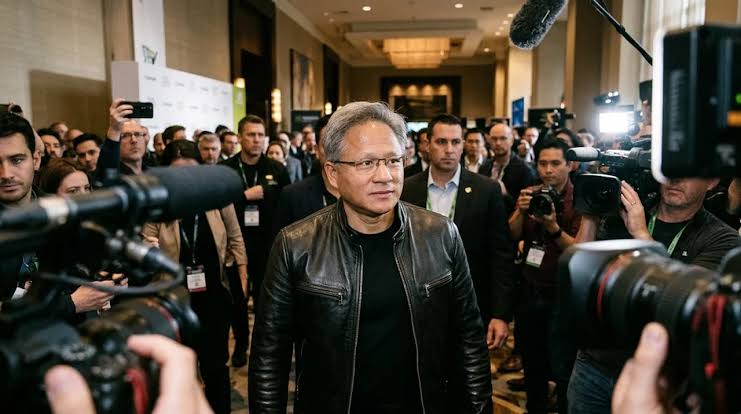
Nvidia's shares fell about 4% by the close of trade on Monday, wiping roughly $250bn (£190bn) from the chipmaker's market value, after the company announced an independent investigation into its chief executive's affair with an alleged Chinese spy, according to the BBC. The board of directors said it would begin the inquiry "in light of recent reporting that founder and chief executive Jensen Huang has been the target of a foreign intelligence effort". Huang admitted he had been "unfaithful" to his wife, apologised for hurting her and their children, and said he was "committed to protecting Nvidia and supporting America's national security" and would cooperate. Nvidia said it had no reason to believe the company's secrets or national security had been compromised.
The allegations come from reports by The New York Times and the Financial Times, which cited unnamed US intelligence officials. They say US officials believe Alice Huang, also known as Huang Le, was a spy for Beijing, and Al Jazeera reports that she is said to have been recruited by China's Ministry of State Security. She was formerly managing director of the Singapore company Megaspeed, which had dealings with Nvidia. According to the Times report, Secretary of State Marco Rubio sent a memo to top officials in Washington last spring warning that the Nvidia chief was in a close relationship with a Chinese spy. President Donald Trump said the FBI is investigating whether the affair led to any compromise of national security, though he also called Huang an "honourable guy", and the tech bosses who backed him included Elon Musk.
China rejects the claims, and Alice Huang has not publicly commented. Beijing's foreign ministry said the allegations of Chinese spies were "entirely groundless, speculative and intended to smear and malign China". The case also rests on anonymous sourcing, and none of the reports reviewed here say that anyone has been charged or that any technology was shown to have been passed on. Analysts quoted by the BBC suggest the damage to the share price may be short-lived. Victoria Fernandez of Crossmark Global Investments said investors would not abandon Nvidia because it is so important to the AI industry, adding: "Nvidia is the core of this AI trade, and without them, all these other pieces start to fall apart because the financing's not there." The US stock market, she noted, opened the week on a positive note, with Nvidia's rival chipmakers benefiting.
The political fallout is already reaching the debate over chip exports. Al Jazeera notes that Huang has long been among Silicon Valley's most powerful voices against restrictions on high-end chip sales to China, lobbying Trump to loosen export controls, and that scrutiny of this lobbying has intensified. Democratic Senator Elizabeth Warren and Republican Senator Jim Banks urged Congress to pass their AI Overwatch Act, which would let lawmakers scrutinise and potentially halt exports of advanced chips to China and other adversaries, and Democratic Representative Bill Foster called for his Chip Security Act, which would track the location of chips sent overseas, to be passed. Three members of the House Foreign Affairs Committee, Brian Mast, John Moolenaar and Rick Crawford, wrote that the reports "raise significant national security concerns" and asked Huang for a closed-door briefing, which he has been requested to give next week.
The company's governance is the other factor to watch. Huang co-founded Nvidia in 1993 and owns only around 3.5% of the company, and because Nvidia operates a single class voting structure, his stake would not be enough to veto a board decision to remove him, unlike founders such as Mark Zuckerberg at Meta or Elon Musk at Tesla and SpaceX, who hold larger stakes across multiple share classes. Fernandez said she did not believe the board would remove Huang unless there was glaring evidence of wrongdoing related to national security or intellectual property, though she expected the company to begin bringing someone forward as his number two, since there is "no natural successor". The outcome of the board inquiry, the FBI's work and next week's briefing will decide whether this stays a personal scandal or becomes a governance and national security case.