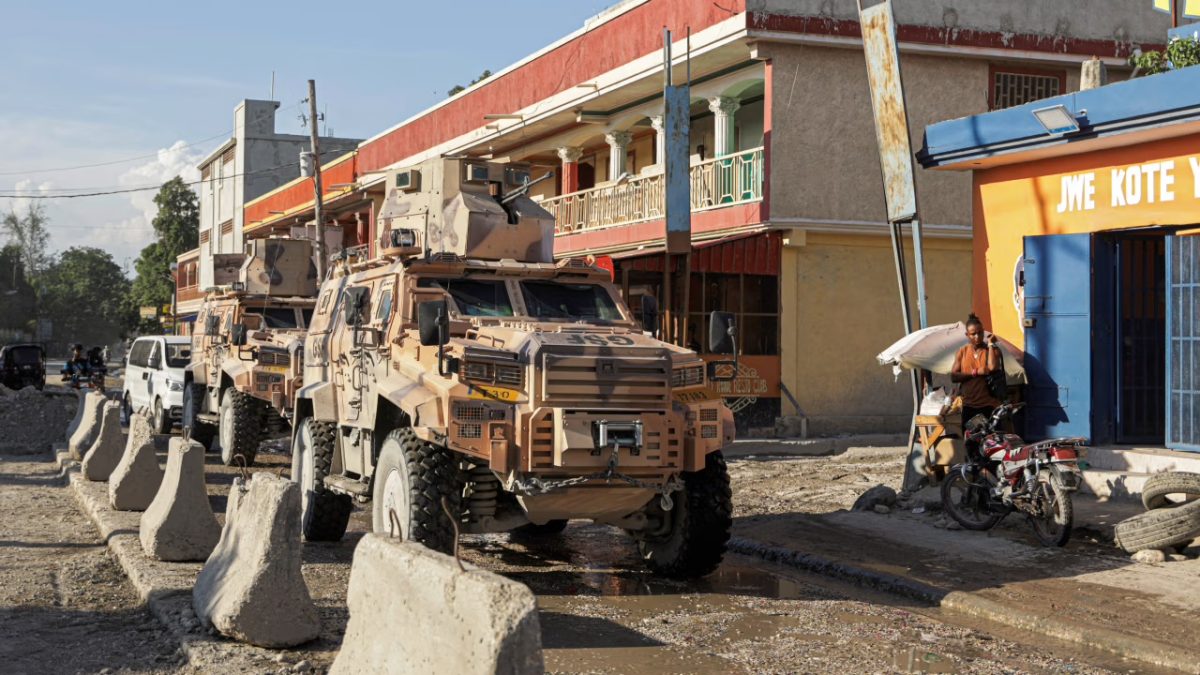
Haiti's Prime Minister Alix Didier Fils-Aimé has praised the commitment of Salvadorean forces in the fight against gangs after a joint strike on a house allegedly used by the leader of the 400 Mawozo gang. El Salvador's President Nayib Bukele had earlier announced that a joint task force had destroyed what he described as the house of the gang leader known as Lanmò San Jou and the 400 Mawozo gang's headquarters. Local media reported that the strike was carried out in the early hours of Sunday. Fils-Aimé said on Tuesday that the two countries would keep working together, along with the UN-backed Gang Suppression Force, to regain control of the territory and restore state authority.
Supporters of the operation point to the threat the gang poses and to the sacrifice already made. The 400 Mawozo is Haiti's largest criminal gang and is infamous for carrying out kidnappings for ransom. A small contingent of Salvadorean troops has been in Haiti since January 2025 as part of a multinational force deployed to suppress gang violence, and four Salvadorean air force technicians working with the force were kidnapped after an ambush on 18 October. Last month Bukele sent an extra 2,000 soldiers to rescue them. Bukele's post on X, accompanied by video of several helicopters firing on a large complex with dozens of people running from the property, said we kept our promise, and the alleged gang members ran away without even trying to fight. He has pointed to his own crackdown on gangs in El Salvador, writing that we have already finished with the gangs in El Salvador and we can finish with you too.
The picture is much less clear than the announcements suggest. The BBC has not been able to verify the video posted by Bukele, or whether the property was indeed the headquarters of the 400 Mawozo. Local media reported that as many as 20 people were killed in the strike, and that Lanmò San Jou, whose real name is Wilson Joseph, was not at the property at the time. Fils-Aimé did not give further details of the operation or the number of casualties. The attack also appears to have followed a social media exchange in which a user on X urged Bukele to attack the complex and he replied, where is that house, give us the exact address and we'll destroy it. That post has since been taken down, apparently for violating X's rules. Critics also say that Bukele's thousands of additional troops are not all working within the command structure of the Gang Suppression Force, which has raised questions about the operational legitimacy and legality of their actions in Haiti.
What happens in Haiti matters across the Caribbean. The country's gangs have driven a security crisis that has led to a multinational force being deployed, and the involvement of a foreign government acting with the Haitian authorities but not entirely within the UN-backed command raises the question of how such operations should be governed. For the Salvadorean air force technicians who have been missing since 18 October, and for their families, the stakes are immediate. For Haitians, the issue is whether strikes on compounds will restore state authority or deepen the violence, since the number of casualties is not known and the target apparently escaped.
Haiti's government has welcomed a Salvadorean strike it calls part of a shared fight against gangs. The evidence for what was achieved is thin, and the questions about legality remain open. Whether the operation weakens the 400 Mawozo or simply escalates the conflict will become clearer in the coming weeks.