Fresh attacks on oil tankers in the Strait of Hormuz and a drone alert at a major gas field in northern Iraq have heightened concerns over the security of energy infrastructure across the Middle East, as tensions between the United States and Iran persist despite diplomatic efforts to end their conflict. Al Jazeera reported that the incidents on Monday came as the US reinforced its military presence in the region, with the aircraft carrier USS Theodore Roosevelt arriving and bringing to three the number of American carriers operating in the US Central Command area.
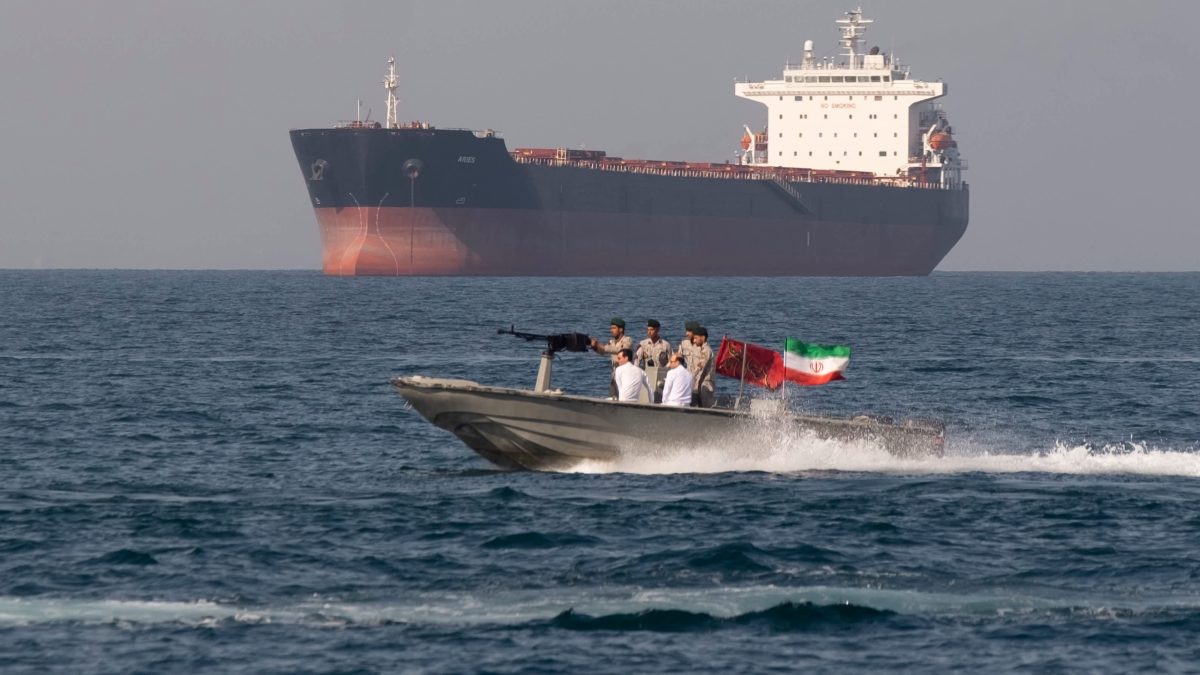
Iran's Islamic Revolutionary Guard Corps (IRGC) Navy said on Monday that two oil tankers struck naval mines and caught fire while trying to cross the southern part of the strait through a route Tehran considers unauthorised. Separately, Iran's regular navy said another tanker had caught fire and been immobilised after hitting a mine in restricted waters east of the strait. These claims could not be independently verified, and Iranian authorities did not identify the vessels involved.
The United Kingdom Maritime Trade Operations (UKMTO) agency separately reported two tanker attacks in the strait on Monday. In one, a tanker was disabled and an engine room fire broke out after an attack seven nautical miles (13km) north of Khasab, Oman. Earlier, the agency said, another tanker had been struck by an unidentified projectile while travelling out of the strait, also causing an engine room fire. No casualties were reported. It was unclear whether either incident was connected to the mine strikes claimed by Iran, which highlights how limited the public information is about who is doing what in these waters.
The incidents follow a series of attacks on commercial vessels in recent weeks. The International Maritime Organization recorded 136 security incidents involving vessels in the Strait of Hormuz and the wider Middle East between 1 March and 11 November, including 35 in October alone. That works out as a steady drumbeat of incidents rather than isolated events, and the October figure suggests the pace has not slowed as the conflict has dragged on. For shipping companies and insurers, the key concern is predictability: they can plan around known risks but struggle when attacks come from mines, projectiles and other means, and when the sources of danger are contested.
The Strait of Hormuz matters because of what passes through it. It is a narrow waterway at the mouth of the Gulf and a route for a significant share of the world's seaborne oil, which is why disruption to it has consequences far beyond the region. Al Jazeera's reporting describes diplomatic efforts to end the war and reopen the strait as stalled, indicating that normal commercial traffic has not been restored. Even without precise figures in the reports, it is clear that mines and attacks raise costs and risks for every ship that tries to pass.
Alongside the maritime incidents came another alert in northern Iraq. In Iraq's semi-autonomous Kurdistan region, warning sirens sounded after a drone flew over the Khor Mor gas field on Monday, Reuters reported, citing two security sources. There were no immediate reports of a strike or damage. The incident was notable because production at Khor Mor had already been halted the previous week following a suspected drone attack that started a fire and disrupted 2.8 gigawatts of electricity generation, according to Dana Gas, one of the facility's operators based in the United Arab Emirates.
Khor Mor is a major source of natural gas for power generation in the Kurdish region, so interruptions have a direct effect on electricity supply for residents and businesses. The field has faced repeated attacks that Iraqi Kurdish officials have blamed on Iranian-backed armed groups. No group was identified as responsible for Monday's drone overflight. The episode shows that the energy dimension of the conflict extends beyond the sea lanes to onshore infrastructure, where drones can create disruption with relatively small and cheap equipment.
The arrival of the USS Theodore Roosevelt adds to an already substantial US presence. A US official confirmed the carrier's arrival to Al Jazeera, bringing the number of American aircraft carriers in the Central Command area to three. A larger naval presence can deter attacks and offer protection for shipping, but it can also raise the risk of confrontation, particularly in confined waters where mines and fast-moving incidents are a factor. The reports do not say how Iran responded to the carrier's arrival, but the reinforcement signals that Washington expects the standoff to continue.
The diplomatic picture is difficult. Al Jazeera's coverage of the Iran war this week included remarks by US Vice President JD Vance rejecting a "forever war", a phrase that suggests an American political desire to avoid open-ended conflict. Yet the military build-up and the continuing attacks on shipping show how hard it is to translate that preference into a settlement. Among the unresolved issues is the reopening of the strait itself, and the reports show a dispute over which route through the waterway is authorised, since Tehran treats one southern route as unauthorised.
For the global economy, sustained insecurity around Hormuz means higher shipping and insurance costs, and the possibility of price spikes if disruptions worsen. For countries in the region, from Oman to Iraq, the danger is that infrastructure becomes a target and civilians lose power supplies. For energy-importing states in Asia and Europe, it reinforces the argument for diversification and reserves, though those measures take time.
It is also worth considering how the different kinds of incident interact. Naval mines, projectiles and drones are different tools, but they produce a similar effect: they raise the perceived risk of operating in the area, and perceived risk is often enough to change behaviour. Shipowners may reroute or delay voyages, insurers may raise premiums or restrict cover, and crews may become reluctant to sail. A strike does not have to sink a vessel to impose costs; a fire in an engine room, as reported in two of Monday's incidents, can disable a ship, endanger its crew and force costly rescues and repairs. The absence of casualties in the UKMTO reports is fortunate, but it does not mean the risk is small.
On land, the Khor Mor field illustrates a similar logic. A drone overflight that causes sirens to sound and workers to shelter can interrupt operations even if nothing is hit, and a field that has already been shut down by a suspected attack is vulnerable to further delays in restarting. The reported loss of 2.8 gigawatts of electricity generation after the earlier attack gives a sense of the power at stake for people in the Kurdistan region, who depend on the field for gas supplies to their power plants.
The next steps to watch are whether the incidents of the past week lead to formal investigations or attributions, whether there is movement in the stalled diplomacy, and whether the three-carrier US presence changes Iran's behaviour. For now, the picture is one of persistent danger: ships catching fire at sea, a gas field shut down and sirens sounding, and no clear path yet to the diplomatic agreement that would end the war and reopen the strait.