The United States-backed Board of Peace has delivered a grim assessment to the United Nations Security Council, warning that conditions in Gaza threaten the year-old truce between Israel and Hamas. In its latest report, submitted on Tuesday, the board cautioned that without immediate steps to implement the 2025 ceasefire deal, the truce may be on the brink of collapse. "The distance between what has been agreed and what is happening on the ground nonetheless remains the principal risk to the process," the report said, according to a copy obtained by the Associated Press. The board was created in 2025 at the behest of US President Donald Trump to oversee the ceasefire deal and reconstruction in Gaza, and its warning is notable because it comes from the body charged with making the arrangement work.
The ceasefire formally began on 10 October 2025, and the board's mission was laid out in a 20-point Gaza peace plan as well as the ceasefire deal itself. Trump first proposed the board in September 2025, saying it would stabilise Gaza and ensure lasting peace. The plan envisioned steps for each side that could eventually create a "credible pathway" to Palestinian statehood. Attacks have nevertheless continued. Al Jazeera reports that in recent weeks Israel has carried out deadly air strikes, and the BBC says Israeli air strikes and other attacks have taken place almost every day despite the truce. The war began after the Hamas-led attack on southern Israel on 7 October 2023, in which about 1,200 people were killed and 251 taken hostage, and more than 74,000 Palestinians have since been killed, according to Gaza's health ministry, whose figures the UN considers reliable.
The board's report is unusually frank about shortcomings on both sides. It said that Israel and Hamas have fallen far short of the commitments they made, and warned that "a ceasefire that delivers nothing visible cannot be sustained indefinitely." It added that "should it collapse, there would be no road map to return to, no administration to deploy and no enabling environment to rebuild." The report specifically noted that Israel has blocked the technocratic civil administration body created to run Gaza on an interim basis, and that the absence of decisions by the Israeli government on the training, deployment and return of civilian police to Gaza "continues to impede full implementation of the Comprehensive Plan." It called on Israel to take those decisions "without delay."
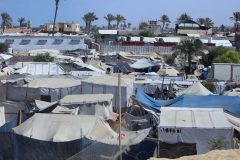
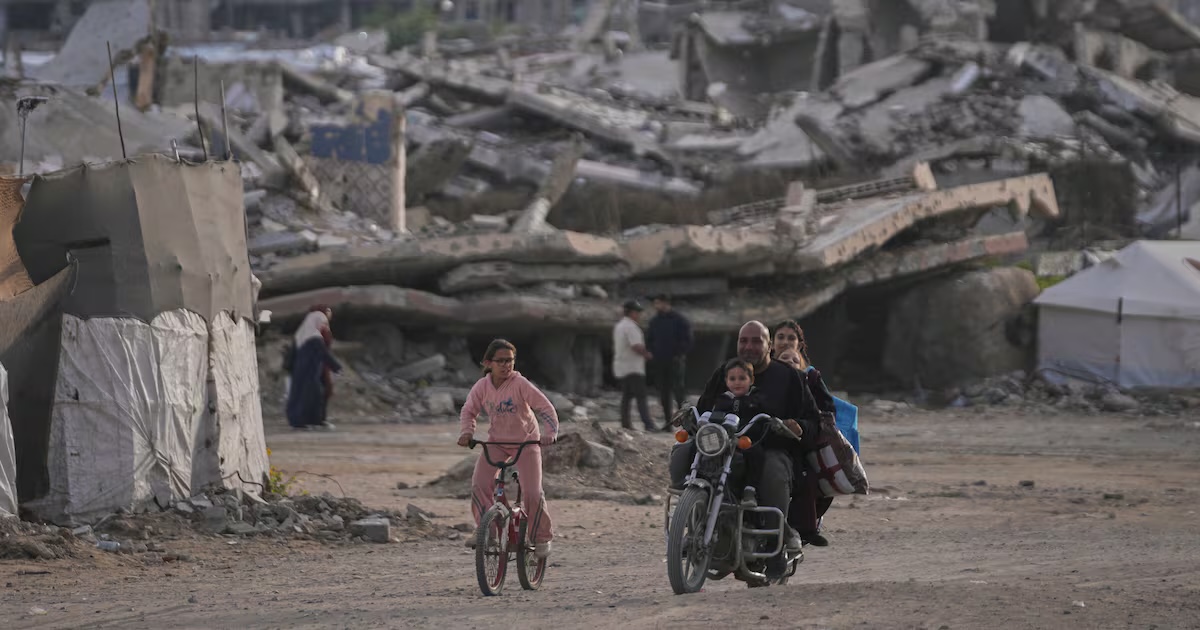
The humanitarian picture explains the urgency. The board said restrictions imposed by Israel on the entry of supplies and equipment, compounded by funding shortfalls, continued to impede preparedness and response efforts ahead of winter, and that the widespread devastation has left Palestinians facing "another winter in tents and rubble". Earlier this month, a heavy storm damaged tents and caused widespread flooding in the territory. The UN Office for the Coordination of Humanitarian Affairs said the flooding and a landslide led to a number of deaths, thousands of damaged shelters and the suspension of critical services. For people living in tents, the arrival of cold and rain is a direct threat, not simply a political talking point.
Governments have begun to speak up. The foreign ministers of the United Kingdom, Australia, Canada and Italy issued a joint statement urging Israel to "allow immediate, rapid and unimpeded humanitarian access throughout Gaza", where they say the situation is "dire". They said 150,000 tents and other vital supplies are being held at the border, and that the situation "is entirely reversible" with time to act before winter fully sets in. The European Union issued a similar statement on Saturday expressing its "grave concern" over what it called the "persistent and devastating humanitarian crisis" and urged Israel to comply with international law.
Israel's position differs. The Israeli military authority that controls the Gaza crossings said it is coordinating with the Board of Peace and the UN on a winter plan, and that 93,000 tents and 8,600 aid trucks with winter supplies have entered the territory. It added that reconstruction "can only begin after Hamas fully disarms." This disarmament condition is central to the deadlock: Israel argues that it cannot allow large-scale rebuilding or withdrawal while Hamas retains weapons, while the board and many international governments argue that Israeli obstruction of the civil administration, police deployment and aid is preventing the conditions in which disarmament and security arrangements could be agreed.
The board's answer is reciprocity. "Neither party may treat the other's delay as license for its own inaction," its report said, "and together these obligations are the only route to Israeli withdrawal and reconstruction at scale." That wording sets out the sequencing problem plainly: each side points to the other's failures as justification for its own, and the board argues that this logic leads nowhere. It called on the Security Council to press both sides to fulfil their agreements, and said that the outcome must establish a credible path toward Palestinian statehood and self-determination, with no unilateral actions permitted to derail that goal.
The Security Council now has to decide what to do with the warning. A body that has often been divided over Gaza is being asked to put pressure on both parties and to back an arrangement created at Trump's initiative, which may complicate consensus. Yet the board's own language leaves little room for delay. If the truce collapses, it says, there will be nothing to return to, which means the cost of inaction falls not only on Gaza's residents but on every government that has invested in the framework.
For now, the situation remains a test of whether a ceasefire can survive when its political promises are not kept. A year after it began, the truce has held in name while attacks continue, aid is contested and the interim administration has not been deployed. The board's warning offers a clear list of what needs to happen: Israeli decisions on the civil administration and police, an end to aid restrictions, funding to meet winter needs and movement by Hamas on its obligations. Whether the Security Council and the parties act on it before winter deepens will determine whether Gaza's ceasefire becomes the basis of a settlement or a pause before more war.