Kuwait's army said on Tuesday that the Gulf country is under attack by drones, as the United States and Iran traded blows in an escalation that has deepened fears for shipping in the Strait of Hormuz and for the prospects of a peace deal. In a statement on X, the Kuwaiti military said that "any explosion sounds heard are the result of air defence systems intercepting hostile attacks" and urged the public to follow safety instructions. It did not say where the drones came from or whether there were casualties or damage. The reports come from Al Jazeera and AFP.
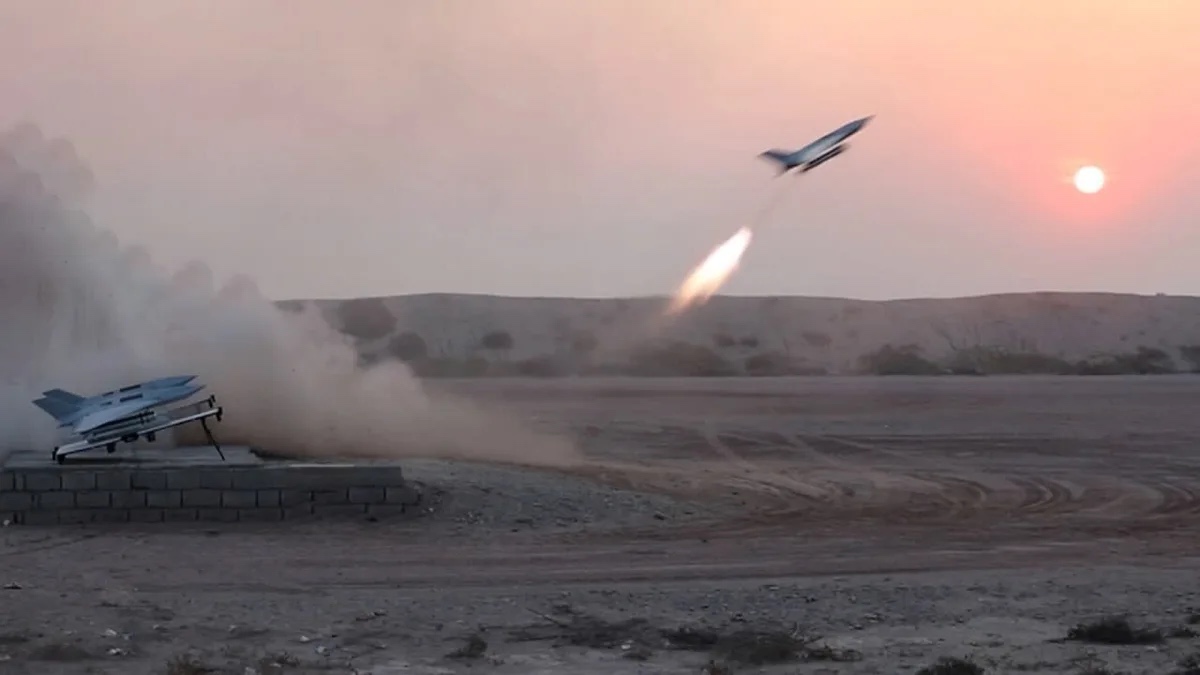
The latest round began in Bahrain. Iran's Islamic Revolutionary Guard Corps said it carried out a "precision operation" with drones on a US-operated radar system at the Sheikh Isa air base, in retaliation, it said, for "repeated violations of Iranian airspace by US military drones". US Central Command said the Iranian drones aimed at the radar "were intercepted without any damage to US equipment or personnel". Bahrain, which hosts the US Navy's Fifth Fleet, said its air defences intercepted the attack, and blasts were heard over the capital, Manama, according to AFP. It was the third Iranian drone attack on Bahrain in five days, after a lull of several weeks. Friday's strike was the first Iranian attack on a Gulf country since early September, AFP reported, and Reuters said it came after a Bahraini court sentenced 64 people, mostly Shia clerics, to life in prison for allegedly colluding with Iran.
The US responded on Qeshm, an Iranian island in the Strait of Hormuz. A US official told Al Jazeera that the strike hit a missile launch site, in response to Iran's earlier attack on the base in Bahrain. Ahmad Nafisi, the deputy governor of Iran's southern Hormozgan province, told the state news agency IRNA that the American attack on locations on Qeshm "caused no damage to residential, commercial, or infrastructural areas", that the situation was under control and that relief agencies were on full alert. IRNA reported five to six explosions on the island on Tuesday evening. Neither side's account of the damage has been independently verified in the reports.
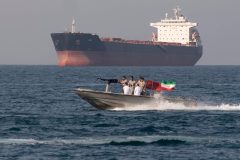
The wider conflict is far from a localised exchange. Al Jazeera said the war began on 28 February, and since then Iran has tried to restrict traffic through the Strait of Hormuz, which normally carries about a fifth of the world's oil, insisting that ships use only routes it has authorised. The United States has responded with a naval blockade of Iranian ports and has escorted tankers. On Monday, a third US aircraft carrier, the USS Theodore Roosevelt, arrived in the Middle East, a sign of how much military weight is already in the region.
Shipping is bearing the brunt. Iran's armed forces said three oil tankers struck naval mines while trying to cross the strait on Tuesday, while the US military says it has cleared the main routes of mines. Separately, the Panamanian-flagged tanker Tara Gas was struck on Monday about seven nautical miles north of Khasab, in Oman, causing a fire in its engine room, according to the security firm Vanguard. Vanguard and India's ports minister initially said all 25 crew, 24 of them Indian, were safe. But the UK Maritime Trade Operations agency said the vessel was hit a second time and the crew were "currently unaccounted for". India's ports minister later said the crew had abandoned the vessel after the second attack and that one Indian sailor was missing. A second Panamanian-flagged tanker, the On Phoenix, was hit by an unidentified projectile off Oman's coast on Monday.
For India, the human dimension is acute. Twenty-four of the 25 crew aboard the Tara Gas are Indian, and the missing sailor has turned a shipping incident into a matter of consumer concern at home. Seafarers from India and other countries crew a large share of the world's merchant vessels, which means that attacks on shipping in the Gulf region tend to carry casualties for countries far from the conflict. The details of the second attack on the Tara Gas, and who carried it out, were not specified in the reports.
Diplomacy continues alongside the violence. Iran's foreign minister, Abbas Araghchi, and his Omani counterpart, Badr Albusaidi, met in Muscat to discuss safeguarding shipping and diplomatic options, according to Omani news agencies. Oman has played a mediating role in Gulf diplomacy, and the talks suggest that channels remain open. Al Jazeera's coverage of the day also included the headline that the Gulf Cooperation Council's head, Qatar and the United Arab Emirates condemned the Iranian attacks on Kuwait and Bahrain, showing that Gulf states are increasingly drawn into a conflict they did not start.
The calendar adds pressure. US President Donald Trump is due to hold a three-way summit on Thursday in China with Chinese President Xi Jinping and Russian President Vladimir Putin, and the Iran war is on the agenda. That puts the fighting in the Gulf into the middle of great-power diplomacy: Any understanding on the margins of the summit could shape whether the exchanges around Bahrain, Kuwait and Qeshm calm down or intensify.
For ordinary people in the Gulf, the immediate concern is safety. Kuwait's army asked residents to follow safety instructions, and explosions heard in Manama and on Qeshm are reminders of how close the conflict is to civilian areas. For the global economy, the question is whether oil and gas can keep moving through a narrow waterway where mines, drones and missiles have all been reported in a single week. And for diplomats, the challenge is to turn contacts in Muscat into something that can stop the tit-for-tat attacks.
The reports leave several questions unanswered: where the drones over Kuwait came from, how much damage was done on Qeshm, what happened to the missing Indian sailor, and who struck the tankers. What is clear is that, with peace talks stalled and a third US carrier on station, the margin for miscalculation is thin. The coming days, including the Thursday summit in China, will test whether the region is heading toward a negotiated end to the war or into another phase of escalation.