Wars are usually described in terms of towers hit and territory held. The United Nations tends to describe them differently: in tents, in vaccination counts, in how many people were forced to leave in a single week. This Thursday, two of those UN accounts landed side by side, one from Yemen and one from Gaza, and together they paint a picture of a region where ordinary people are once again carrying the heaviest load.
Riyadh, and a war that is no longer far away
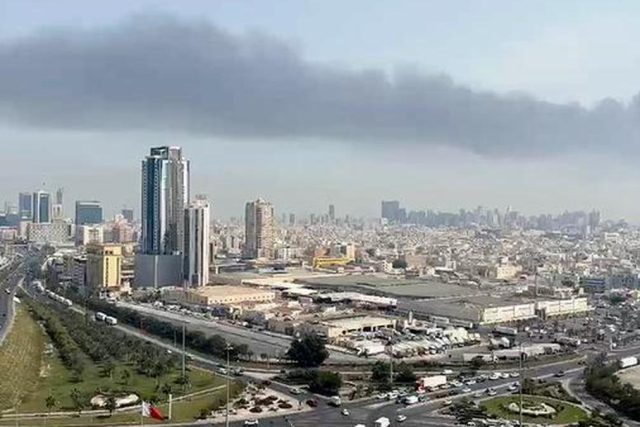
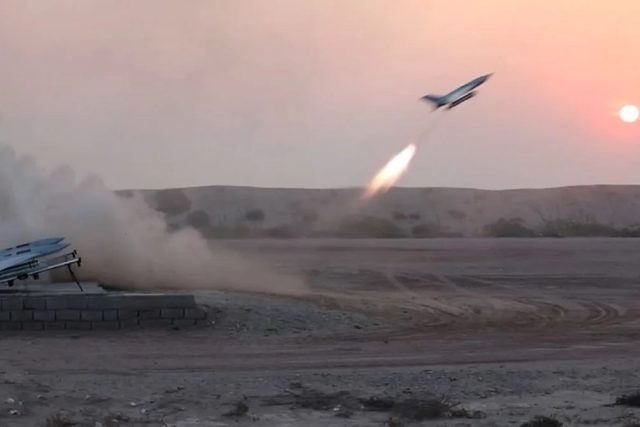
The headline event of the day was a strike on the Saudi capital. Reporting from a news roundup says the Houthis, also known as Ansarullah, attacked and damaged the Public Investment Fund Tower in Riyadh, the city’s tallest building, with no casualties reported. The Times of Israel separately reported that the Houthis claimed cruise missile attacks on Riyadh’s King Khalid International Airport and financial center, and that Saudi authorities said a tower in the city was hit. Details differ between outlets and several of the claims come from the Houthis themselves, so they should be read as claims.
The group also said Saudi airstrikes killed at least ten people in Sanaa over the previous two days. That, too, is unconfirmed.
What is clear is the direction. The war inside Yemen, between Saudi-backed government forces and the Houthis, has reached a point where the Saudi capital is being targeted and Sanaa is under bombardment. For people who had hoped the long lull of recent years meant something permanent, the past months have been a hard lesson.
The numbers behind the headlines
For a sense of how that feels at ground level, look at what the International Organization for Migration told the UN. More than 356,000 people have been displaced in Yemen in the last three and a half months. The governorate of Taiz hosts the largest number of displaced people, about 145,000.
To put that in perspective, 356,000 is roughly the population of a major city. Imagine every resident of a place like that packing what they could carry in under four months. That is the scale of the disruption, and it is happening in a country that was already in the middle of one of the world’s largest humanitarian emergencies.
Health on the front line
The UN’s update contains a mix of cautious good news and clear warnings, which feels honest for a situation this complicated.
On the encouraging side, measles and rubella vaccination campaigns have reached over nine in ten children. Cholera infections are falling in the five most-affected governorates.
On the worrying side, health partners say 73,000 children could not be vaccinated. A cholera outbreak is growing in Tarim. And the UN’s humanitarian office warns that funding cuts have disrupted food support for more than four million people.
That last point deserves a pause. A shortage of money does not sound as dramatic as a missile strike, but for a family relying on a monthly food ration, it can feel just as sudden. Aid workers have been saying for some time that the gap between needs and resources is widening. In a place where displacement keeps pushing people into crowded shelters, the risk of disease rises exactly when the ability to respond is shrinking.
Gaza: moving again, with very little room left
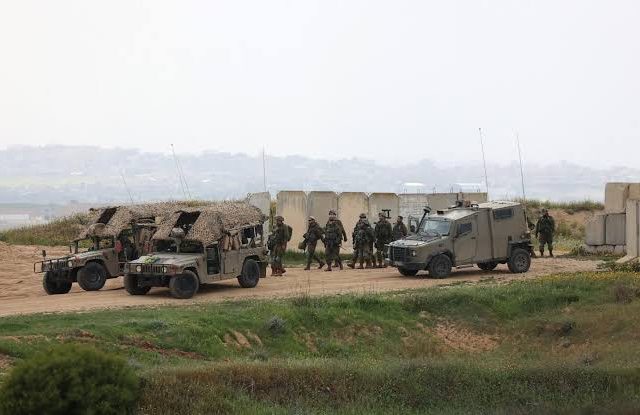
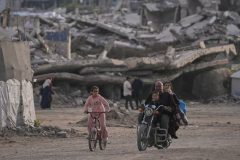
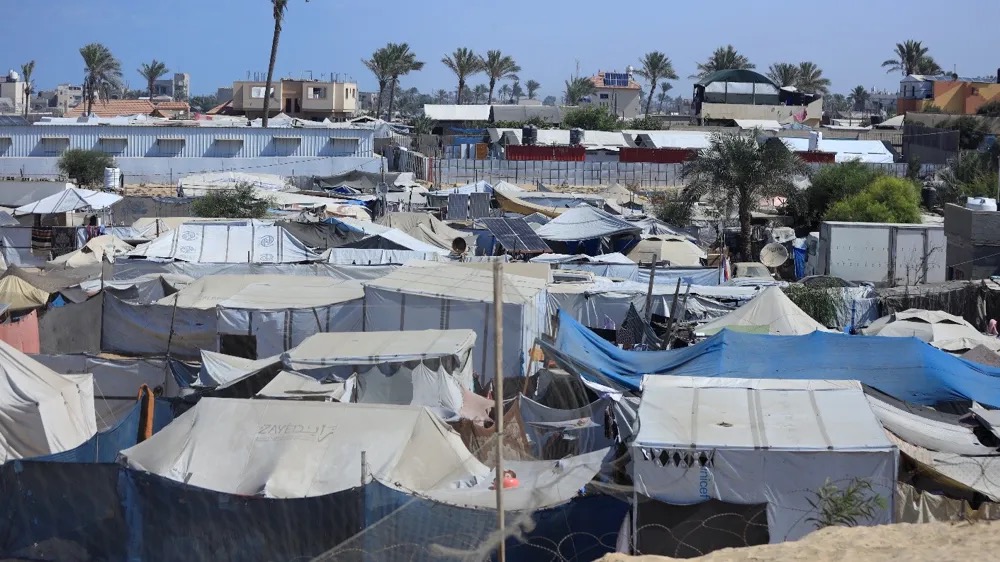
Hundreds of miles away, the same UN update describes a different crisis with a painfully familiar shape. The UN’s aid coordination office, OCHA, reports that Palestinians are fleeing central Gaza’s Deir al-Balah area, heading west and southwest, after an Israeli military operation beyond the so-called “yellow line.”
About 18,000 people were believed to be in the affected area, which covers roughly 2.5 square kilometers, and about 4,000 of them were in displacement sites. Aid teams warned that rainwater and sewage basins in the area could overflow if damaged or blocked, a risk that sounds technical until you picture a flooded camp in the cold and wet of late November.
OCHA also noted that there were six Israeli displacement orders in the same area between December 2023 and June 2025. In other words, many of the people moving now have almost certainly moved before. Repeated displacement does something particular to families: each time, there is less left to carry and less energy to start again.
The UN’s message was direct. Civilians who flee, it said, “must be allowed to return” as soon as possible. On Thursday, Israel’s military also said it had concluded its “activity against Hamas infrastructure,” according to a news roundup, though what that means for the people displaced is not yet clear.
Two crises, one pattern
It would be too neat to say Yemen and Gaza are the same story. They are not. The actors differ, the histories differ and the causes differ. But there are threads that connect them, and they are worth naming.
First, civilians bear the cost long after the military objectives shift. Each new operation or offensive produces a fresh wave of people who have to find shelter somewhere.
Second, health and sanitation systems fail quietly. Outbreaks of cholera or the risk of sewage overflow do not make the nightly news, yet they can harm more people than any single strike.
Third, funding is the invisible fault line. Humanitarian agencies repeatedly warn that cuts leave them unable to meet needs they can plainly see.
Fourth, the regional picture is increasingly connected. Tensions between the United States and Iran, Houthi attacks on Saudi targets and Israeli operations in Gaza do not sit in separate boxes. Events in one theater can raise the stakes in another, and diplomats in several capitals are juggling all of them at once.
What aid workers say they need
The humanitarian asks in these updates are not complicated, even if delivering them is.
Safe, unimpeded access for aid workers and supplies, including medicine, food, clean water and shelter materials.
Protection for civilians and civilian infrastructure, including the drainage and sewage systems that keep camps livable.
The right of displaced people to return home as soon as conditions allow.
Predictable funding, so that food support and vaccination campaigns do not stop halfway.
None of these requests is controversial in principle. The difficulty is that they depend on decisions made by governments and armed groups with other priorities.
Why this deserves your attention
It is easy, when a week brings a three-leader summit, a landmark court ruling and talk of war in the Horn of Africa, to let a UN displacement update slide past. But these numbers are the human ledger of the same events that fill the headlines. Every strike on a tower and every operation beyond a line on a map eventually shows up as families on the road.
If there is a hopeful note, it is the vaccination figure. Nine in ten children reached, in the middle of a war, is the result of people doing difficult and often dangerous work without much applause. It is a reminder that alongside the destruction there is also steady, stubborn care.
The world will keep debating who is right and who is wrong in these conflicts, and those debates matter. But for a child in Taiz or Deir al-Balah, the question is simpler. Is there a dry place to sleep tonight, and will someone bring food tomorrow? Keeping that question in view is, in the end, what good reporting on a war should do.