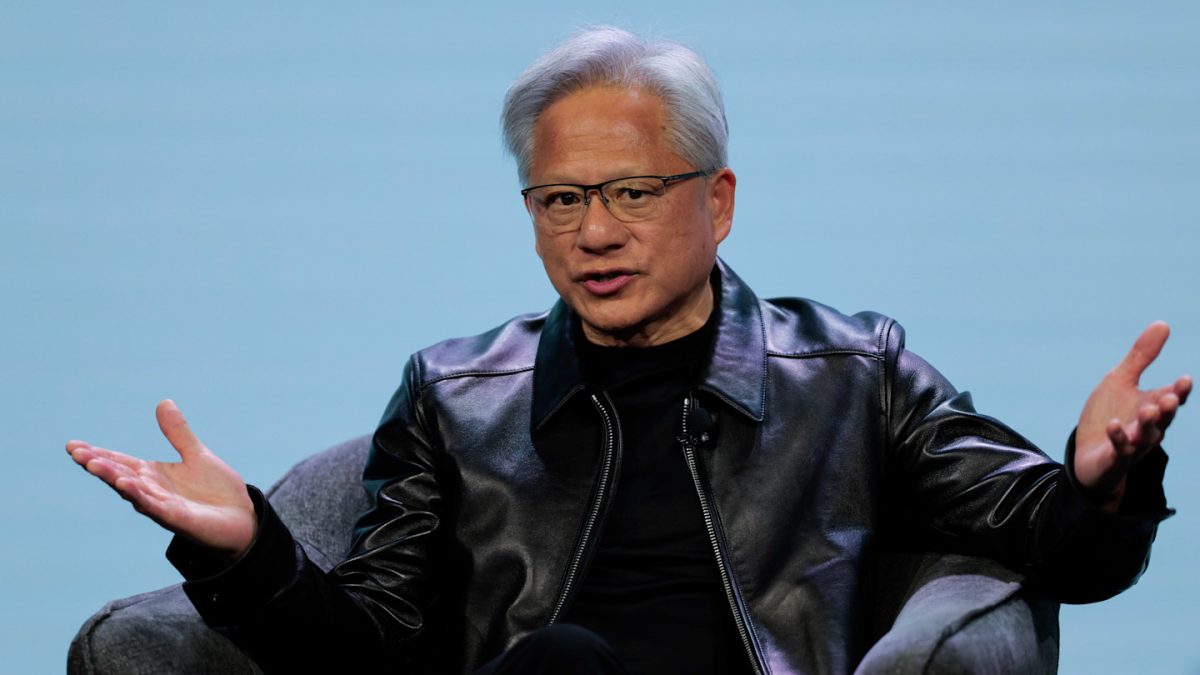
Nvidia has reinstated Jensen Huang as chief executive with immediate effect, completing what analysts are calling one of the most dramatic corporate reversals in memory. The announcement on Monday, 23 November 2026, came just 11 days after Huang resigned from the company he co-founded following reports of extramarital affairs, one of them with a businesswoman US officials allege to be a Chinese intelligence asset. Within hours, Nvidia's market value rose by nearly $1 trillion, and the surge pulled stock markets higher around the world.
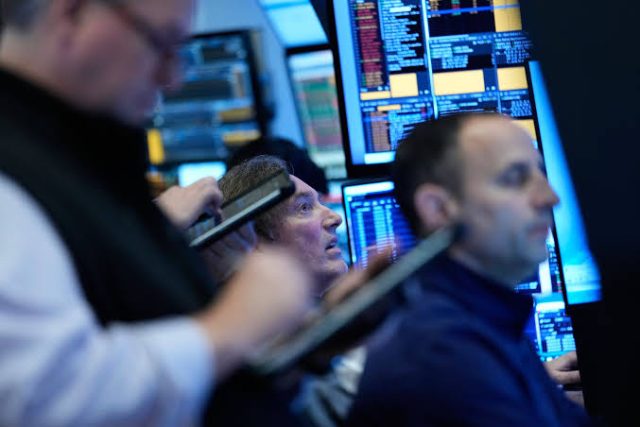
The numbers were striking. Nvidia shares rose by more than 31%, lifting the tech-heavy Nasdaq by 6.5% and the S&P 500 by 4.75%, according to the BBC. Other chipmakers followed: Micron Technology jumped 19% and AMD rose nearly 7%. Tesla climbed by almost 11.5%, while Amazon was up nearly 3.5% and Apple and Microsoft each rose by less than 2%. The jump took Nvidia's market value back towards $4 trillion, yet its share price remains about 21% below where it stood a month ago. A sharp fall began on 4 November, after the Democrats' midterm election victory sparked fears of tougher AI regulation and a broad tech sell-off. On Friday alone, Nvidia shares fell 13.7% as tech stocks tumbled and as Reuters reported, a claim the BBC has not confirmed, that the company was being investigated by the US Securities and Exchange Commission over its accounting practices.
The path to this point was short and chaotic. The New York Times reported on 29 October that Huang had conducted a relationship with Alice Huang, who is no relation. US officials allege that the businesswoman, who was associated with the Singapore-based company Megaspeed, is an asset of Chinese intelligence. Huang admitted to having been unfaithful to his wife and apologised for hurting his family. Then came reports of a second affair, with Kimberly Powell, a Nvidia vice president of healthcare who has worked at the company for 18 years. That prompted a board meeting and the announcement on 12 November that Huang was stepping down.
He had barely gone before a "Bring Jensen Back" campaign was launched, reportedly by current and former Nvidia employees, partners, shareholders and supporters. Huang said he would be "honoured" to return if the board asked. At first the board showed no interest: last Tuesday it explicitly said it did not intend to reinstate him, and interim management had suggested shifts in strategy away from the Huang era, including a more "disciplined and selective" approach. All of that was swept aside on Monday. Board chairman Harvey C Jones said in a statement: "The Board believes Jensen is the right person to lead Nvidia, and that his reinstatement is in the best interests of our stockholders, employees, partners and customers." The board said its decision followed "a series of discussions and meetings" and was unanimous.
The statement also contained a line that explains much of the controversy: the board said it had received input from senior levels of the US government and was confident that Huang's reinstatement posed no national security risk. Within the hour, President Donald Trump told CNBC he had spoken to Nvidia's board and "convinced" them to bring Huang back, saying he "made the deal". "They did ask for assurance on the national security threat," Trump said. "And we gave them assurances at least with everything we know. And we know a lot." He added: "People say, is it a threat to have him? No, it's a threat to lose him." BBC economics editor Faisal Islam wrote that Trump's "You're unfired" message to the board changed the decision, and that such a reassurance on national security could only have come from the White House.
Why was Huang considered too big to fire? The BBC's reporting offers several answers. Nvidia dominates the market for the microchips that power artificial intelligence and is at the centre of the AI race between the US and China. Islam notes that the company generated more than $400 billion in sales this year, compared with $27 billion four years ago. Huang has described AI as a "new industrial revolution" on a par with electricity, and Nvidia's customers include Google, Meta, Amazon, Microsoft, SpaceX, Tesla, OpenAI and Anthropic. Nvidia's stock market valuation has also served as a form of financing for other companies building data centres, through what Islam calls a complex web of loans, guarantees and shareholdings. His exit raised doubts about the fragility of that system, which is why markets reacted so violently in both directions.
Huang's personal story adds to the picture. Born in Taiwan in 1963, he moved with his family to the US west coast at the age of nine, studied electrical engineering at Oregon State University and then at Stanford, and met his wife, Lori Mills, as lab partners at college. They married in 1985, eight years before he founded Nvidia, and their two children, Madison and Spencer, both now hold senior roles at the company. Bloomberg's Billionaires Index put his fortune at close to $200 billion earlier this year, though it has since dropped to around $105 billion. Stephen Witt, author of a biography of Huang, told the BBC he is "a tech visionary of the likes of Steve Jobs", but also a demanding boss with "a level of arrogance" and "a level of self-deception".
The reaction in Washington has been fierce and bipartisan. Hakeem Jeffries, expected to lead the House as Speaker when Democrats take control in January, called the decision "indefensible, irresponsible and incomprehensible" and promised "a swift, thorough and wide-ranging investigation". Senator Elizabeth Warren, set to chair the Senate Banking Committee, called the reinstatement "reckless" and demanded to know what "input" was given by which officials. Republicans also objected: Representative Don Bacon, who chairs a House subcommittee on cyber security, said Nvidia "should have moved on without Huang", and Senator Tom Cotton, chair of the Senate intelligence committee, said the controversy "is just the tip of the iceberg". Huang is due to give a closed-door interview to three House committees on 1 December and has been asked to testify before the Senate Banking Committee two days later.
Trump's own financial interests have become part of the story. A BBC review of the president's financial disclosures for the last two years shows he bought Nvidia shares worth between $23 million and $86 million, in 85 separate purchases across several accounts, and sold some shares in 19 transactions worth between $3.5 million and $10.2 million. Trump and the White House have repeatedly rejected claims that he has profited from the presidency; the president says "everybody" is making money from rising stocks and that he does not make decisions on his investment accounts, and the White House notes that his businesses are in a trust managed by his sons.
For investors, the immediate relief is clear. AJ Bell's Dan Coatsworth called it "the biggest corporate U-turn in living memory", and XTB's Kathleen Brooks said it showed Huang has "a talismanic influence over the sector". But Coatsworth also warned that Huang may take a more conservative approach going forward, and that his every move will now be scrutinised. A separate independent investigation into Nvidia's compliance with export controls is still under way, and the Megaspeed blacklisting announced the same day shows the scandal is far from over.
The reinstatement settles who runs Nvidia, but not the questions that surround it: how far the company's valuation depends on one man, how much influence the White House exerted on a private company's board, and whether national security concerns have been addressed or merely deferred. Congress will start asking in earnest next week.