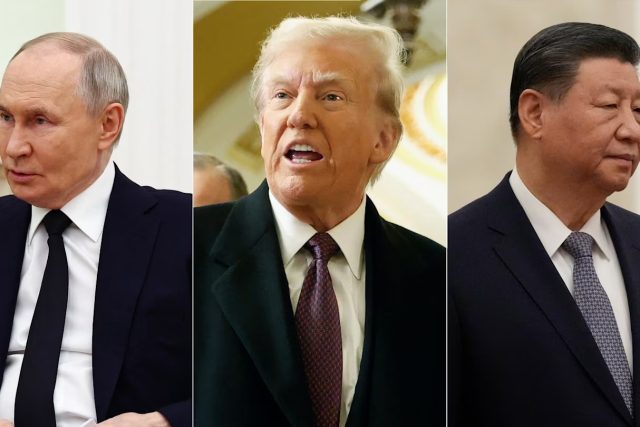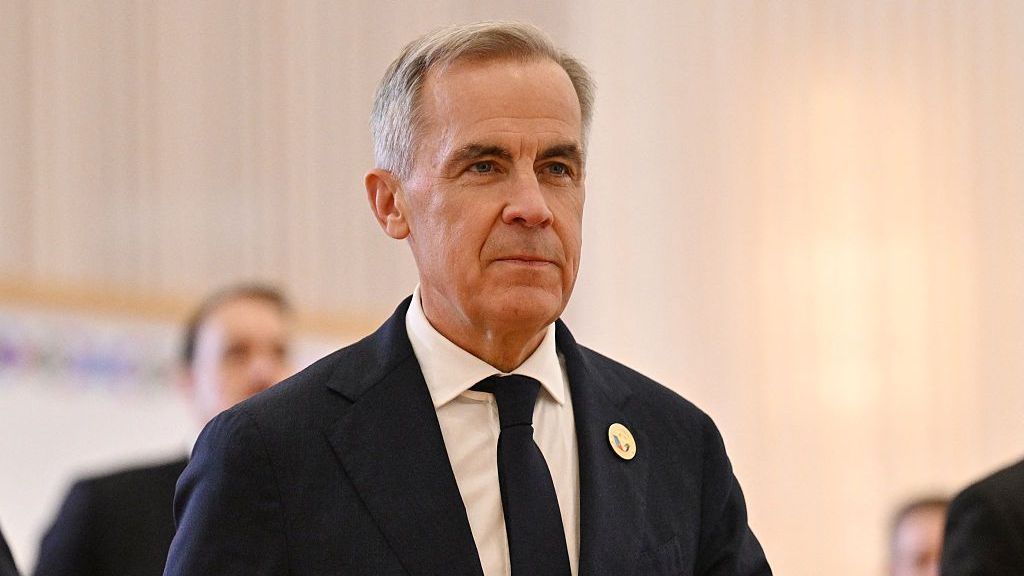
Canada's car industry has become one of the clearest stress tests for Ottawa as it grapples with US tariffs on the sector, and Prime Minister Mark Carney has now signalled that he is looking to China as part of the solution. Carney is in China for the Asia-Pacific Economic Cooperation summit, known as Apec, and on Tuesday he met Chinese President Xi Jinping for their second head-to-head in less than a year. The two leaders talked about the importance of developing their relations, and Carney said they had agreed to further tariff cuts. Neither side mentioned vehicles specifically, according to the BBC, though analysts suggest the issue was prominent in both leaders' minds.
The prime minister had been more direct earlier in the week. Speaking to reporters in Cambodia, Carney said Canada could turn to European and Asian carmakers to rescue its auto manufacturing sector if a trade deal with the United States could not be reached. If Canadian auto workers are not fully utilised in a North American context, he said, "that provides other opportunities." He added: "Canada's going to move forward either way." The remark was a deliberate piece of positioning, a reminder to Washington that Canada has choices, made on the eve of a summit where he will be in the same city as President Donald Trump.
The economic case for diversification is rooted in how dependent the sector is on a single customer. About 90% of cars made in Canada are shipped to and sold in the United States, so American tariffs on Canadian-made vehicles have led to thousands of job losses and widespread anxiety about the future. Stellantis, the multinational that made models such as the Dodge Challenger in Canada, recently announced that it would sell its assembly plant in Brampton, Ontario. The facility had been idle since 2023 for a planned retooling, but what was supposed to be a temporary shutdown became permanent after Trump's tariffs. For workers in a country whose industrial heartland is built around the North American supply chain, a prime minister saying the status quo may not return is a significant shift.
China has been waiting for exactly this opening. Beijing has eyed Canada as a potential entry point into the North American electric vehicle market, and earlier this year Canada announced that it would let in 49,000 EVs from China at a low tariff rate, with plans to raise that quota gradually to 70,000 by 2030. That was a significant break from the United States, which tariffs Chinese EVs heavily to protect domestic manufacturing. Chinese manufacturers such as BYD and Chery have been lobbying the Canadian government for market access, and Canada's international trade minister, Maninder Sidhu, toured a Chery plant in China earlier this month. He told reporters afterwards that Canadians could expect to see affordable Chinese EVs in Canada by early 2027. In January, Carney himself said that opening the door to Chinese EVs could bring investment into Canadian-owned companies and create manufacturing jobs in the sector.
The opposition is loud and comes from two directions. In Washington, Peter Navarro, Trump's senior counsel for trade and manufacturing, warned the prime minister against cosying up to Beijing in a post on X. "Are u really threatening to play China off the US? This is offensive in the extreme," he wrote on Monday. "You should be far more worried China is going to eat Canada alive." His comments were reposted by Pete Hoekstra, the US ambassador to Canada. At home, Ontario Premier Doug Ford has pushed back against one specific idea. A report from CTV News, citing anonymous sources, said Stellantis was planning to lease back 25% of the Brampton plant to assemble affordable EVs, which fuelled speculation that a Chinese manufacturer could move in. Ford wrote to Carney warning against allowing Chinese EV kits to be assembled at the site.
The unease is not only political. Lynette Ong, director of the China Governance Lab at the University of Toronto, said introducing Chinese auto manufacturing to Canada would be controversial because of fears that Canadian jobs could be lost and that the North American industry could be eroded. "We want to make sure they're hiring Canadian workers, that they are helping train Canadian workers and that they are transferring the technology over," she said. The model matters because China overwhelmingly builds its cars at home and ships them whole, or in kits to be assembled overseas. Assembling kits in Ontario would create fewer of the high-skilled jobs that the sector has traditionally offered, which is why the terms of any deal would matter as much as the principle.
Carney has tried to answer the criticism by stressing limits. He has noted that there are "clear guardrails" in how Canada deals with China, including barring work on sensitive matters such as artificial intelligence and critical minerals. He has also pointed to a broader diversification effort. Canada is pursuing associate member status with the European Union and signed a free trade deal with the Philippines earlier this week. Seen that way, the China outreach is one strand in a wider strategy to reduce reliance on a single market, rather than a pivot away from the United States, and the government can argue that the guardrails distinguish it from a wholesale embrace of Chinese industry.
Even so, the outcome depends largely on Washington. Carney said recently that progress has been made in the ongoing US-Canada trade talks but that differences remain, and it is unclear whether he and Trump will speak on the sidelines of the Apec summit later this week. If a deal restores access to the American market for Canadian-built vehicles, the Chinese option becomes less urgent. If talks stall, the pressure to find other buyers and other manufacturers will grow, and Ottawa will have to decide how much Chinese investment it is willing to accept in a sector that employs so many Canadians.
For now, the country is holding both doors open. Canada has taken a first step with a limited quota of Chinese EVs, a pledge of further tariff cuts and a trade minister promising affordable models by early 2027, while insisting on guardrails and continuing negotiations with its largest trading partner. The risk is that the strategy irritates the Trump administration without producing enough alternative demand, and the reward is a more resilient auto sector. The coming days in China, and whatever happens between Carney and Trump at Apec, will show which of those outcomes is more likely.