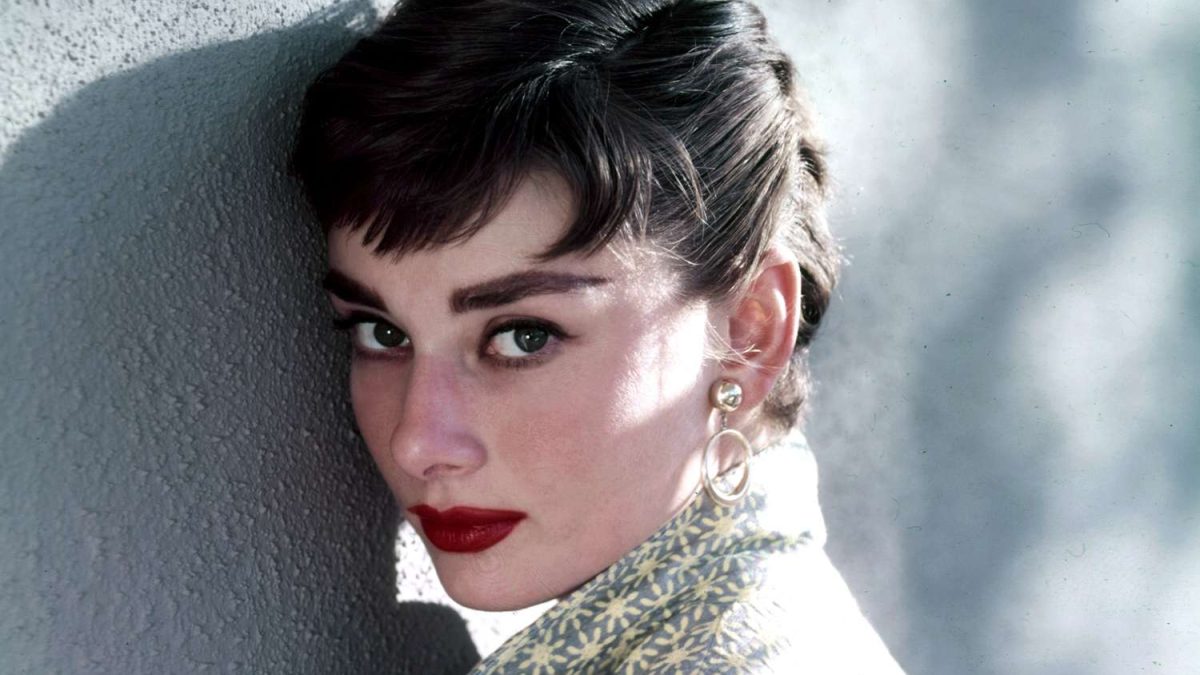
Audrey Hepburn (Audrey Kathleen Ruston, 4 May 1929 to 20 January 1993) was a British actress and humanitarian, born in Brussels, who became one of the most admired film stars of the twentieth century. She won the Academy Award for Best Actress for her first major film role, in Roman Holiday, and went on to star in Sabrina, Funny Face, Breakfast at Tiffany's and My Fair Lady. In her later years she devoted herself to UNICEF, the United Nations children's agency. She died in Switzerland at the age of 63. This biography follows her life, her career and her work for children.
Audrey Hepburn at a Glance
| Birth name | Audrey Kathleen Ruston |
| Born | 4 May 1929, Ixelles, Brussels, Belgium |
| Died | 20 January 1993, Tolochenaz, Switzerland (aged 63) |
| Profession | Actress and humanitarian |
| Best known for | Roman Holiday, Sabrina, Breakfast at Tiffany's, My Fair Lady |
| Major awards | Academy Award for Best Actress (1954), Tony Award for Best Actress in a Play (1954) |
| Spouses | Mel Ferrer (1954 to 1968) and Andrea Dotti (1969 to 1982) |
| Children | Sean Hepburn Ferrer and Luca Dotti |
| Humanitarian role | UNICEF Goodwill Ambassador from 1988 |
Early Life and Wartime Childhood
Audrey Hepburn was born in Ixelles, a municipality of Brussels, to Joseph Victor Anthony Ruston, a British subject, and Baroness Ella van Heemstra, a Dutch aristocrat. Her father later added Hepburn to the family surname, and she grew up using the name Hepburn-Ruston. Her parents divorced in 1938 after her father left the family, an event she later described as the most traumatic of her childhood. She was educated in England, at a boarding school in Kent, and then moved to the Netherlands with her mother shortly before the Second World War, hoping that the country would stay neutral.
The Netherlands was occupied by Germany in 1940, and Hepburn spent the war years in Arnhem. She trained as a ballet dancer, and she used the name Edda van Heemstra during the occupation because an English-sounding name was considered unwise. The Dutch winter of 1944 to 1945, known as the Hunger Winter, left the population of the occupied north of the country short of food. Hepburn later spoke of the malnutrition she suffered at that time, and the experience shaped her later commitment to helping children affected by war and famine. After the liberation she received food and aid from relief agencies, which she remembered for the rest of her life.
The Road to the Screen
After the war Hepburn moved to London to continue her ballet training, but she was told that her height and her wartime malnutrition made it unlikely that she would become a leading ballerina. She turned to acting, taking small parts in films and stage musicals in the early 1950s. A role in a French film production led her to the attention of the writer Colette, who reportedly chose her for the lead in the Broadway adaptation of Gigi. Hepburn went into rehearsals having never spoken on stage, and the play opened at the Fulton Theatre in New York on 24 November 1951 to praise for her performance.
Roman Holiday and Hollywood Stardom
Hepburn's breakthrough in cinema came with Roman Holiday (1953), directed by William Wyler, in which she played a princess who escapes her royal duties for a day in Rome and meets an American journalist played by Gregory Peck. The film was a critical and commercial success, and Hepburn unexpectedly won the Academy Award for Best Actress, the BAFTA Award for Best British Actress in a Leading Role and the Golden Globe Award for Best Actress in a Motion Picture – Drama. In the same year she won a Tony Award for her performance on Broadway in Ondine, an unusual double achievement for a young actress.
She followed these successes with Sabrina (1954), with Humphrey Bogart and William Holden, and Funny Face (1957), a musical in which she appeared opposite Fred Astaire. Her partnership with the French designer Hubert de Givenchy became one of the best-known associations between film and fashion, and the costumes she wore in her films shaped popular style for decades. In Breakfast at Tiffany's (1961) she played Holly Golightly, a role that produced one of cinema's most recognised images, a woman in a black dress outside the New York jewellery store. In 1964 she starred as Eliza Doolittle in My Fair Lady, and in 1967 she earned another Oscar nomination for the thriller Wait Until Dark, in which she played a blind woman menaced by criminals.
Marriage, Children and Family Life
Hepburn married the actor and director Mel Ferrer in 1954. Their son, Sean Hepburn Ferrer, was born in 1960, and the couple divorced in 1968. In 1969 she married the Italian psychiatrist Andrea Dotti, and their son, Luca Dotti, was born in 1970. That marriage ended in 1982. She later formed a long relationship with the Dutch actor Robert Wolders, who remained her companion until her death. Hepburn stepped back from acting for long periods to raise her sons, and she described motherhood as the most important part of her life. She lived in Switzerland, in the village of Tolochenaz, for much of her later life.
Later Film Work
After Wait Until Dark she made fewer films, and in the 1970s and 1980s she appeared only occasionally on screen. Her later work included Robin and Marian (1976), in which she appeared opposite Sean Connery, and a cameo as an angel in Steven Spielberg's Always (1989), her last film role. She also completed Gardens of the World with Audrey Hepburn, a PBS documentary series, in 1990, and it brought her a posthumous Emmy Award.
UNICEF Work and Humanitarian Legacy
Hepburn had supported UNICEF since the 1950s and in 1988 she was named a Goodwill Ambassador for the organisation. She travelled to some of the poorest and most dangerous parts of the world, including Ethiopia, Sudan, Bangladesh, El Salvador and Vietnam, and she used her fame to draw attention to the needs of children. In 1992, shortly before her death, she travelled to Somalia, where famine and conflict were causing great suffering. She described what she saw there as a nightmare and urged governments and the public to act.
In recognition of this work, President George H. W. Bush awarded her the Presidential Medal of Freedom in December 1992. After her death she received the Jean Hersholt Humanitarian Award from the Academy of Motion Picture Arts and Sciences. Her sons established the Audrey Hepburn Children's Fund to continue her work for children.
Death and Legacy
Hepburn died of appendix cancer at her home in Tolochenaz, Switzerland, on 20 January 1993, at the age of 63, only a month after receiving the Presidential Medal of Freedom. She is remembered as an actress whose elegance and warmth made her a model for generations, and as a humanitarian who used her celebrity for others. Her image remains one of the most recognisable in the history of film, and her work for UNICEF continues to be cited as an example of how a public figure can make a difference.