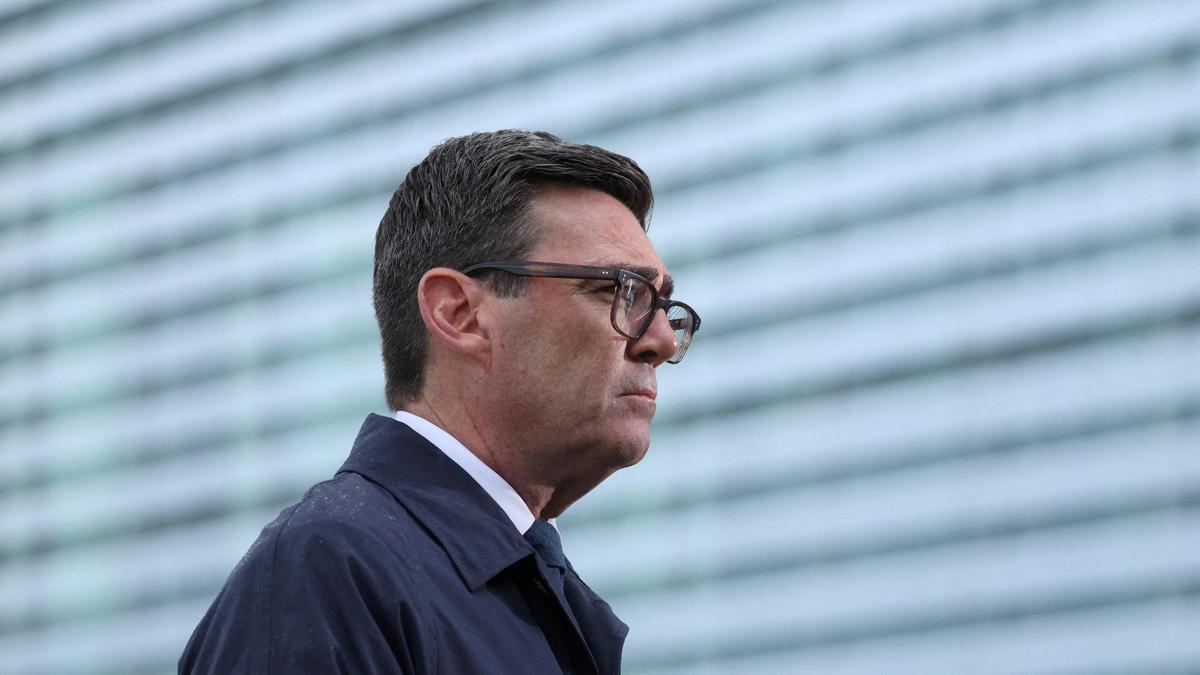
British Prime Minister Andy Burnham has said that the promise of Brexit failed to deliver for the United Kingdom and that the country needs to reset its relationship with the European Union to counter a growing global trend towards isolationism. Speaking at the Lord Mayor's Banquet in London on Monday, Burnham likened the outcome of Britain's departure from the EU to Hans Christian Andersen's fairy tale "The Emperor's New Clothes", in which no one is willing to tell the ruler that he is naked. "I do try to say things as I see them," he said. "And to be frank, we have lost more than we have gained in the last 10 years. The hard Brexit we were given is not good enough for Britain."
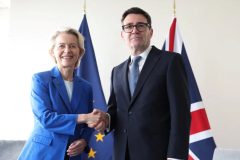
The remarks come ahead of a UK-EU summit in Brussels on Friday, which Burnham said could deliver "real improvements in people's everyday lives in areas of the country that have felt neglected for too long". The meeting is a key step in his pledge to reset relations with the 27-nation bloc, a decade after the UK voted to leave in 2016 and six years after the country's formal departure in 2020. According to Al Jazeera, the UK is expected to seal a deal on trading food and drink, to make agreements on energy and emissions, and to agree a plan allowing young people to work for limited periods across Britain and the EU.
Burnham set out three tests for any deal. It would have to be consistent with Labour's manifesto and red lines, improve the Brexit deal so that it aligns with what people voted for in 2016, and pass what he called his "Makerfield Test", his benchmark for ensuring real improvements for parts of the UK that have long felt neglected. The third test is a distinctive political signature: rather than judging a deal by technical trade metrics, he is asking whether it makes a visible difference in communities that have often felt left behind by national policy, including places that voted to leave.
His critique of Brexit was blunt. Burnham said the pro-Brexit campaign's promise that Britain would "take back control" of its borders, laws and economy had not been delivered. He said trade with EU countries has dropped sharply, and that estimates of the economic damage range from 4 percent to 8 percent of UK gross domestic product. Those are figures he cited in the speech, as reported by Al Jazeera, and estimates of Brexit's cost vary between economists, so they should be read as the prime minister's characterisation rather than a settled number.
He also placed Brexit in a global context. "Brexit was the first domino to fall in a global move towards more isolationism and protectionism," he said. "It is exactly what our enemies wanted. Russia wanted disunity within NATO and a weaker Europe." The argument is that closer UK-EU cooperation is no longer only an economic question but a security one, in a period when European states are dealing with the war in Ukraine and uncertainty about the international order. Burnham said Britain, because of its experience since 2016, is well positioned to lead in an era of renewed international cooperation.
Burnham is Britain's seventh prime minister since 2016, a fact that illustrates the turbulence of the decade. He replaced Keir Starmer as leader of the centre-left Labour Party and as prime minister, and until the next general election he remains bound by Starmer's pledge not to rejoin the EU's tariff-free customs union or the frictionless single market for goods, services and workers. His spokesperson Tom Wells said on Monday that "no assumptions are being made" and that "the British public will be the boss of any outcome". The words are carefully chosen: they leave room for further change without breaking the existing pledge.
Erasing that pledge would reopen a subject that split the country. The 2016 referendum was won by the Leave side with 52 percent against 48 percent for Remain. That narrow margin is the political backdrop for every UK government decision on the EU. Supporters of a closer relationship argue that public opinion has shifted and that practical gains, such as easier food trade and youth mobility, are common sense. Opponents warn that every step towards alignment erodes the sovereignty that Leave voters sought, and that it is a path back to membership by stealth. Burnham says he will open a discussion with EU partners on Britain's long-term relationship with the bloc soon after Friday's summit.
What would the expected agreements mean in practice? A deal on food and drink trade would aim to reduce the checks and paperwork that exporters and importers have faced since Brexit, potentially lowering costs for businesses and consumers, though the details, including how far the UK would align with EU rules, will determine the benefits and the political price. Energy and emissions agreements could cover cooperation on power markets and carbon pricing. A youth work scheme would allow people in Britain and the EU to work for limited periods in each other's territory, a concrete benefit for young people that supporters hope will symbolise a warmer relationship.
The politics are as important as the policy. Burnham is making an unusually frank admission for a sitting prime minister, and it will draw fire from Brexit supporters who will say he is talking Britain down and ignoring benefits they believe it has gained. It may also test the unity of his own party, which has to balance voters in leave-supporting areas with a more pro-European membership. The reference to the "Makerfield Test" is meant to anchor the reset in the interests of such areas.
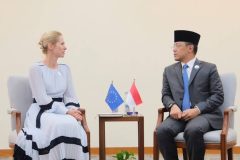
On the EU side, the key question is how much flexibility member states will show. Brussels has its own priorities, including protecting the integrity of the single market and avoiding a perception that leaving offers a better deal than membership. A package limited to food trade, energy and youth mobility is likely to be acceptable to many capitals, but anything beyond that will provoke harder bargaining.
Friday's summit will therefore be a measure of how far the reset can go within the limits Burnham has accepted. If the expected agreements are sealed, the government will present them as proof that cooperation can deliver for ordinary people without crossing the red lines. If not, critics on both sides will say that the process has promised more than it can deliver. Either way, a prime minister has said openly that Brexit has failed to live up to its promise, and the debate over what Britain should do next has become central to its politics again.