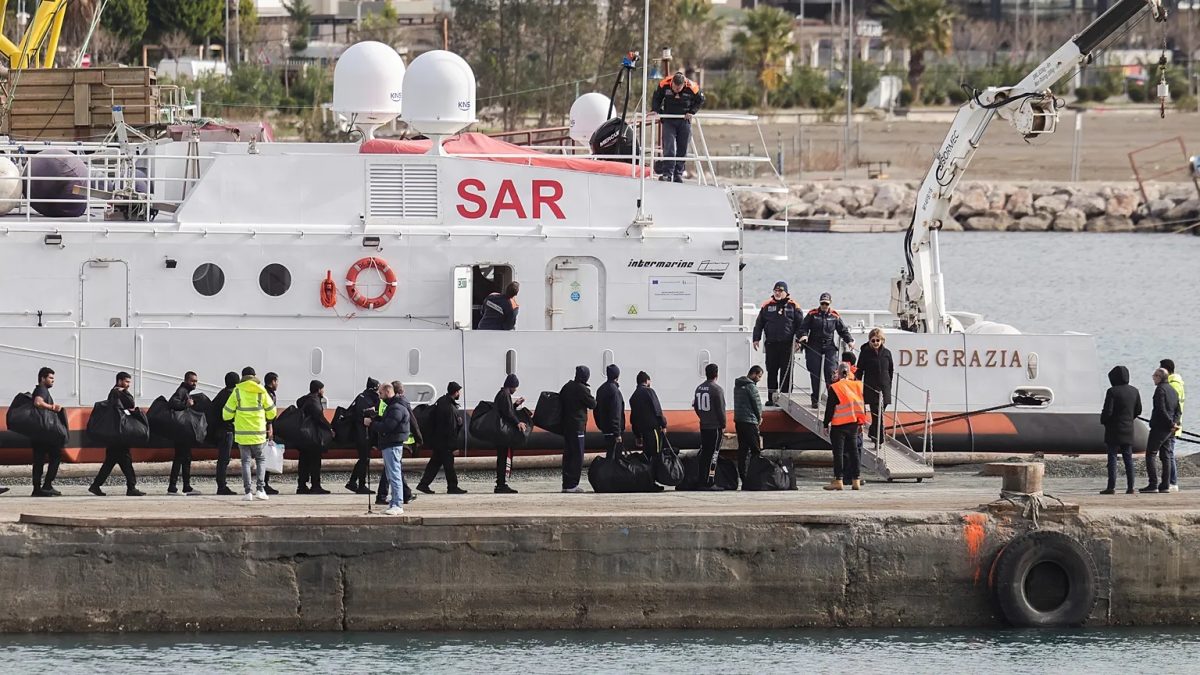
Five European Union countries have announced that they will open a migrant deportation centre in Rwanda next year as part of a wider push to increase removals. Germany, Denmark, Austria, Greece and the Netherlands are expected to open a "return hub" ready to accept transfers in 2027, according to statements from the Dutch and Danish governments, and a joint press conference in Vienna on Monday. The announcement follows a recent EU reform that allowed for the creation of such hubs outside the bloc, and it puts one of the most contested ideas in European migration policy into practice.
The scheme will apply to migrants staying illegally in the five countries who are subject to deportation, and the Dutch government said it would provide an alternative if deportees cannot be returned to their country of origin. According to the countries involved, deportees will be able either to integrate into Rwandan society or to return to their home country. The Dutch statement said that in the first phase of the deal only single men will be returned, and that the Netherlands will focus on people from countries of origin in the same region as Rwanda. The Dutch government has also confirmed that unaccompanied children will not be sent to the hub.
Officials are keen to distinguish the plan from the scrapped British Rwanda policy. The new scheme applies only to people who have exhausted all their legal avenues to stay in the five countries, unlike the British deal, which envisaged sending people to Rwanda to have their asylum claims processed. Legal challenges meant that the UK deal never took off, and it was eventually junked by the incoming Labour government in 2024. Downing Street has not ruled out the UK joining the new scheme and said it will watch developments "with interest", the BBC reported.
Once in Rwanda, according to the Dutch government, people will be able to integrate into society, which means they will have the right of residence and access to education, healthcare, the labour market and the legal system. Rwanda's Interior Minister Vincent Biruta said the country is committed to working with European partners to provide a "safe, legal and dignified solution" for migrants, and that it would also work on correcting the global imbalance in economic opportunities, which he called a key driver of irregular migration. Austrian Chancellor Christian Stocker said the five countries wanted to relieve European asylum systems and stop traffickers arranging deadly trips across the Mediterranean.
Diplomatic sources told the AFP news agency that the hub is expected to run initially as a pilot hosting about 100 people, with each of the five nations possibly sending about 20 migrants. The International Organization for Migration (IOM) could play an ancillary role. An IOM spokesperson said the agency has a long history of assisting migrants in transit, including in complex contexts, and was in discussions with some EU countries about plans for return hubs or similar mechanisms. That a United Nations agency is part of the conversation shows how far the debate has moved, but its language is careful and stops short of endorsing the Rwanda plan itself.
Criticism came quickly. Spanish Prime Minister Pedro Sanchez said he saw no "future or humanity" in the plan and that it was "not the solution", according to AFP. Human rights bodies say the policy could violate the rights of migrants, although the five governments insist it is in line with EU and international law. Human Rights Watch's senior Africa researcher, Clementine de Montjoye, said the choice of Rwanda is a cause for concern because the country has what she called a well-established record of repression of dissent, arbitrary detention, ill-treatment in detention and support for armed rebels in the neighbouring Democratic Republic of Congo. She said paying Kigali to host a deportation programme would cause suffering and harm to those deported, and would finance and provide political leverage to a government responsible for serious abuses at home and abroad.
The independent EU Agency for Fundamental Rights made a more procedural argument, saying that any third country hosting a return hub should respect fundamental rights and that people should not be sent to a country where they face a serious risk of persecution. These points are likely to shape legal challenges, because the lawfulness of the scheme will depend heavily on the safeguards that actually exist in Rwanda and on how individual cases are handled. The previous British experience showed that courts can become the decisive battleground when a removal policy is contested on rights grounds.
The political context explains the timing. According to the BBC, with elections approaching in several EU countries, governments are under pressure to show that they can control migration, and concerns about security, struggling economies and disillusionment with governing parties have shaped attitudes towards people arriving. The numbers, however, are moving in a direction that complicates the urgency narrative. The European Border and Coast Guard Agency (Frontex) said there were almost 110,000 irregular border crossings into the EU in the first 10 months of 2026, a 29% decrease from the previous year. In October, about 18,100 crossings were detected, about 6% fewer than in October 2025 but 22% more than in September, largely because of a sharp rise in arrivals on the Western African route to the Canary Islands.
Supporters of return hubs argue that the aim is deterrence and orderly removals: if people who have been refused permission to stay can be moved to a third country with legal residence and services, the incentive to attempt dangerous crossings may fall, and governments gain a tool where direct returns to origin countries are blocked. Opponents respond that deterrence claims are unproven, that third-country schemes risk creating a class of people with uncertain futures, and that money paid to host governments can distort their relations with Europe. Both sides will have a chance to test their arguments on a pilot of about 100 people, whose experience will be scrutinised by journalists, lawyers and rights groups from the first transfer.
Several questions remain open. Which migrants will be selected, and how will governments decide that a person has genuinely exhausted their legal options? What independent monitoring will exist inside the hub? What happens to people who do not wish to integrate in Rwanda and cannot be returned home? And how will other European states, including those like Spain that publicly oppose the plan, respond if the pilot is expanded? The answers will determine whether the scheme becomes a model for the bloc or another policy undone by legal and practical obstacles.
For now, the announcement marks a significant step in the externalisation of European asylum policy. It signals that a group of governments, representing very different parts of the continent, are willing to pursue offshore solutions openly, and that a reform at EU level has given them a legal pathway to do so. The next year, as the hub is prepared and the first transfers approach, will show whether the plan delivers the orderly returns its backers promise or the harm its critics predict.