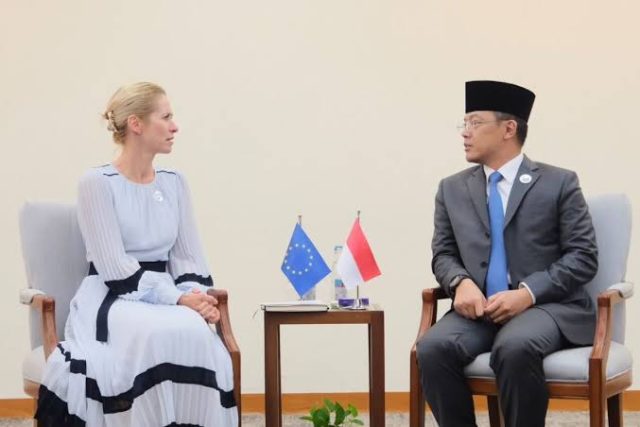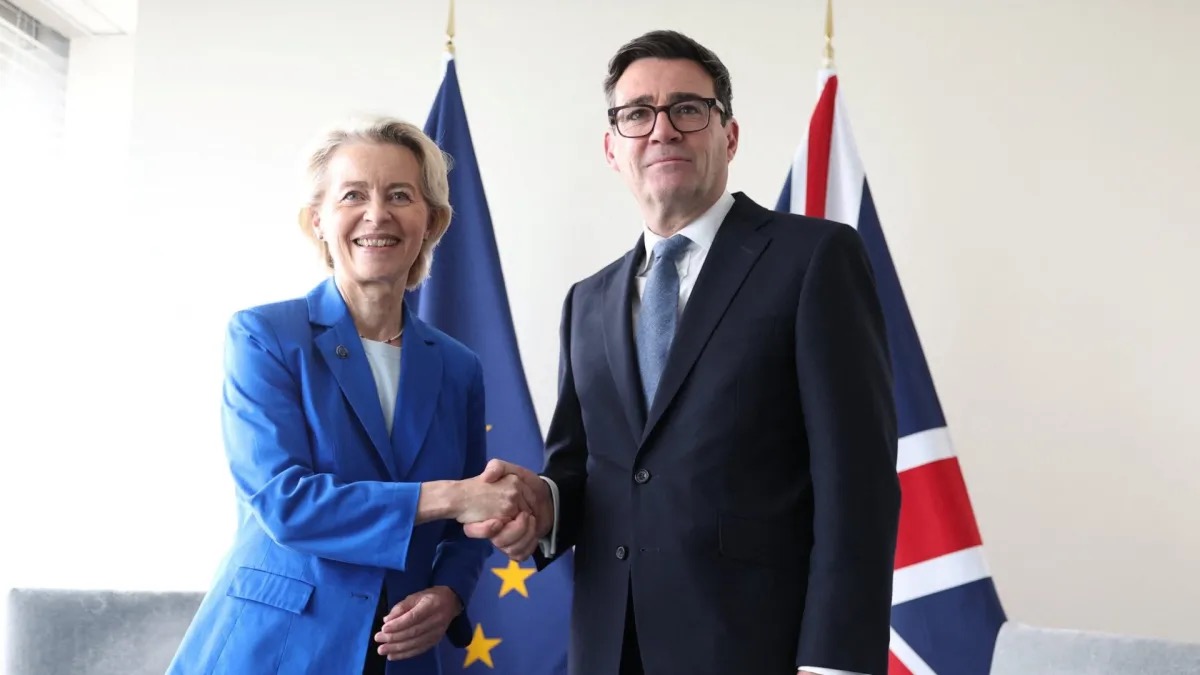
Ten years is a long time to stay angry at a decision. It is also, as it turns out, long enough for a country to start asking itself some uncomfortable questions. On Friday, November 20, Britain’s Prime Minister Andy Burnham sits down in Brussels with European Commission President Ursula von der Leyen and European Council President Antonio Costa, at a summit billed as a chance to reset relations a decade after the Brexit vote.
It is only the second such meeting since Britain formally left the bloc in 2020. The first, in 2025, was described as laying a “stable foundation.” This one, by contrast, is being sold as the moment the building actually starts to go up.
What is on the table
Three big items dominate the talks: food, carbon and young people.
The most valuable of them is an agreement on the cross-border movement of animals, plants and related products. Al Jazeera reports that Britain estimates removing the current controls could be worth £5.1 billion ($6.7 billion) a year. The BBC says the government argues such a deal could remove checks and paperwork faced by food companies exporting to the EU, add £5 billion to the economy and cut food prices.
Anyone who has watched a lorry queue at the Channel, or noticed the price of a supermarket basket creeping upward, will understand why this is the headline item. Paperwork is dull until it is the reason your strawberries cost more.
The second is an emissions deal. A potential agreement on emissions trading systems could see London and Brussels exempt each other from carbon border levies on goods such as steel. That matters to manufacturers who would otherwise face an extra charge for selling across the Channel.
The third is the one most likely to be discussed over dinner tables: a youth mobility scheme.
A scheme for the young
According to the BBC, up to 100,000 young people from the EU would be allowed to travel, work and study in the UK each year under the new scheme, with the same number of young Britons allowed into Europe. Al Jazeera reports the stay would be up to three years, and that the UK had originally wanted half that number. Downing Street has not commented on the details, but said talks were “down to the wire” on Thursday.
There is a bit of history worth remembering. The UK already has youth mobility schemes with 13 non-EU countries, including Australia, Canada and India. In 2024, the EU proposed allowing 18 to 30 year-olds to work or study in the EU and UK for up to four years. Labour, then in opposition, rejected it, arguing it amounted to reinstating freedom of movement. Since coming to government, the party has suggested it would consider something more restricted, with a time limit, a cap on numbers and a ban on participants claiming benefits.
So the argument has come full circle, with a cap now at the center of it. The UK’s request to limit numbers proved a sticking point in negotiations ahead of the summit, along with the EU’s request that EU students pay the same tuition fees as domestic students at UK universities. London has so far only agreed to apply “significantly reduced” fees, according to Al Jazeera, while the EU wants “home fees,” often a third of the international price.
For a nineteen-year-old in Lyon dreaming of a year in Manchester, or a twenty-two-year-old in Leeds thinking about Lisbon, those details are not abstract. They are the difference between a plan and a fantasy.
The prime minister’s pitch
Burnham was asked on Thursday evening whether there were circumstances in which the UK would walk away from a deal. His answer, as quoted by the BBC, was refreshingly plain: “There would always be those circumstances because I’m in this to get the best deal for Britain, always.”
He then laid out what he sees as the prize: “the possibility of lower food prices and I can’t turn my back on that, lower costs for business, cutting red tape, and a really big win potentially of more collaboration on immigration.” That last item refers to a “Channel action plan,” which the prime minister has said could also be struck. Burnham has also said the UK and EU could link up law enforcement efforts, including sharing more data and criminal records of foreign nationals.
The prime minister’s spokesman has said that if a deal is secured, the government would bring legislation to Parliament next week to implement the changes. That is a fast timetable, and it tells you how much political energy is behind this.
Burnham also said earlier in the week that it was an “obvious truth” that Britain had lost more than it had gained from Brexit, which followed a non-binding referendum in 2016 in which 52 percent of voters chose to leave. That is a sentence few prime ministers would have uttered so plainly a few years ago.
The trade-offs nobody should skip over
A food deal is not free. The BBC notes it could mean the UK has to follow certain EU rules on products, for example on gene-edited crops or labelling. That is the old Brexit tension in miniature: easier trade in exchange for less freedom to write your own rules.
There is also the “Made in Europe” scheme, designed to protect industries from unfair Chinese competition. The UK wants to be part of it. Brussels has said it may be open to this, but it would require the UK to accept EU policies, a point Al Jazeera calls potentially tricky given Britain’s sizable Eurosceptic population.
Those are the real bargaining chips, and each one carries a political price at home.
The noise outside the room
If the summit is calm on paper, the reaction has been anything but.
Conservative leader Kemi Badenoch has accused Burnham of “reopening the divisions” of the Brexit referendum. She told the BBC she wants easier trading with the EU but “not trade at any cost,” and warned the deals could see UK companies following EU rules even if they do not trade with the bloc.
Reform UK leader Nigel Farage was blunter. He described the agreement as a “very, very expensive and costly error” and said Burnham has no “democratic mandate to do any of this,” pointing out that Labour’s manifesto promised not to return to the single market. Speaking to The Sun, he accused the prime minister of “playing a very cynical political game.”
From the other side, Liberal Democrat leader Sir Ed Davey said he agreed with Burnham on “the harms of Brexit” but did not think the prime minister was “going to go anywhere near far enough,” calling for a return to freedom of movement.
And inside Labour itself, the subject is stirring. Former deputy prime minister David Lammy urged the prime minister this week to go into the next election promising to rejoin the EU, though the BBC reports the subject has divided the cabinet, with one minister warning of the costs of reversing Brexit. Burnham has previously suggested he could commit Labour to a closer long-term relationship with Europe, including asking to rejoin as a full member, but has ruled out major changes before the next election. The party’s 2024 manifesto promised not to return to the EU, the single market, the customs union or freedom of movement.
So what does an ordinary person take from this?
Strip away the acronyms and the question is quite human. Do we want it to be easier to live, work and trade with our closest neighbors, and what are we willing to give up for that?
Some will answer that sovereignty is not for sale at any price. Others will point to shop prices, delayed shipments and a generation of young people who lost the right to casually study abroad. Both groups are speaking from lived experience, and neither is silly.
What is striking is how different the tone has become from the Brexit years. The language today is about practical gains, such as lower food prices, less red tape and cooperation on migration, rather than grand constitutional drama. Whether that framing survives contact with the press, the opposition and Burnham’s own party is the real test.
What to watch next
Whether the summit actually produces signed deals on food, emissions and youth mobility, or only a promise to keep talking.
The final numbers on the youth scheme and the compromise on student fees.
Whether legislation reaches Parliament next week as the government has suggested.
And, perhaps most importantly, whether voters see a reset as common sense or as Brexit by stealth.
Whatever happens in Brussels, one thing is clear. A decade on, the argument about Britain and Europe is not over. It has just changed its clothes.