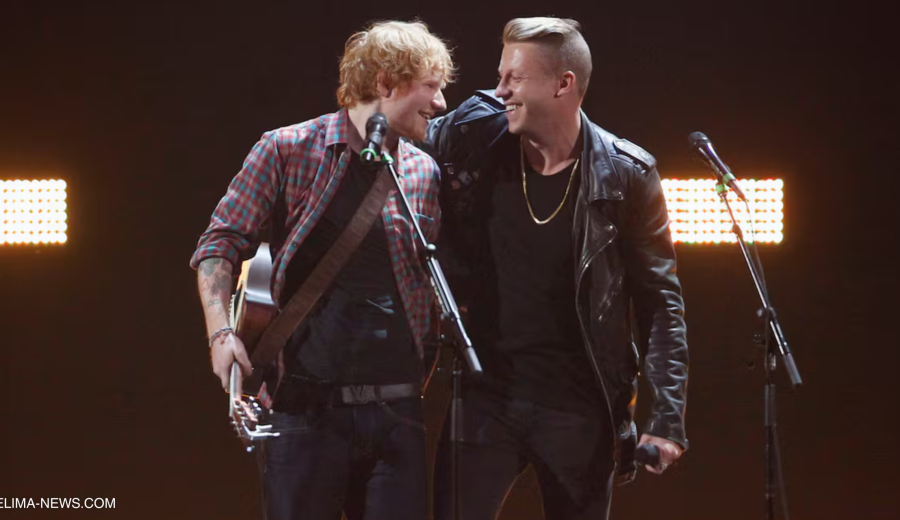
Macklemore was removed from the remaining U.S. dates of Ed Sheeran’s Loop Tour after making pro-Palestinian remarks on stage. Sheeran says the decision was made by promoters and venues, while Macklemore’s supporters have accused the industry of silencing political speech.
A dispute over Palestine has turned Ed Sheeran’s ongoing tour into a wider debate over free expression, political speech and the power of concert venues after rapper Macklemore was removed from the remaining U.S. dates of Sheeran’s Loop Tour.
The controversy began after Macklemore used his opening performance at New Jersey’s MetLife Stadium on September 4 to deliver a political message supporting Palestinians. He told the crowd that one reason he wanted to join the tour was to have the opportunity to say two words he considered important: “Free Palestine.” He also referred to Gaza and the occupied West Bank and called for peace and dignity for Palestinians.
Macklemore reiterated his position during a second MetLife performance the following night, saying that criticism of Israel and opposition to what he described as apartheid and genocide should not be interpreted as criticism of Jewish people.
The remarks subsequently triggered objections from some U.S. venues, ultimately leading to Macklemore’s removal from the remaining U.S. tour dates.
Why Was Macklemore Removed?
The circumstances surrounding the decision have become one of the central points of the dispute.
Sheeran said venues on upcoming tour dates told him they would withdraw their shows if Macklemore remained on the bill. He said he spent the week attempting to find a compromise and held discussions with venue owners, promoters and activists on both sides.
According to Sheeran, however, the final decision belonged to the promoter rather than him.
“Macklemore coming off tour was the promoter’s decision, it was not mine,” Sheeran said in a statement. He also said Macklemore’s contract was with the promoter, not directly with him.
Among those involved was Robert Kraft, owner of the New England Patriots and Gillette Stadium, where Sheeran was scheduled to perform. Kraft defended the decision to prevent Macklemore from appearing at Gillette, saying the venue had determined that his recent stage remarks and what Kraft described as a broader history of antisemitic rhetoric crossed a line. Kraft also said criticism of Israel and advocacy for Palestinians should not come at the expense of the Jewish community.
The Israeli American Council also launched a petition calling for Macklemore to be removed from the tour following his MetLife remarks.
Macklemore Pushes Back
Macklemore has disputed the circumstances surrounding his removal and argued that speaking publicly about Palestine was precisely why he wanted the platform.
In a statement following his removal, he said he accepted that there could be professional consequences for his political views but argued that those consequences should not prevent artists from addressing the suffering of Palestinians.
He also rejected the suggestion that criticism of Israel should automatically be regarded as antisemitic, while acknowledging that antisemitism itself is real.
Macklemore has been outspoken about Gaza for years. During his Sheeran tour appearances, he also performed “Hind’s Hall,” his protest song addressing the war in Gaza.
His supporters have subsequently portrayed his removal as an example of the financial and institutional pressures artists can face when they speak about politically sensitive issues.
Sheeran Faces Backlash
Sheeran’s explanation has not ended the controversy. Criticism intensified after Sheeran said he had tried to “build bridges” between the different sides but ultimately accepted the promoter’s decision. He also said he was “appalled” by the Israel-Palestine conflict and regarded suffering on both sides as a human tragedy.
The singer explained that he generally avoids using his professional platform for politics because his concerts attract people from different backgrounds, including children. He said he wants his shows to remain spaces centered on unity, music and entertainment rather than political debate.
That position has drawn criticism from people who believe artists have a responsibility to speak about humanitarian issues even when doing so creates professional risks.
The controversy therefore extends beyond Sheeran and Macklemore themselves: it has become a dispute over whether neutrality in a political conflict is genuinely neutral when one artist is prevented from using a major platform to express a particular position.
Other Artists Leave the Tour
The backlash escalated further when Sheeran’s other supporting acts began withdrawing from the tour in solidarity with Macklemore.
Finneas, who was scheduled to support Sheeran on South American dates, announced that he was leaving, writing that “artists must not be silenced when they speak up for the oppressed.” Lukas Graham, Beoga and Aaron Rowe also withdrew. Sheeran’s backing band subsequently departed as well.
The withdrawals effectively transformed the controversy from a dispute involving two artists into a much broader confrontation involving performers, promoters and venue owners.
Several departing artists specifically criticized the influence of wealthy venue owners and argued that financial power should not determine which political views artists are permitted to express on stage.
A Debate Over Art, Politics and the Stage
The dispute highlights a difficult question for the modern music industry: where should the boundary lie between an artist’s freedom of expression and a venue’s right to determine what happens on its stage?
Macklemore’s supporters argue that artists should be able to use their platforms to highlight humanitarian crises, particularly when they believe mainstream institutions are failing to address them.
Sheeran’s position is different. He has argued that maintaining a non-political environment allows audiences from different backgrounds to attend his concerts without feeling that they have entered a political forum.
Neither position has ended the dispute.
What has changed is the scale of the controversy. What began with two words—“Free Palestine”—has now resulted in the removal of a major opening act, the withdrawal of every remaining supporting act and a public confrontation over who controls political speech inside some of the world’s biggest concert venues.
For Macklemore, the episode has amplified the debate he wanted to create around Palestine. For Sheeran, it has become a test of whether an artist can maintain a deliberately non-political public platform while working within a concert industry where venue owners and promoters retain substantial control.
The controversy is therefore no longer simply about whether Macklemore should have remained on Sheeran’s tour. It has become a broader argument about free expression, commercial power and the role of musicians in politically divisive conflicts.