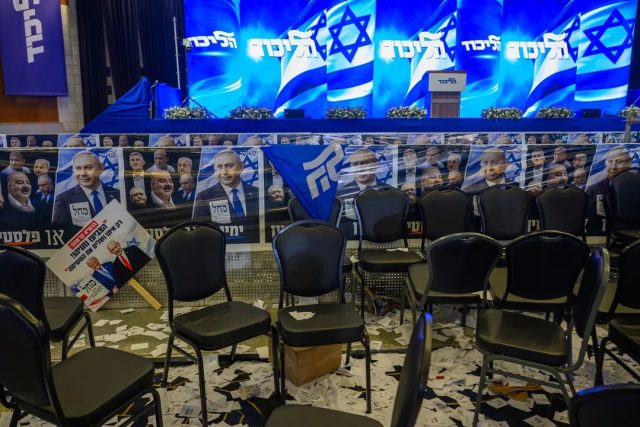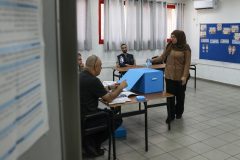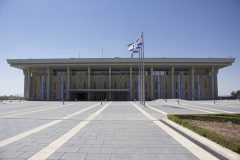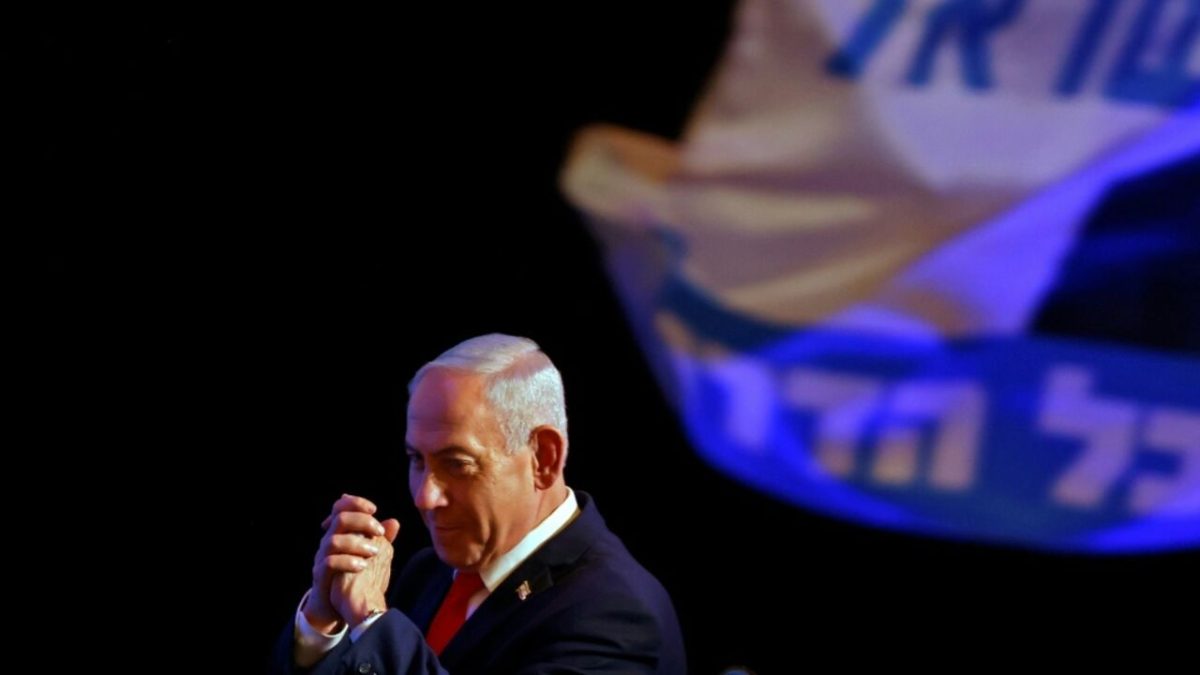
Israel's President Isaac Herzog must decide who gets the first attempt at forming a government after the 27 October election left both Prime Minister Benjamin Netanyahu and his main challenger, former army chief Gadi Eisenkot, short of a majority in the 120-seat Knesset. Herzog has said he will name his choice on Sunday. The decision matters because no bloc has reached the 61 seats needed to govern, and Palestinian citizens of Israel have emerged as kingmakers after winning a record number of seats. Eisenkot has the endorsement of a majority of lawmakers, but only because of the Arab-led parties, whom he has refused to bring into government unless they meet conditions that include recognising Hamas as a terrorist organisation.
The case for asking Eisenkot first rests on the numbers. During consultations that ended on Thursday, 67 of the 120 lawmakers endorsed him, while only 46 endorsed Netanyahu, according to Al Jazeera. Netanyahu's right-wing and religious alliance holds 53 seats, while four Jewish-led parties backing Eisenkot hold 48 and the Arab-led parties hold a record 19. Arab-led parties received 64 percent more votes than at the previous election, according to the Central Elections Committee cited by NPR. Israeli law also lets a prime minister take office with fewer than 61 seats if the government wins a confidence vote, which the Arab-led parties could help him secure. Likud's claim that the election was stolen was rejected by election officials and the attorney general, and police found no basis for it. Ra'am, which holds eight seats, says it is willing to join an Eisenkot-led government, and Eisenkot could form a minority government and later try to win ultra-Orthodox support by making concessions on military conscription.
The counter-argument is that endorsements do not make a government. Eisenkot has ruled out bringing the Arab-led parties into his coalition, so his four Jewish-led partners stand at 48, well short of 61. Reaching exactly 61 would require both ultra-Orthodox parties, yet Shas endorsed Netanyahu on Wednesday and United Torah Judaism has said its support comes at a price. The Joint List, which holds 11 of the Arab-led seats, says it will back Eisenkot only from outside the government. Herzog himself has warned that "mutual vetoes between the blocs and within the blocs themselves" make it hard to tell who can build a coalition, and Netanyahu's own bloc fell seven endorsements short of its 53 seats.
The stakes extend well beyond coalition arithmetic. Under the rules described by NPR, the chosen candidate has 28 days to form a government and can ask for a two-week extension. If that fails, a second candidate gets 28 days, and if nobody succeeds Israel faces repeat elections next year. Al Jazeera notes that Netanyahu could remain in office in the meantime if no government is formed. Palestinian citizens, who make up about 20 percent of the population, have shown that their votes can decide who governs a country in the middle of a turbulent period.
Herzog's choice will shape the next phase of Israeli politics, but it will not settle it. Ra'am leader Mansour Abbas has said he supports disarming Hamas but has declined to call it a terror group, a gap that shows how hard the conditions will be to meet. Whoever receives the mandate must still win over rivals who have vetoed one another, and Israel may yet return to the polls.