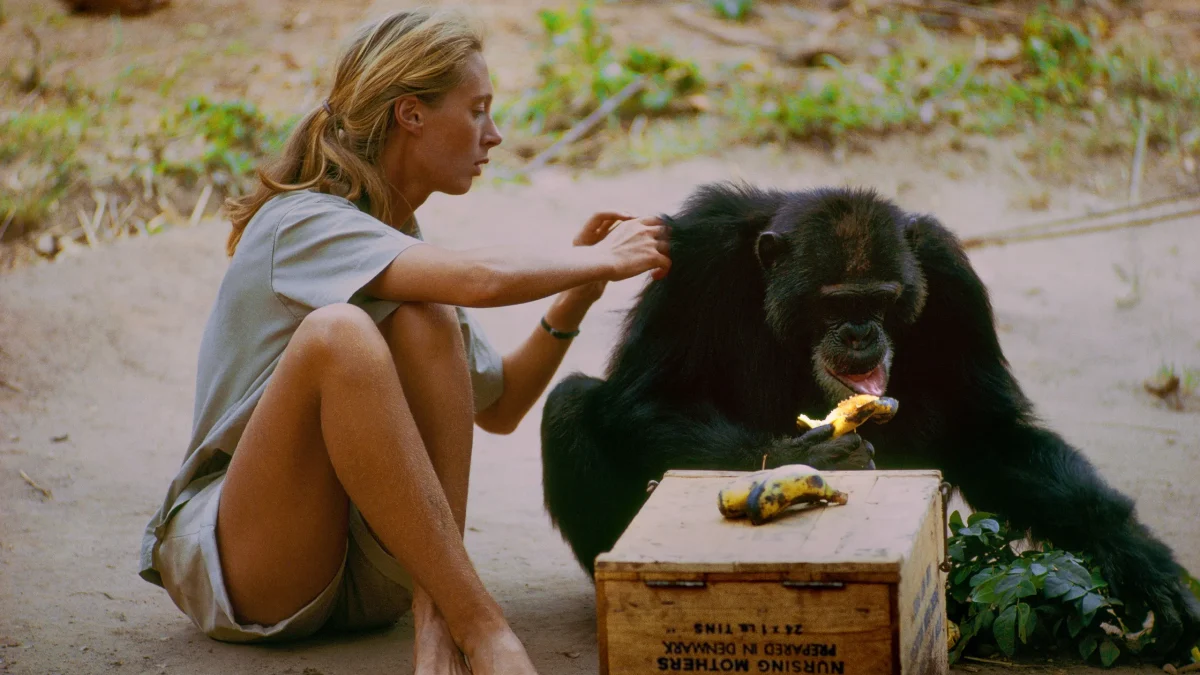
Jane Goodall (Dame Jane Morris Goodall, 3 April 1934 to 1 October 2025) was a British primatologist and anthropologist who is best known for her studies of wild chimpanzees in Tanzania. She began her work at Gombe Stream in 1960, aged 26, and it grew into the longest-running study of wild chimpanzees. She founded the Jane Goodall Institute in 1977 and the youth programme Roots & Shoots in 1991. She died in her sleep at 91 while on a speaking tour in California. This biography follows her life and work.
Jane Goodall at a Glance
| Full name | Dame Jane Morris Goodall |
| Born | 3 April 1934, Hampstead, London, England |
| Died | 1 October 2025, California, United States (aged 91) |
| Profession | Primatologist, anthropologist and conservationist |
| Research | Wild chimpanzees at Gombe Stream, Tanzania (from 14 July 1960) |
| Organisations | Jane Goodall Institute (1977); Roots & Shoots (1991) |
| Honours | Kyoto Prize (1990); Dame Commander of the Order of the British Empire (2003); Templeton Prize (2021); Presidential Medal of Freedom (January 2025) |
| Spouses | Hugo van Lawick (1964 to 1974); Derek Bryceson (1975 until his death in 1980) |
Early Life
Goodall was born in Hampstead, London, to Mortimer Herbert Morris-Goodall, a businessman, and Margaret Myfanwe Joseph, a novelist. She was fascinated by animals from a young age. The anthropologist Louis Leakey became her mentor, and he arranged for her to begin research on chimpanzees in Tanzania.
Gombe and Chimpanzee Research
Goodall arrived at Gombe Stream on 14 July 1960, at the age of 26. She observed chimpanzees stripping leaves from twigs and using grass stalks to "fish" for termites, which showed that they make and use tools, a finding that challenged the idea that only humans make tools. She later earned a doctorate at the University of Cambridge, and her research at Gombe has continued for more than six decades.
Books and Fame
Her series of articles for National Geographic in the 1960s brought her to a wide audience, and she received the magazine's Hubbard Medal. Her book In the Shadow of Man (1971) was translated into 48 languages. In 1999 she published Reason for Hope: A Spiritual Journey with Phillip Berman. Time named her one of the 100 most influential people in the world in 2019.
Conservation and Roots & Shoots
Goodall founded the Jane Goodall Institute in 1977 to support research, conservation and community development. In 1991 she began Roots & Shoots in Dar es Salaam with 12 teenagers, and by 2010 it had grown to more than 10,000 groups in over 100 countries. In April 2002 the United Nations Secretary-General Kofi Annan named her a UN Messenger of Peace. She became a Dame Commander of the Order of the British Empire in the 2003 Birthday Honours, and she received the Kyoto Prize in 1990, the Templeton Prize in 2021 and the Presidential Medal of Freedom in January 2025.
Personal Life
Goodall married the Dutch wildlife photographer Hugo van Lawick on 28 March 1964, and they divorced in 1974. Their son, Hugo, known as "Grub", was born in 1967. In 1975 she married Derek Bryceson, who died of cancer in October 1980.
Death and Legacy
Goodall died on 1 October 2025, aged 91, while staying in California on a speaking tour of the United States. The Jane Goodall Institute said that she died of natural causes, in her sleep. Her work changed the way that scientists think about the relationship between humans and other animals, and she spent her last decades campaigning for the protection of wildlife and habitats.