Microsoft disrupted a Chinese-language phishing marketplace linked to more than a billion messages on 14 October, the same day a study reported that ransomware gangs increasingly threaten victims’ families.
Microsoft disrupted a Chinese-language phishing marketplace behind more than one billion messages on 14 October 2026, according to a morning security brief by thrunt.me that Delima News reviewed in a search summary. The brief does not give the details of the operation, such as the name of the marketplace or the legal action Microsoft used, so these are not described here.
The same brief says that the United States arrested two people in a crackdown on laptop farms used by North Korean IT workers. Such farms let overseas workers appear to be based in the United States when applying for remote jobs. The brief does not name those arrested or the court, and the explanation of the scheme is general background.
Several companies released critical patches. The brief lists 29 vulnerabilities from Citrix, Fortinet and Ivanti and critical vulnerabilities in SAP NetWeaver and SAP S/4HANA. These are separate from Microsoft’s record monthly update, which Delima News reported on 15 October.
A study reported by The Register on 14 October looked at 1,200 organisations that had been hit by ransomware. It found that attackers threatened psychological intimidation in 23% of cases and physical threats in 17%, and that the threats were directed not only at executives and staff but also at their families, according to the search summary. The headline quotes the phrase “we-know-where-you-are kind of stuff”.
The percentages are for the organisations in the study, which had already experienced ransomware, so they do not show how common such threats are among all ransomware attacks. The study’s authors and the date of the research are not given in the summary.
The brief also reports that security researchers built a $250,000 Chrome full-chain exploit in six days using AI agents that ran OpenAI’s publicly available GPT-5.6 Sol model. A full-chain exploit combines several flaws to take over a browser. The figure of $250,000 is presumably the market value of such an exploit, but the summary does not say how it was calculated, and the claim has not been verified by Delima News.
A quantum-computing warning and a cybersecurity acquisition were also in the news the same day. IonQ agreed to buy the network security firm Elisity, and IBM said that fewer than 10% of firms are ready for quantum threats, as Delima News reports in a separate article.
Taken together the items describe a day of ordinary security work: a takedown, arrests, a round of patches and a research finding. None of them is described in the sources as a new vulnerability being used in attacks, and the sources reviewed do not report that any of the vulnerabilities in the Citrix, Fortinet, Ivanti or SAP patches were exploited.
The items come from a brief and a summary and not from the primary reports, so Delima News does not give more detail than the sources support, and readers should check the vendors’ own advisories before acting on any patch.
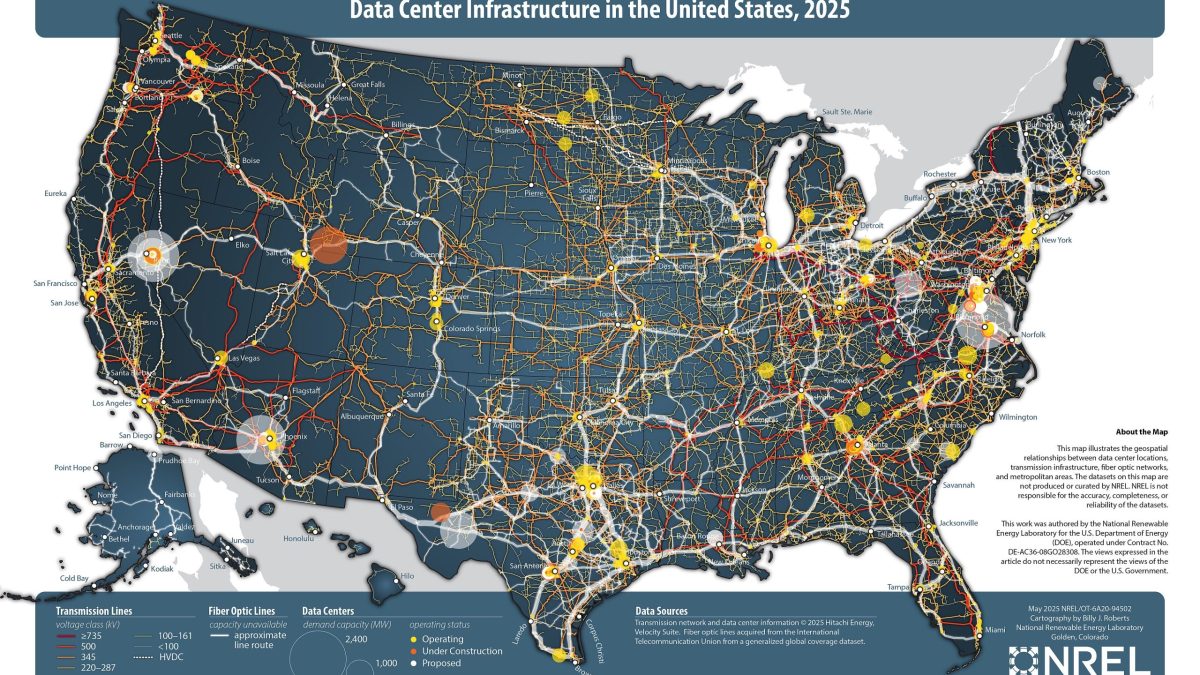
Image: A data centre (file photo; a stand-in image). Photo: DOE/National Renewable Energy Laboratory (NREL) / Wikimedia Commons (Public domain)