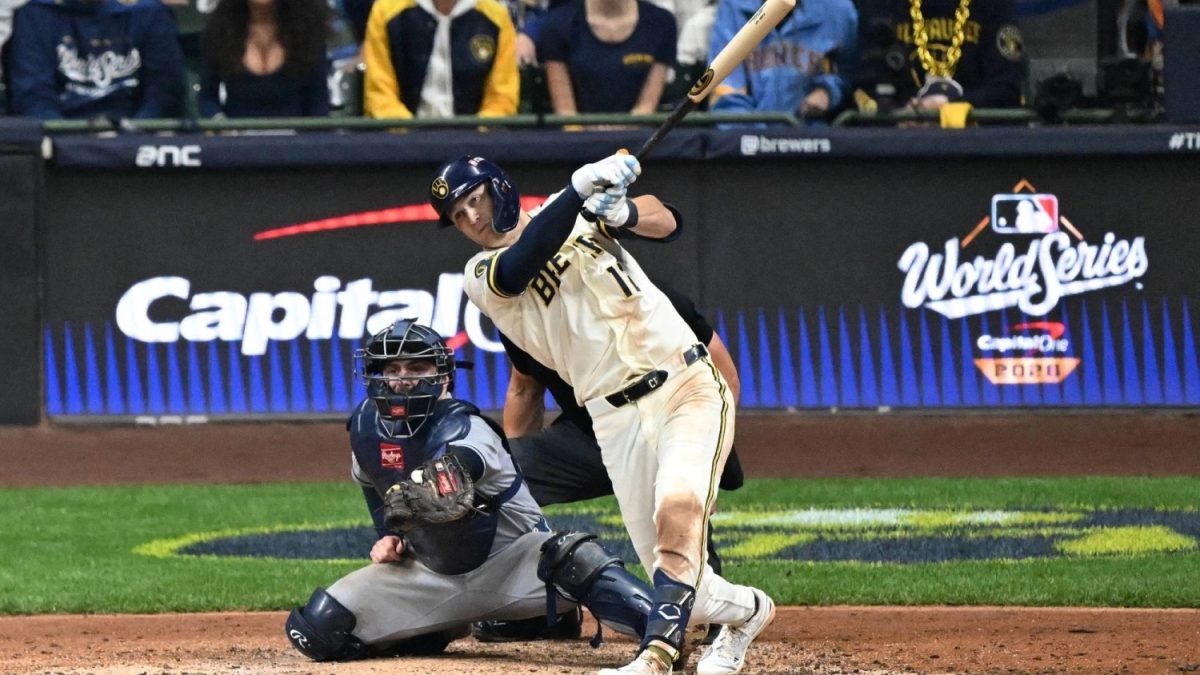
The Milwaukee Brewers lead the Tampa Bay Rays 2-0 in the World Series after winning Game 1 by 3-2 on 23 October and Game 2 by 5-4 on 24 October, the second after trailing 4-0 following the first inning. The series now moves to Tropicana Field for Game 3 on Monday, the first World Series game played there since 2008. Tampa Bay will start Freddy Peralta, and Milwaukee will counter with the left-hander Robert Gasser. The question is whether a two-game lead is close to decisive or whether the Rays can reset the series at home.
The case for Milwaukee is statistical and tactical. ESPN notes that the past 13 teams to take a 2-0 World Series lead went on to win the title. In Game 1, Jacob Misiorowski set a World Series record with a 103.5 mph first pitch and became the youngest pitcher to win Game 1 since 1997, and Milwaukee’s pitching staff had a 2.03 ERA through nine playoff games. In Game 2, Sal Frelick tied the score at 4-4 with a sixth-inning home run off lefty Ian Seymour, even though he had hit only four regular-season home runs, and Cooper Pratt’s single in the seventh put the Brewers ahead. ESPN’s Jeff Passan said the Brewers “laugh at your lead” when they trail early, and Bradford Doolittle called Milwaukee “in the catbird’s seat.” William Contreras also drove in a run in Game 1 and caught two would-be base stealers, and the bullpen of Abner Uribe, Aaron Ashby and Trevor Megill, who closed, held the lead.
The case for Tampa Bay is that the margins have been thin and the Rays have not played their best baseball. Game 1 was a one-run game in which Tampa Bay cut the lead to one in the ninth after a double play that first appeared to end the game was overturned, and in Game 2 the Rays led by four runs after the first inning. ESPN’s Jorge Castillo described them as “uncharacteristically sloppy” on defense and the bases in the first two games, a problem that can be fixed. Peralta has allowed two runs in 16⅔ postseason innings across four outings, and the Rays are 4-0 in games he has pitched. Drew Rasmussen, the Rays’ Game 2 starter, has a 1.29 ERA in 21 postseason innings across three starts. As Doolittle put it after Game 1, “It’s really hard to score against either of these teams.”
Game 3 matters because it decides whether the 13-for-13 history survives. If Milwaukee wins at Tropicana Field it will be one victory from a sweep and the series will be effectively settled, while a Tampa Bay win with Peralta on the mound would cut the deficit to 2-1 with the home crowd behind them. Game 2 also showed that the two clubs can produce long, tense games, with the teams combining for 81 foul balls, the most in a postseason game this year, and a similar grind would favour the side that holds its nerve in the late innings.
The Brewers have the history and the lead, and the Rays have home field and a pitcher they have not lost with. Monday’s game will show which counts for more.