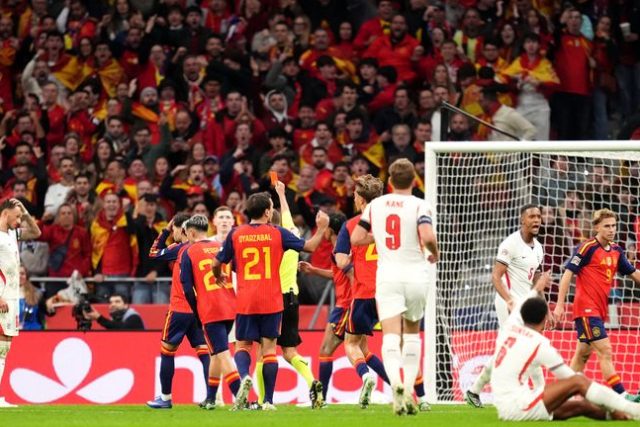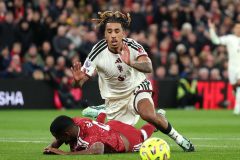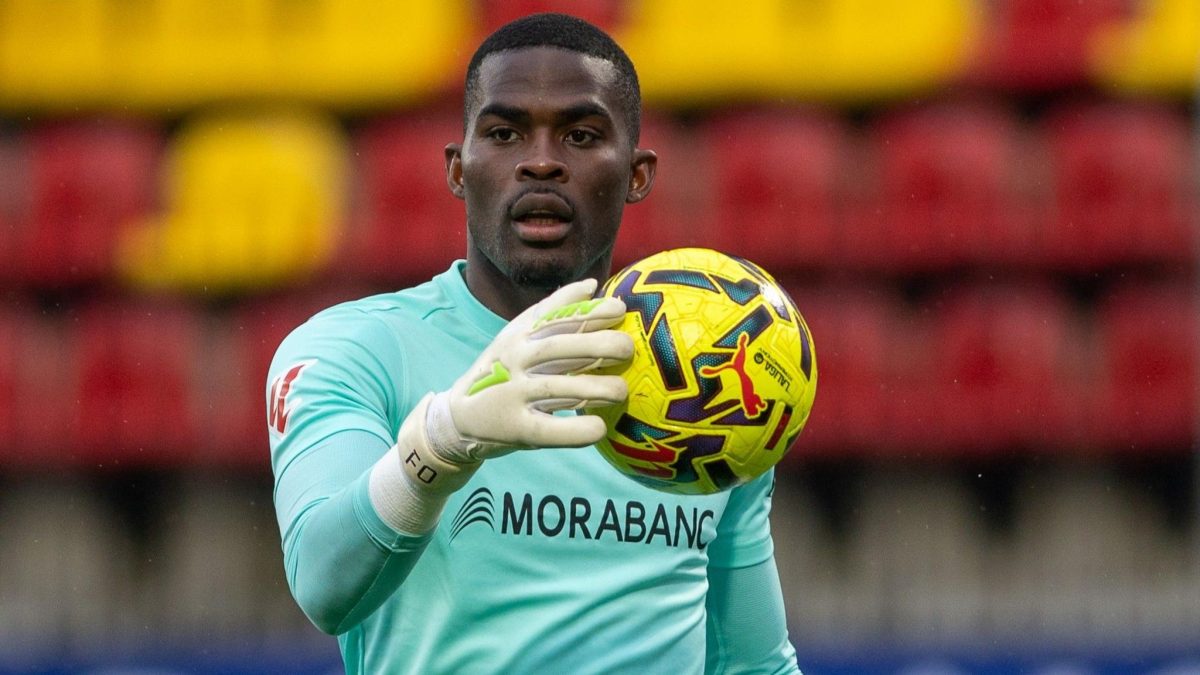
The Spanish football federation's disciplinary committee has handed FC Andorra goalkeeper Jesus Owono a 12-match suspension, the maximum available sanction, following the collision that led to the death of Tenerife forward Jesus de Miguel. Owono, 25, was sent off in the second-tier match between the two clubs on 2 November after racing out of his area and colliding with De Miguel during the closing stages while trying to clear an aerial ball. De Miguel, 30, was taken to intensive care and died on 3 November. The ruling is a disciplinary decision based on the referee's report, and it comes at a time when the football community in Spain and elsewhere is still absorbing the loss of a player in a match that ended in tragedy.
The committee was explicit about its method. It said the assessment "must be based on the facts expressly recorded in the referee's report," which stated that the goalkeeper was sent off for "violently striking an opponent in the chest with his leg, using excessive force, while the ball was in play." The committee added that "the tragic outcome of the incident, resulting in the death of Jesus de Miguel Alameda, is public knowledge," and concluded that in view of the nature of the conduct described and the circumstances, "the maximum sanction, a 12-match suspension, is justified." In other words, the committee was applying its rules to what the match official recorded, not conducting a separate inquiry into intent or cause. That distinction matters, because the legal and criminal dimensions of the case are separate from the football ones.
The federation also decided what to do with the match itself. The game was abandoned seven minutes into stoppage time when the incident occurred, with the teams level at 2-2. The federation ruled that it will not be replayed and that the scoreline will stand, with a committee describing this as the "most respectful course of action, given the extraordinary and tragic circumstances of this case." It said the decision avoids having to resume play from the precise moment of the tragic incident. For many observers, that is the only reasonable solution: no one wants to see the two teams restart a game at the very point where a colleague was fatally injured.
There are arguments in favour of the ruling. A maximum suspension signals that the federation takes the incident with the utmost seriousness and that the referee's description of excessive force cannot be set aside because of the intent behind it, which is not recorded. It also gives Owono time away from the pitch, which his club has said he needs. In a statement published by FC Andorra on 4 November, he said these were "the hardest days of my life," that he struggled to find words and felt "immense pain over the loss of Jesus," and added: "I know there will be many issues to address, and I will face whatever comes with the utmost respect." Both the severity of the punishment and the careful wording of the committee's decision reflect an effort to respond to a death while still working inside the limits of the disciplinary code.
There are also arguments for sympathy. Owono's club and coach have made clear that he is suffering. Carles Manso, the FC Andorra manager, said on Thursday that the Equatorial Guinea international has not decided whether he will return to football, is spending time with his family, and is "completely free to make any decision." "What we have to do is support him in every way and be close to him," Manso said, adding that the club will give him space to decide "whether he wants to return, when, or if he does not want to return." Owono withdrew from Equatorial Guinea's squad for Africa Cup of Nations qualifiers against Zimbabwe this month. The ban therefore may matter less in practice than the question of whether a young goalkeeper who has experienced such a tragedy feels able to play again. The disciplinary committee itself did not comment on the player's intent, and Spanish police sources told AFP that a separate investigation has been opened under judicial supervision, so legal questions remain open.
The two clubs have responded in very different but equally human ways. Tenerife, which lost a player and colleague, held a memorial at its stadium where fans and players gathered to say goodbye, and the funeral drew about 400 mourners, including figures from the highest levels of Spanish football. FC Andorra, which is based in the principality and plays in the Spanish league pyramid, has chosen to speak for its goalkeeper through carefully worded statements and to emphasise that its priority is his wellbeing rather than his availability for selection. Both approaches reflect an understanding that the usual language of football, with its talk of results, fixtures and appeals, does not fit a situation in which a person has died. The decision not to replay the match, and to let the 2-2 draw stand, was part of the same instinct, and it means the league table will carry a result that nobody involved wants to remember.
The ruling also leaves practical questions for the coming weeks. A 12-match suspension, means Owono could not return to competitive action for a substantial stretch even if he decided that he wanted to, and Andorra will need to arrange goalkeeping cover while his future is unresolved. The judicial investigation reported by AFP adds a further layer of uncertainty that sits outside the sporting system altogether, and neither the federation nor the clubs have said anything to suggest what it may conclude. Those who follow the sport will likely resist drawing conclusions before it does, and the federation's own wording, which stressed that it was relying only on the referee's report, supports that caution.
Why does it matter beyond the two clubs? Goalkeepers routinely leave their area to challenge for the ball, and the decision that they must make in a fraction of a second sits at the heart of the modern game. A tragedy of this kind prompts football's authorities, referees and players to ask whether current rules, training and protocols give enough protection to players in such collisions, and how medical teams respond on the pitch. Those questions are for experts to answer, and the incident does not by itself establish that rules need to change. But it will likely be examined by governing bodies and by players' unions, and the way the federation handled the case, with a swift ruling, a proportionate decision on the match and a respectful tone, may become a reference point.
The most important part of the story remains human. Tenerife fans and players gathered at the club's stadium last Saturday for a memorial and farewell to De Miguel, and about 400 mourners attended his funeral last Thursday, including Spain coach Luis de la Fuente and Real Madrid president Florentino Perez. His family, his team-mates and his supporters are grieving a 30-year-old forward. On the other side, a 25-year-old goalkeeper is dealing with the death of a fellow professional. The 12-match ban settles the disciplinary question, but it does not resolve the pain on either side, and the sport's response in the coming weeks, from clubs, fans and officials, will be judged by how well it supports both.