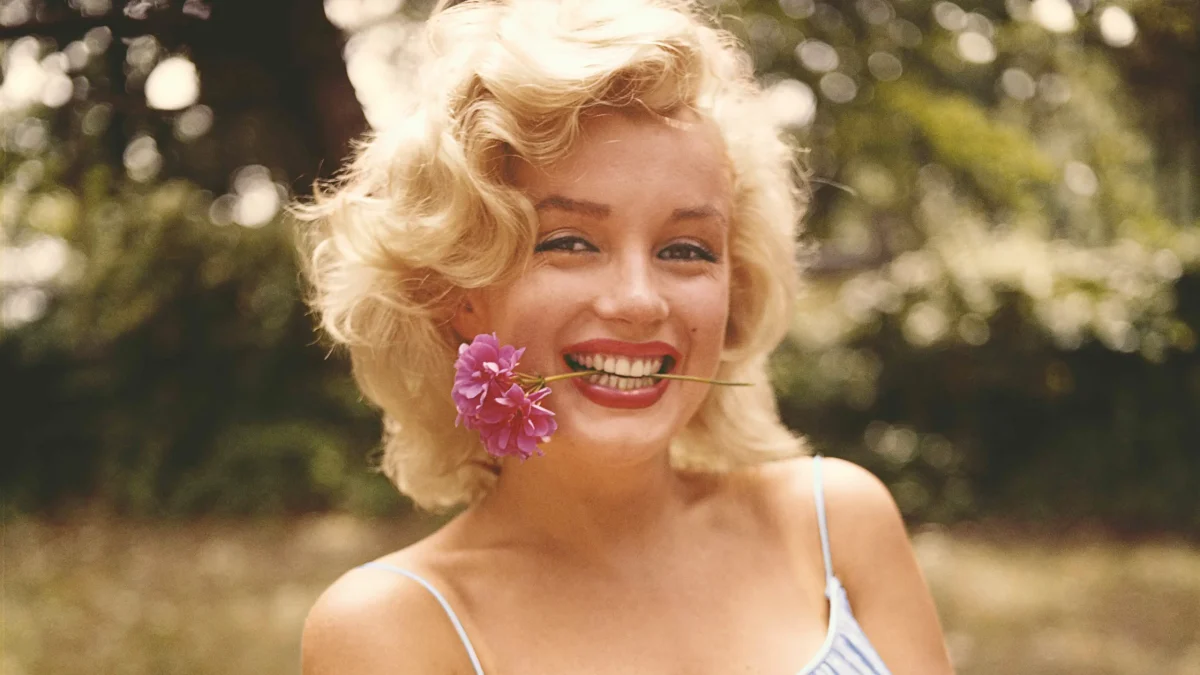
Marilyn Monroe (Norma Jeane Mortenson, 1 June 1926 to 4 August 1962) was an American actress, model and singer who became one of the most recognisable stars of the twentieth century. She rose from a difficult childhood to star in comedies such as Gentlemen Prefer Blondes, The Seven Year Itch and Some Like It Hot, and she remains a lasting symbol of Hollywood glamour. She died at her home in Los Angeles at the age of 36. This biography follows her life, her career and her legacy.
Marilyn Monroe at a Glance
| Birth name | Norma Jeane Mortenson (later Norma Jeane Baker) |
| Born | 1 June 1926, Los Angeles, California, United States |
| Died | 4 August 1962, Brentwood, Los Angeles (aged 36) |
| Profession | Actress, model and singer |
| Best known for | Gentlemen Prefer Blondes, The Seven Year Itch, Some Like It Hot |
| Major award | Golden Globe Award for Best Actress in a Motion Picture, Musical or Comedy, for Some Like It Hot |
| Spouses | James Dougherty, Joe DiMaggio and Arthur Miller |
| Studio | Twentieth Century-Fox |
Early Life and Childhood
Marilyn Monroe was born Norma Jeane Mortenson in Los Angeles. Her mother, Gladys Baker, struggled with mental illness and was unable to care for her, and Norma Jeane spent much of her childhood in foster homes and, for a period, in an orphanage. She later spoke of the insecurity of those years, and the experience shaped the way she was described by biographers throughout her life. At the age of 16, in 1942, she married a neighbour, James Dougherty, partly because her foster family was moving away and she would otherwise have returned to an orphanage.
From Model to Film Star
During the Second World War, Dougherty enlisted in the Merchant Marine in 1943, and Norma Jeane worked in a factory, where she met a photographer from the First Motion Picture Unit. In August 1945 she signed with the Blue Book Model Agency, which judged her figure more suitable for pin-up than high-fashion modelling, and she was told to straighten her hair and dye it golden, and eventually platinum, blonde. By early 1946 she had appeared on 33 magazine covers.
In June 1946 she signed with an acting agency, and after a screen test the Twentieth Century-Fox executive Ben Lyon gave her a standard six-month contract, which began in August 1946. She and Lyon chose the stage name Marilyn Monroe, and in September 1946 she divorced Dougherty. Fox did not renew her contract in August 1947, because her teachers thought her too shy and insecure to have a future in acting, and she moved to Columbia Pictures in 1948, where her first starring role was in the low-budget musical Ladies of the Chorus. She returned to modelling, and small roles in films including All About Eve (1950) led to her breakthrough in the early 1950s.
The Peak of Stardom
In 1953 Monroe starred in three films, and she emerged as a major sex symbol and one of Hollywood's most bankable performers. In Niagara, a Technicolor film noir in which she played a femme fatale, she and her make-up artist Allan "Whitey" Snyder developed her trademark look of dark arched brows, pale skin, glistening red lips and a beauty mark. In the same year her nude images were used as the centrefold and cover of the first issue of Playboy. She was often cast in comedies such as Gentlemen Prefer Blondes and How to Marry a Millionaire that established her image as a "dumb blonde". Monroe's best-known role of the period was in The Seven Year Itch (1955), directed by Billy Wilder, which included the famous scene in which her white dress is blown up by air from a subway grating. In 1955 she also founded her own production company, Marilyn Monroe Productions, in an effort to gain more control over her career, and she studied acting at the Actors Studio in New York. She then played in Bus Stop (1956), a performance that critics praised as evidence of her range. In Some Like It Hot (1959), again directed by Wilder, she played the singer Sugar Kane Kowalczyk, and the performance won her a Golden Globe Award for Best Actress in a comedy or musical.
Difficulties on Set
Monroe became known as difficult to work with, a reputation that grew as her career progressed. She was often late or did not show up at all, did not remember her lines and demanded several retakes before she was satisfied with her performance, and her dependence on acting coaches, first Natasha Lytess and then Paula Strasberg, irritated directors. Her problems have been attributed to a combination of perfectionism, low self-esteem and stage fright. To alleviate her anxiety and chronic insomnia, she began to use barbiturates, amphetamines and alcohol, which made her problems worse. The author Sarah Churchwell argues that some of her behaviour, especially later in her career, was also a response to the condescension and sexism of her male co-stars and directors.
Marriages
Monroe married the retired baseball star Joe DiMaggio at San Francisco City Hall on 14 January 1954, and both of her high-profile marriages, to DiMaggio and to the playwright Arthur Miller, ended in divorce. She married Miller in 1956, and they separated after The Misfits was filmed; she obtained a Mexican divorce in January 1961. Her dependence on pharmaceuticals escalated in these years, and during the filming of The Prince and the Showgirl in 1956, according to the biographer Donald Spoto, she had a miscarriage.
The Misfits and Final Years
Her last completed film was The Misfits (1961), written by Miller and directed by John Huston, in which she starred alongside Clark Gable. In May 1962 she sang a breathy version of "Happy Birthday, Mr President" at a birthday celebration for President John F. Kennedy at Madison Square Garden, an appearance that became one of the best-known moments of her career. Her last film project, Something's Got to Give, was left unfinished.
Death
On 4 August 1962 Monroe was found dead at her home in Brentwood, Los Angeles. She was 36. She died of a barbiturate overdose, and her death was ruled a probable suicide. The circumstances of her death have been the subject of many books and theories over the decades, but the official finding has not changed.
Legacy
Monroe is regarded as one of the most enduring icons of American popular culture. She has been the subject of numerous films, plays, operas and songs, and has influenced artists and entertainers such as Andy Warhol and Madonna. The American Film Institute ranked her the sixth-greatest female screen legend of classic American cinema. Her life, which ended young, continues to prompt debate about the pressures placed on women in the film industry, and her best films remain popular around the world.