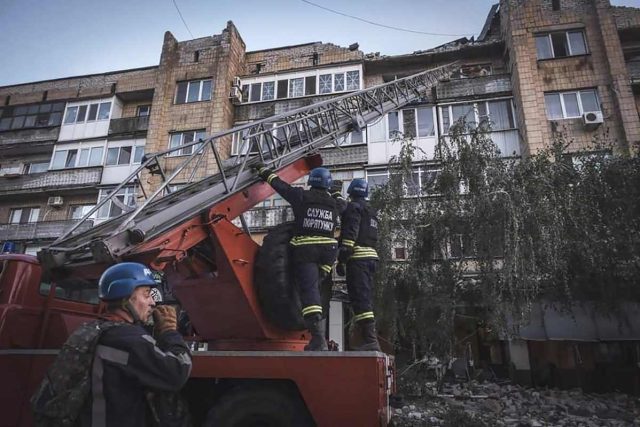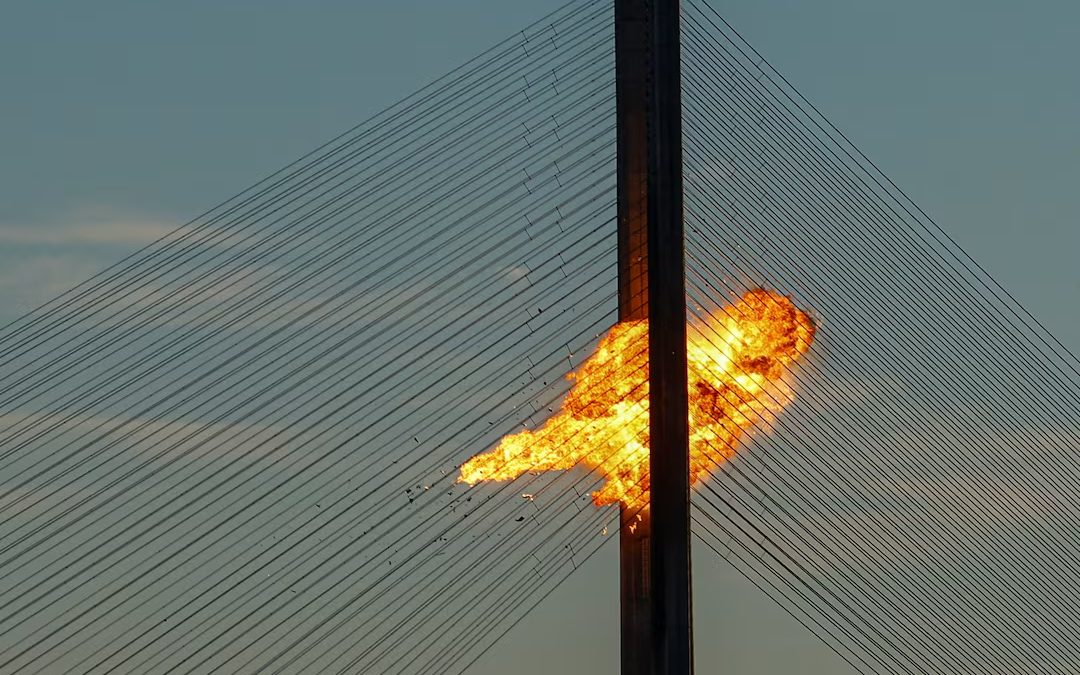
Two of the major bridges across the Dnipro River in the Ukrainian capital were reportedly struck in a Russian ballistic missile attack overnight, Kyiv Mayor Vitali Klitschko said on Tuesday, in an escalation that came within hours of fresh peace talks involving Ukrainian, American and European officials. Klitschko said the missiles hit the city's Northern and Southern bridges and that water and power supplies had been disrupted. Loud explosions were heard in the capital shortly before midnight, and the mayor said the city had suffered damage to critical infrastructure systems.
The strikes did not come out of nowhere. President Volodymyr Zelensky had warned earlier that Moscow might launch further attacks on Monday night, after the online talks in which US envoy Jared Kushner and special envoy Steve Witkoff took part alongside Ukrainian and European representatives. Those talks themselves followed an announcement by Russia that it had recorded the largest Ukrainian drone attack since the war began. In other words, the diplomatic track and the military track are moving at the same time, and each side is using force to shape the terms on which any negotiation would eventually take place.
For residents of Kyiv, the practical consequences of hitting the bridges are immediate. Eight major bridges span the Dnipro, linking the western and eastern parts of the city, and an estimated three million residents rely on them to travel across Kyiv. Klitschko said some areas were experiencing disruptions to water and heating supplies, and officials said some above-ground subway services had been damaged in the overnight attacks after civilians were told to go to civil defence shelters. Residents of the capital typically shelter in underground stations during air raids, which means a night of attacks is also a night of lost sleep, interrupted work and anxiety about whether the lights and the heating will still be on in the morning, as winter approaches.
The bridges are not new targets. Several of the capital's major bridges were also targeted by Russian drone strikes in October, according to the BBC. What distinguishes this attack, as described by the mayor, is the use of ballistic missiles against structures that carry a large share of the capital's daily traffic. Zelensky said in his address on Monday evening that more needed to be done to support Ukraine's defence against Russian ballistic missile strikes, a point he has pressed repeatedly with Western partners. He also said Moscow is receiving dozens of missiles per month from North Korea, an assertion made by the Ukrainian leader that the BBC reported without independent confirmation.
Ukraine, for its part, was also striking at Russian logistics. The Ukrainian military hit the Kerch Bridge, which links Russia to occupied Crimea, for a second consecutive day, according to Sergei Aksyonov, the Moscow-installed governor, who said on Telegram that traffic across it had been suspended. The BBC reported that the earlier strike killed two people, according to the region's Moscow-installed governor. The Kerch Bridge was built by Russia after it invaded and annexed the peninsula in 2014, and President Vladimir Putin inaugurated it with great fanfare in 2018. It has come under repeated attack by Ukrainian forces. The severity of the latest strike was still unclear, and the bridge is protected by multiple layers of aerial and maritime defences.
Russia's own account of the past day underlines the scale of the aerial war. Russian officials said the military intercepted and destroyed 2,049 drones and four Flamingo long-range missiles over 24 hours, and Moscow Mayor Sergey Sobyanin said around 600 of the drones flew towards the Russian capital alone. These are figures from the Russian side and cannot be independently verified, but they point to how heavily both countries now rely on drones, and how much of the war has shifted from fixed front lines to the contest between long-range strikes and air defences.
Against this backdrop, the diplomacy has a very specific shape. After Monday's meeting, Kushner said the United States was committed to providing Ukraine with strong, credible security guarantees, as well as a path towards EU membership. He added that NATO would remain a critical pillar of European security, and that preparations were under way for a further multilateral meeting in the near future. Zelensky described the meeting as difficult, but said Europe was represented for the first time by the full delegation that will take part in negotiations with Moscow, including the United Kingdom, France, Germany, Italy, Poland, the European Union and NATO. Kyiv has long argued that Europeans must be at the table, because its longer-term ambition to join the European Union means any settlement directly affects European security.
The central obstacle remains territory. Approximately one-fifth of Ukraine is now under Russian occupation, and Kyiv has refused Putin's demand that it give up the parts of the eastern Donbas region that it still controls. Russia launched its full-scale invasion in February 2022. Any peace framework therefore has to answer two questions at once: where the lines are drawn, and what prevents a renewed attack afterwards. Security guarantees and an EU path are Kyiv's answer to the second question; Moscow's insistence on the Donbas is its answer to the first. The two positions have not been reconciled, and the overnight strikes suggest neither side believes it has yet lost the ability to improve its hand by force.
There is also the human toll that keeps surfacing in the background of the talks. Ukrainian officials said the final death toll from a Russian attack on the village of Komyshuvakha earlier this month had reached 72, with four people still considered missing, in what they describe as one of the deadliest single attacks since the start of the war in 2022. Every such event hardens public opinion in Ukraine and makes concessions politically harder for Zelensky, while the strikes on Kerch and on Russian territory feed Moscow's narrative that it is the target of an escalating campaign. Elsewhere on Tuesday, three people were reported injured in a Russian missile attack in the Cherkasy region, according to local officials.
Why does this matter beyond Ukraine? First, attacks on civilian infrastructure in winter test the resilience of a country that has lived under bombardment for nearly four years, and they raise questions for Western governments about air defence supplies, particularly interceptors for ballistic missiles. Second, strikes on the Kerch Bridge show that Ukraine continues to treat Russia's links to Crimea as a legitimate military objective, which complicates any talk of a ceasefire along current lines. Third, the presence of a full European delegation in the talks signals a shift in how the diplomacy is structured, moving away from a purely US-Russia channel towards a format in which European security interests are directly represented.
The most likely near-term outlook is more of the same: continued exchanges of long-range strikes while officials prepare the next round of meetings. Whether the bridge attacks will change the calculation in Kyiv or Moscow is uncertain. What is clear is that a capital of millions of people is again dealing with damaged infrastructure, that Russia and Ukraine are each targeting the other's transport arteries, and that the talks Kushner described are being conducted under fire. Observers will be watching for the date of the next multilateral meeting, for official confirmation of the damage to the bridges and the Kerch crossing, and for any sign that either side is prepared to move off its stated position on the Donbas.