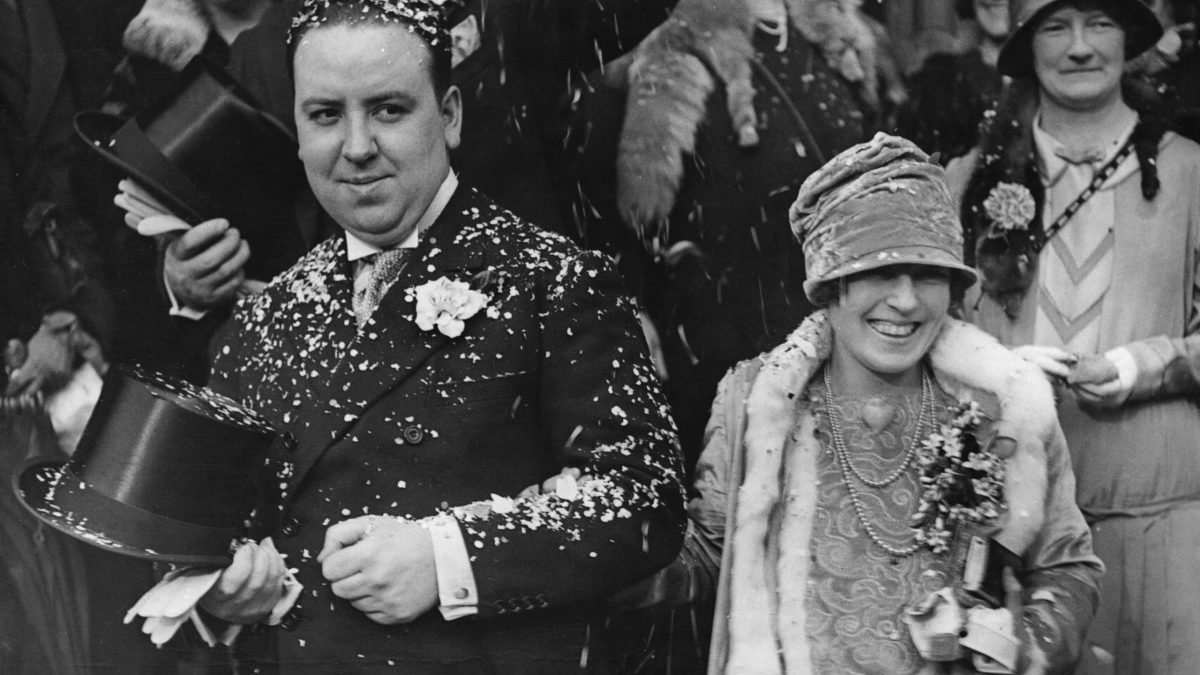
Sir Alfred Hitchcock (13 August 1899 to 29 April 1980) was an English filmmaker, widely regarded as one of the greatest and most influential figures in the history of cinema. In a career spanning six decades he directed over 50 feature films, many still widely watched and studied, and became known as the "Master of Suspense". This biography follows his life, films and legacy.
Alfred Hitchcock at a Glance
| Full name | Sir Alfred Joseph Hitchcock |
| Born | 13 August 1899, Leytonstone, Essex, England |
| Died | 29 April 1980, Bel Air, Los Angeles (aged 80) |
| Profession | Film director and producer |
| Nickname | The Master of Suspense |
| Best-known films | The 39 Steps, Rebecca, Rear Window, Vertigo, North by Northwest, Psycho, The Birds |
| Wife | Alma Reville (married 1926) |
| Child | Patricia Hitchcock |
| Honours | BAFTA Fellowship (1971), AFI Life Achievement Award (1979), knighted 1980 |
Childhood in Leytonstone
Alfred Joseph Hitchcock was born on 13 August 1899 in the flat above his parents' leased greengrocer's shop at 517 High Road in Leytonstone, then in Essex. His father, William Edgar Hitchcock, was a greengrocer and poulterer, and his mother was Emma Jane Whelan. He had an older brother, William John, and an older sister, Ellen Kathleen, known as Nellie. His parents were Roman Catholics with English and Irish ancestry, and the household was "characterised by an atmosphere of discipline".
One of his favourite stories for interviewers was that his father sent him to the local police station at the age of five with a note; the policeman locked him in a cell for a few minutes, saying, "This is what we do to naughty boys." The experience, he said, left him with a lifelong fear of the police.
Entering Film
Hitchcock trained as a technical clerk and copywriter before entering the film industry in 1919 as a title card designer. His directorial debut was the British-German silent film The Pleasure Garden (1926). His first successful film, The Lodger: A Story of the London Fog (1927), helped shape the thriller genre, and Blackmail (1929) was the first British "talkie". The 39 Steps (1935) and The Lady Vanishes (1938) are ranked among the greatest British films of the 20th century.
Marriage
On 2 December 1926 Hitchcock married the English screenwriter Alma Reville at the Brompton Oratory in South Kensington. Their daughter and only child, Patricia, was born on 7 July 1928; she died on 9 August 2021 at the age of 93. Reville became his closest collaborator. During the preparation of North by Northwest, she was diagnosed with cancer, and although she made a full recovery, it made Hitchcock imagine life without her for the first time.
Hollywood
By 1939 he had earned international recognition, and the producer David O. Selznick persuaded him to move to Hollywood. A string of successful films followed: Rebecca (1940), Foreign Correspondent (1940), Suspicion (1941), Shadow of a Doubt (1943) and Notorious (1946). Rebecca won the Academy Award for Best Picture, with Hitchcock nominated as Best Director. He also received Oscar nominations for Lifeboat, Spellbound, Rear Window and Psycho.
The Peak Years
From the 1950s his films included Strangers on a Train (1951), Dial M for Murder (1954), Rear Window (1954), To Catch a Thief (1955), Vertigo (1958), North by Northwest (1959), Psycho (1960) and The Birds (1963). He made films with some of the biggest stars in Hollywood, including four with Cary Grant, four with James Stewart, three with Ingrid Bergman and three consecutively with Grace Kelly. Hitchcock became a United States citizen in 1955.
From 1955 to 1965 he hosted the television series Alfred Hitchcock Presents, with a droll delivery and gallows humour that made him a celebrity in his own right. The title sequence showed a caricature of his profile, which he drew himself in nine strokes. He directed 18 episodes.
Later Films
Failing health reduced his output in the last two decades of his life. He made Torn Curtain (1966), which ended his twelve-year collaboration with the composer Bernard Herrmann, Topaz (1969) and Frenzy (1972). He was working on a spy thriller, The Short Night, which was never filmed.
Honours, Knighthood and Death
Hitchcock's films garnered 46 Academy Award nominations, including six wins, though he never won the Best Director award despite five nominations. He received the BAFTA Fellowship in 1971 and the AFI Life Achievement Award in 1979. Having refused a CBE in 1962, he was appointed a Knight Commander of the Order of the British Empire in the 1980 New Year Honours; too ill to travel to London, he received the papers from the British consul general at Universal Studios on 3 January 1980. He died of kidney failure on 29 April 1980 at his home in Bel Air.
Wartime Beginnings and Hollywood Life
Hitchcock's route into film was not direct. He told his parents he wanted to be an engineer and in 1913 enrolled in night classes at the London County Council School of Engineering and Navigation in Poplar. His father, who had suffered from emphysema and kidney disease, died on 12 December 1914 at the age of 52, and to support himself and his mother Hitchcock took a job as a technical clerk at the Henley Telegraph and Cable Company, continuing night classes in art history, painting and economics.
Selznick signed him to a seven-year contract beginning in April 1939, and the Hitchcocks moved to Hollywood. They lived in a flat on Wilshire Boulevard, kept a low profile and were not interested in attending parties. He was impressed by Hollywood's filmmaking culture, expansive budgets and efficiency compared to the limits he had often faced in Britain, and in June 1939 Life called him the "greatest master of melodrama in screen history".
Family and Home
The Hitchcocks' primary residence was an English-style home in Bel Air, purchased in 1942. That year his mother, Emma, died, and on 4 January 1943 his brother William died of an overdose at the age of 52. In his last years Hitchcock was worried about Alma, who had suffered a stroke, while his own health declined: he had a pacemaker and was being given cortisone injections for his arthritis.
Asked by a reporter after the ceremony why it had taken the Queen so long, Hitchcock quipped, "I suppose it was a matter of carelessness." Cary Grant, Janet Leigh and others attended a luncheon afterwards. The remark is typical of the humour with which he presented himself to the public, a humour that made him as well known as any of his actors.
Legacy
In 2012 Vertigo displaced Orson Welles's Citizen Kane as the British Film Institute's greatest film ever made, based on its worldwide poll of critics. As of 2021, nine of his films had been selected for the US National Film Registry. His methods, from the use of suspense rather than shock to the careful control of the viewer's point of view, remain a standard reference in film schools and in modern thrillers.