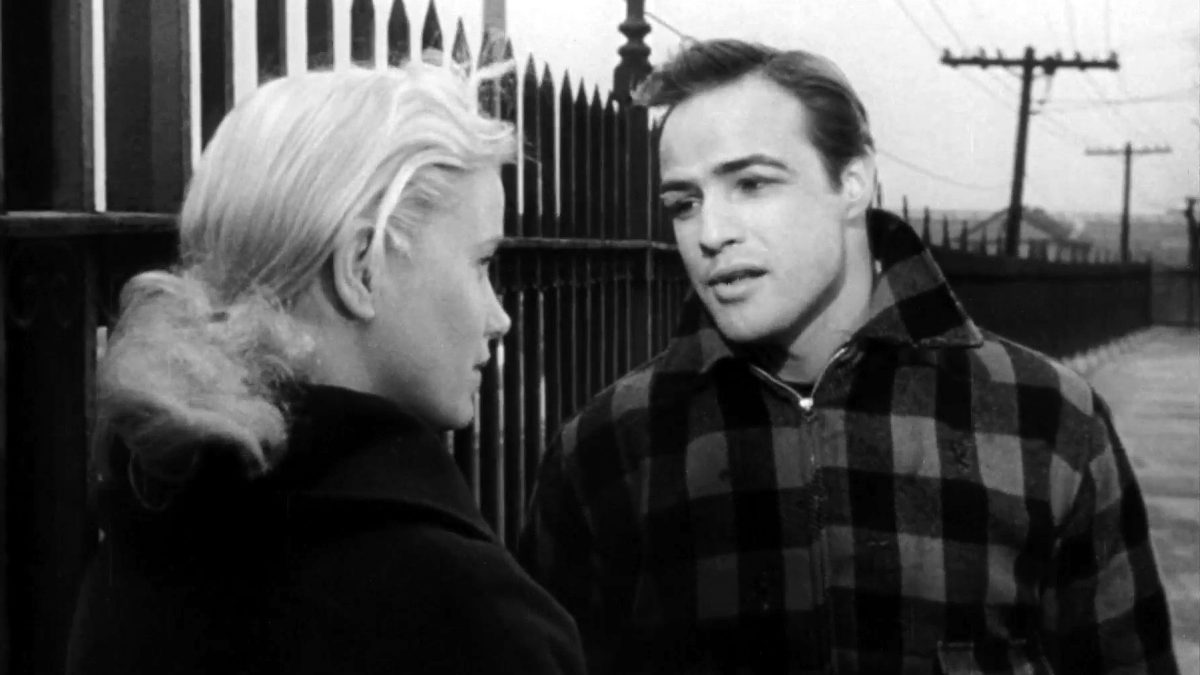
Marlon Brando (3 April 1924 to 1 July 2004) was an American actor, widely regarded as one of the greatest and most influential performers in the history of cinema. He won two Academy Awards, for On the Waterfront (1954) and The Godfather (1972), and is credited as one of the first actors to bring the Stanislavski system and method acting to mainstream audiences. This biography follows his life, career, family and legacy.
Marlon Brando at a Glance
| Full name | Marlon Brando Jr. |
| Born | 3 April 1924, Omaha, Nebraska, United States |
| Died | 1 July 2004, Los Angeles, California (aged 80) |
| Profession | Actor |
| Academy Awards | Best Actor for On the Waterfront (1954) and The Godfather (1972) |
| Other honours | Two Golden Globe Awards, three BAFTAs, a Cannes Film Festival Award and a Primetime Emmy Award |
| Best-known roles | Stanley Kowalski, Terry Malloy, Vito Corleone |
| Children | At least 11, three of them adopted |
Early Life
Marlon Brando Jr. was born on 3 April 1924 in Omaha, Nebraska, the only son of Marlon Brando Sr., a salesman who frequently travelled, and Dorothy Pennebaker, a stage actress who was often away from home. He had two elder sisters, Jocelyn and Frances. Brando developed abandonment issues after the family's housekeeper, to whom he had become attached, left to marry. His ancestry was mostly German, Dutch, English and Irish, and despite his famous roles he had no Italian ancestry. In 1930, when he was six, the family moved to Evanston, Illinois, where he developed a reputation for mimicry and pranks and met the actor Wally Cox, who remained his friend until Cox's death in 1973.
Stage Beginnings
Brando came under the influence of the teacher Stella Adler and Stanislavski's system in the 1940s. He made his Broadway debut in I Remember Mama (1944) and won Theater World Awards for Candida and Truckline Cafe (1946). He returned to Broadway as Stanley Kowalski in Tennessee Williams's A Streetcar Named Desire in 1947, a role he reprised in the 1951 film directed by Elia Kazan, which earned him his first Academy Award nomination.
Film Stardom
Brando made his film debut as a wounded G.I. in The Men (1950). He was nominated for Oscars for Viva Zapata! (1952) and Julius Caesar (1953), in which he played Mark Antony, and he won his first Academy Award for Best Actor for his performance as the dockworker Terry Malloy in On the Waterfront (1954). He also portrayed the rebellious Johnny Strabler in The Wild One (1953), an emblem of the era's generation gap, and starred in Guys and Dolls (1955), Sayonara (1957), for which he was nominated, and The Young Lions (1958). He made his directorial debut with One-Eyed Jacks (1961), which performed poorly at the box office.
The Godfather and the 1970s
His career revived in the 1970s with The Godfather (1972), in which he played the crime boss Vito Corleone and won his second Academy Award for Best Actor. He was nominated again for Last Tango in Paris (1973). He later appeared in The Missouri Breaks (1976), Superman (1978) and Apocalypse Now (1979), and on television he won the Primetime Emmy Award for Outstanding Supporting Actor for Roots: The Next Generations (1979), after which he took a nine-year hiatus from acting.
Later Work
After The Formula (1980), Brando announced his retirement, but he returned in 1989 in A Dry White Season, an anti-apartheid drama, for which he agreed to work for free and earned an Academy Award nomination for Best Supporting Actor. In The Freshman (1990) he played a caricature of his Vito Corleone role as Carmine Sabatini, and his final films included The Island of Dr. Moreau (1996) and The Score (2001).
Activism
In the early 1960s Brando contributed to the Southern Christian Leadership Conference and to a scholarship fund for the children of the slain NAACP leader Medgar Evers. In August 1963 he took part in the March on Washington alongside celebrities including Harry Belafonte, Charlton Heston and Sidney Poitier, and he participated in the Freedom Rides alongside Paul Newman. Films such as Sayonara, which addressed interracial romance, and The Ugly American carried messages about human rights and foreign policy.
Personal Life
Brando was known for a tumultuous private life, a large number of partners and children, and a poor treatment of women, according to biographical accounts. He was the father of at least 11 children, three of whom were adopted. In 1960 he married the Mexican-American actress Movita Castaneda; the marriage was annulled in 1968 after it emerged that she had still been legally married to her first husband. In later life he gained a great deal of weight, weighing over 300 pounds (140 kg) in the early-to-mid 1990s, and suffered from type 2 diabetes. He also earned a reputation for being difficult on set. In his last years he was granted several US patents for a method of tensioning drumheads.
Death
Brando died on 1 July 2004 of respiratory failure from pulmonary fibrosis with congestive heart failure at the Ronald Reagan UCLA Medical Center, aged 80. The cause was initially withheld, with his lawyer citing privacy concerns, and he also suffered from diabetes and liver cancer. His last role was a voice for the unreleased animated film Big Bug Man.
Method Acting and Influence
Brando's reputation rests on the way he made screen acting feel spontaneous. Having come under Stella Adler's influence in the 1940s, he brought the Stanislavski system to mainstream audiences, and his performance as Stanley Kowalski, first on stage in 1947 and then on screen in 1951, is regarded as one of his greatest. For Viva Zapata! (1952) he reportedly went to Mexico before filming to study the speech patterns, behaviour and movement of people in the town where Zapata was born.
His later career was uneven, but he still produced memorable work. Roger Ebert wrote of The Freshman that few stars had repeated the triumphs of earlier roles as triumphantly as Brando did in that film, and in A Dry White Season he received praise and an Academy Award nomination, and won the Best Actor Award at the Tokyo Film Festival, for a performance he had agreed to give for free. His memoir, Songs My Mother Taught Me, is also a source for many stories about his life, though they should be read as his own account.
Legacy
The American Film Institute lists Brando as the fourth greatest male star whose debut occurred before or during 1950. Time magazine named him "Actor of the Century" in its 1999 list of the 100 Most Important People of the Century, and he was one of only six actors on the list. The critic Pauline Kael called him an "American hero" who embodied the tragic themes of the 1950s. Encyclopaedia Britannica describes him as the most celebrated of the method actors, whose slurred, mumbling delivery marked his rejection of classical dramatic training, and his performances remain a benchmark for naturalistic acting.