The International Court of Justice in The Hague is due to deliver its verdict on Thursday, 19 November, in the genocide case that The Gambia filed against Myanmar in November 2019. The judges must decide whether Myanmar, as a state, committed genocide against its Rohingya Muslim minority during the 2017 military crackdown, in breach of the 1948 Genocide Convention. It is the court's first judgment on the merits of a genocide case in more than a decade, and Al Jazeera reports that it will be the first final judgment among the five genocide cases currently pending before the court. The BBC pointed out a more striking fact: dozens of individuals have been prosecuted for genocide in conflicts such as Rwanda and the former Yugoslavia, but no state has ever been found guilty of genocide by an international court.
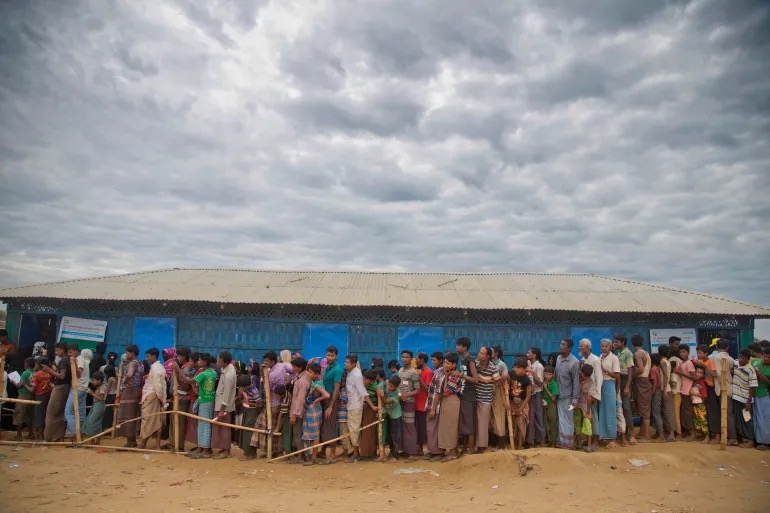
The case for a finding against Myanmar is built on the scale and character of the 2017 operation. Myanmar's military began what it called clearance operations in Rakhine State in October 2016 and launched a far larger campaign in August 2017 after attacks on police posts by a Rohingya armed group. The United Nations estimated that about 10,000 Rohingya were killed and 740,000 forced to flee to Bangladesh. UN investigators found that soldiers razed hundreds of villages, carried out mass killings and routinely raped and gang-raped Rohingya women, girls and boys, and said the sexual violence indicated genocidal intent. A UN report in 2018 said the army's tactics were "grossly disproportionate to actual security threats". The Gambia, a Muslim-majority nation of 2.5 million people, brought the case on behalf of the 57-member Organisation of Islamic Cooperation. Its lead lawyer, Arsalan Suleman, told the BBC that the team showed the court a long history of discrimination, including the 1982 citizenship law, as a background to the government's rhetoric and policies, and argued that these were indicators of genocidal intent. In 1982, Myanmar left the Rohingya out of its 135 recognised ethnic groups, and nearly all of them have since been denied citizenship, making them the world's largest stateless group, according to the figures cited by Al Jazeera.
The case against a genocide finding rests on a legal standard that is deliberately demanding. The court must find not only that atrocities occurred but that they were carried out with the specific intent to destroy a group, wholly or partly. As the BBC explained, where there is no explicit genocidal programme of the kind the Nazis had, judges typically require that the only reasonable inference from the defendants' actions is genocidal intent. Myanmar's position is that it was carrying out a legitimate counterterrorism operation against Rohingya fighters, not targeting the Rohingya as a people, and it has denied accusations of ethnic cleansing and genocide. Aung San Suu Kyi, who led the initial defence in person at The Hague in 2019 while head of the elected government, argued that The Gambia had mischaracterised a complex conflict and that, while war crimes may have been committed, that is not proof of genocidal intent. The BBC recalled the Bosnian precedent: Bosnia-Herzegovina filed its case against Serbia in 1993, and it took the court 14 years to rule that the 1995 Srebrenica massacre amounted to genocide but that there was not enough proof Serbia as a state had genocidal intent, though Serbia was found to have failed to prevent genocide. Myanmar also tried to block the case on standing, but in 2022 the judges ruled that The Gambia could bring it because both countries are parties to the convention, under which all signatories must prevent and punish genocide.
The ruling matters in several directions at once. For the Rohingya diaspora, it carries emotional and historical weight. Mohammed Nowkim, a Rohingya man driven out of Buthidaung in 2017 who now lives in Canada, told the BBC that the case is "like formal recognition of our suffering". Legally, Arsalan Suleman called a win for The Gambia "a judgment of landmark importance" that would give renewed vitality to the 1948 convention. Al Jazeera adds that legal experts believe the reasoning could bear on South Africa's ongoing case accusing Israel of genocide in Gaza, which Israel is contesting. Seven states, including Canada, France and the United Kingdom, backed The Gambia at the January hearings on the merits. The Gambia has asked the court to order Myanmar to ensure displaced Rohingya can return safely, compensate them and rebuild destroyed homes and property.
But the practical limits are severe, and the experts quoted are candid about them. An ICJ ruling cannot be appealed, yet the BBC noted that no penalty follows from it, and the court does not rule on the guilt of individual soldiers or commanders, only on the conduct of states. Michael Becker, a professor at Trinity College Dublin and former ICJ legal officer, told Al Jazeera that a finding may do little in the short term for the more than one million victims, and that the court may order remedies only in general terms, leaving Myanmar to decide how to comply. He said the political conditions in Myanmar are not suited to delivering relief soon. The general who runs Myanmar, Min Aung Hlaing, was responsible for the 2017 operations and is rebuilding relations mainly with Asian neighbours that, the BBC said, are unlikely to pay much attention to a verdict.
The situation on the ground has also moved on. Since fighting with the military resumed in 2023, the Arakan Army, an ethnic Rakhine armed group, has taken most of Rakhine State, and the UN human rights office said in August that both forces have committed widespread and systematic abuses against the Rohingya. The UN says those abuses have driven more than 155,000 Rohingya into Bangladesh since early 2024, taking the refugee population there to about 1.2 million. Nearly all live in crowded camps in Cox's Bazar, dependent on aid that has fallen sharply, especially since the Trump administration slashed foreign aid in 2025; many receive smaller food rations and many camp schools have closed. The Arakan Army is hostile to the idea of Rohingya returning, which makes a safe return even harder to imagine.
Whatever the judges decide, the day is a test of whether international law can reach a state accused of the gravest crime. A finding of genocide would put Myanmar in a category with very few precedents and give diplomats a legal basis to press for action. A finding that stops short would be read as confirmation of how high the bar is. Either way, the Rohingya who have waited since 2017 will be watching The Hague, knowing that the verdict, however historic, will not by itself bring them home. Delima News will update this report when the court's decision is public.