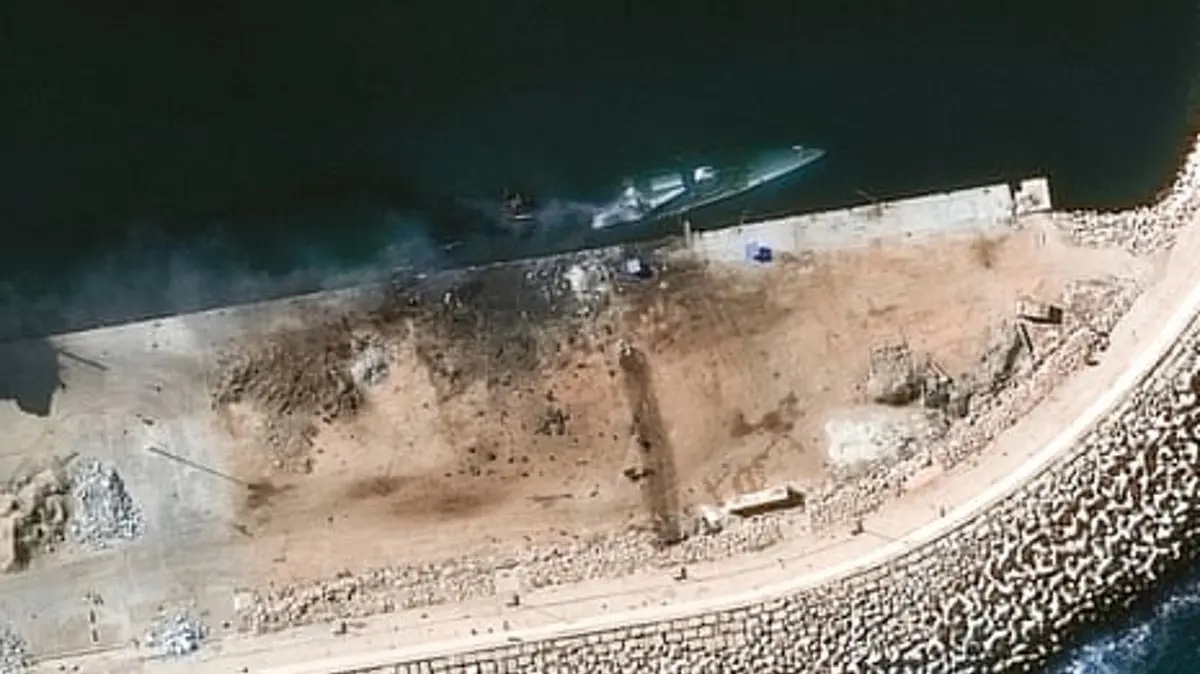
Anchored in a Mediterranean harbour nearly 2,000 miles from Moscow, the captain of Russia's corvette Merkury might well have thought his ship was safe from attack. It was not. A night-time operation at the port of Benghazi in eastern Libya, co-ordinated by Ukraine's SBU intelligence agency and its armed forces, sank the Russian warship and also hit an accompanying cargo vessel, according to the BBC's security correspondent Frank Gardner. The strike, reported on 23 November 2026, has pushed an uncomfortable question to the front of the diplomatic agenda: is the war in Ukraine now spreading well beyond its borders?
Gardner's own answer is that it already was. The Benghazi attack, which Ukrainian President Volodymyr Zelensky called "an exemplary operation", will nevertheless raise the stakes another notch. Russia, which is waging what Gardner describes as a non-stop campaign of daily missile and drone strikes aimed at battering Ukraine's civilian population into submission, has called the sinking "a dangerous escalation". The United Nations mission in Libya has already expressed its "deep concern", and Libyan officials have pointed out that their country is not a party to the Russia-Ukraine war.
The geography matters. Both the Merkury and the cargo ship that was also struck were berthed in the eastern part of Libya, an area controlled by the pro-Moscow warlord and self-styled "Field Marshal" Khalifa Haftar. That is why Russian ships were able to use the harbour in the first place, and it is also why Kyiv considered them a legitimate target. For Libya, however, the episode is awkward. A foreign war has now been fought in one of its ports, and Libyan officials have stressed that the country is not a party to it.
The Benghazi strike did not come out of nowhere. At the weekend, a suspected Ukrainian drone attack hit a Russian dry-cargo ship in the Gulf of Finland, an incident the Kremlin described as an act of terrorism. Ukraine's long-range drones have also previously struck Russia's Baltic oil terminal at Ust-Luga. Some of Ukraine's more audacious attacks, which Zelensky likes to call "long-range sanctions", have hit targets thousands of kilometres beyond Ukraine's borders, deep inside Siberia. The most notable was last year's Operation Spider's Web, in which a specially adapted lorry was driven close to a Russian strategic nuclear bomber airbase and released a swarm of explosive drones that damaged or destroyed several expensive bombers.
Ukraine has also been active further south in Africa, where its forces have targeted Russian mercenaries from the Africa Corps, the successor to the Wagner Group, which was accused of carrying out numerous human rights abuses. Seen against that background, the sinking of the Merkury is less an aberration than the latest point on a line that has been rising for some time: Ukraine, unable to match Russia's size on the front line, is looking for places where Russian assets are exposed and where the cost to Moscow is highest.
The shipping industry will watch the consequences closely. Throughout this year, the International Maritime Organisation (IMO) has condemned all attacks on commercial shipping in the Strait of Hormuz, and Gardner notes that the global shipping community will now be wondering whether Benghazi sets a dangerous precedent. If Ukraine can plan and execute such a bold attack on Russian ships in a nominally neutral harbour so far from home, he asks, where does it stop? The question is not only about Russia. Any navy or merchant vessel that calls at a port controlled by a faction aligned with one side in a distant war could find itself in the same position.
The attack also highlights how much of the conflict is now fought below the threshold of open confrontation with NATO. As the fifth anniversary of Russia's full-scale invasion of Ukraine approaches, the war has been spreading notably in other parts of Europe. On Friday, several Russian projectiles landed well inside Poland's borders, just 60 miles from an Anglo-French exercise of forces intended to be deployed after an eventual ceasefire in Ukraine. Polish Prime Minister Donald Tusk called it "a deliberate provocation" by Moscow. It was not the first time Russian munitions have landed inside Poland, and therefore inside NATO territory, but observers cited by the BBC say that Russia's probing of NATO's borders is becoming ever more brazen, and some are calling for a firmer response.
Options for that response are limited. Russia is already heavily sanctioned by the West, and although Europe has reduced much, though not all, of its energy imports from Russia, there is little left to cut short of a military confrontation, which no one wants. That leaves allies relying on air defences, diplomatic protests and exercises, while Moscow tests how far it can go.
Further south, Romania and Moldova have frequently been struck by overflying Russian drones targeting Ukraine's Black Sea ports, while Bulgaria and Romania have suffered maritime drone attacks on commercial shipping just offshore in the Black Sea. In Romania, a NATO member, fast jets have had to be scrambled to intercept incoming Russian drones, and Gardner reports a profound suspicion that the incursions are not all accidental. The three Baltic states of Estonia, Latvia and Lithuania all border Russia and consider themselves on the front line. There have been a number of anonymous attacks on military-industrial facilities in these countries, blamed on agents acting on Moscow's behalf. Russia, for its part, suspects Estonia of being complicit in Ukrainian drone attacks on the Baltic involving overflights through Estonian airspace.
This is the world of hybrid warfare, which the BBC describes as the practice, by either side, of carrying out largely anonymous and unattributable operations using methods such as cyber attacks, the burning down of warehouses supplying military equipment, and the dispatching of drones both for surveillance and loaded with explosives. It is not new, but it is on the rise. This autumn, Germany's Leipzig-Halle airport, which is used as a resupply hub by Ukraine's cargo aircraft, was targeted by three explosive drones that were discovered before anyone was hurt. There have been other incidents involving explosive packages sent across Europe targeting Germany, Poland and the UK. Moscow denies any involvement.
Why does the Benghazi strike matter beyond the immediate damage to a single warship? First, it shows Ukraine's intelligence service and military can operate far from home and in places where Russia felt secure. Second, it forces Moscow to reconsider how and where it deploys naval assets, since a Mediterranean port that once looked like a safe logistics point now looks like a target. Third, it adds pressure on Libya's rival authorities, who face the prospect of being pulled into the conflict whether they wish to be or not. And fourth, it tests the norms of maritime conduct at a moment when the IMO has already been warning about attacks on shipping elsewhere.
Critics of the operation will argue that widening the geographic scope of the war risks escalation that could rebound on Ukraine and its backers. Russia has already described the strike as "a dangerous escalation", and the Kremlin's earlier description of the Gulf of Finland incident as terrorism suggests it will seek to frame Ukraine's long-range campaign as illegitimate. Supporters, including Zelensky, see the opposite: Russian forces attack Ukrainian cities every day, and making Russian assets vulnerable beyond the front line is a form of pressure that Kyiv can apply without relying on partners' decisions.
What happens next will depend on several things. Russia's response, whether rhetorical or military, will set the tone. The reaction of Libya's authorities, and of Haftar's forces in the east in particular, will show whether the country can keep its distance. And the response of NATO members that are themselves being probed, from Poland to Romania to the Baltic states, will indicate whether the alliance is willing to harden its stance. With a ceasefire force being prepared on paper and the war approaching its fifth year, the sinking of the Merkury is a reminder that the conflict is no longer confined to Ukraine's front lines, and that every new escalation narrows the space for a negotiated end.