Ukraine has severely damaged the Crimean Bridge, the 12-mile crossing that links Russia to the occupied Crimean peninsula, in what President Volodymyr Zelensky described as an "unprecedented operation" that took weeks to prepare. Images shared by Ukrainian officials show a large section of the road span collapsed into the water of the Kerch Strait, dealing what the BBC called a logistical and symbolic blow to Moscow's war effort. The Kremlin has acknowledged the damage and said the structure will be rebuilt, but the strike has already changed the strategic picture around Crimea and raised the stakes of a week in which Russian President Vladimir Putin is due to meet the leaders of China and the United States.
According to Zelensky, the attack was the result of a seven-stage operation carried out by the military and the security services. Over a period of weeks, Ukrainian forces gradually destroyed air defence systems, radars, electronic warfare equipment and other designated targets on the way to the final objective. The Security Service of Ukraine, known as the SBU, said its operations had "systematically suppressed enemy air defence systems" over the course of a month, and argued that the result showed "no Russian defence systems can guarantee the safety of illegal objects occupied by the invaders". Zelensky said several types of Ukrainian drones, along with the country's Flamingo and Neptune cruise missiles, were fired overnight in what he called a "pivotal stage" of the operation.
The BBC's verification team reconstructed the timeline. A significant strike had already been reported on 16 November, when drones hit the bridge at night. Traffic was paused briefly and then reinstated, and although the arch over the road section was visibly damaged, the structure remained standing. That hit turned out to be only the penultimate stage. In the early hours of 17 November, the final strikes dealt a fatal blow to the weakened arch. One verified video, filmed from a camera on board a Ukrainian-made Flamingo missile, shows the weapon approaching the main span and heading towards the steel arches, with the footage freezing just before impact. Justin Bronk of the Royal United Services Institute told the BBC that the Flamingo may have been modified to be controlled remotely, which would have improved its accuracy enough to hit the bridge supports, and that its "very heavy warhead" made it "more suitable" for attacking reinforced concrete spans.
The scale of the damage appears far greater than in earlier attacks. The massive road arch, which weighs thousands of tonnes and measures about 227 metres in length, collapsed into the strait, and daylight images taken from the Crimean shore show a section of roadway roughly 200 metres (660ft) long dragged below the surface. Ukraine's military said the roadway is "out of action" and that no vehicle can cross it. The railway section running parallel to the road was also hit by a wave of drones, but images show its supporting arch still standing, and Russia's transport ministry later said that some rail services had resumed. Russia's defence ministry, for its part, recorded the biggest Ukrainian drone attack since the war began for the second day in a row, saying it had downed 2,256 drones.
Engineers who examined the images were blunt. Colin Capriani, a structural engineer at Monash University in Melbourne, told BBC Verify that the damage to the main span is "catastrophic" and that it is "very hard to envisage" how the bridge could be rebuilt while it remains well within range of Ukrainian weapons. The arch, he explained, is not decorative: it transfers loads and supports the span, helping to ensure the stability of the whole structure. David MacKenzie of the engineering consultancy COWI said that major attacks in 2022 and 2023 had also damaged the road spans, but the structure survived. The difference this time, he said, is that "the most critical and vulnerable part of the bridge has been hit", and while the wreckage could be cleared fairly quickly, reinstating full road traffic "will take over a year".
The Kremlin's response was defiant. Spokesman Dmitry Peskov said Putin had been briefed and that the bridge would "be restored following Ukrainian strikes, and it will be even better than before". He did not rule out the possibility that the timing of the attack was linked to Putin's visit to China. Russia's Investigative Committee confirmed structural damage and said it had opened a criminal case on terrorism charges against what it called "Ukraine's armed formations". Moscow's language reflects how closely the bridge is tied to the president's personal image. It was built after Russia invaded and illegally annexed the Ukrainian peninsula in 2014, at a reported cost of $3.6bn (£2.7bn), by Arkady Rotenberg, a tycoon close to Putin. Putin opened it himself in May 2018 by driving a lorry across it, and the BBC noted that the section he drove over now lies on the seabed.
Ukrainians see the same structure very differently. Many regard it as one of the main symbols of Russia's continuing occupation of Ukrainian land. "We're drinking champagne!" an engineer from Kyiv named Andrii told the BBC, saying the attack would "deal a very heavy blow to the morale of the Russians". He acknowledged that some Ukrainians fear Moscow will respond with more attacks on civilian infrastructure, but said he did not think the Russians could "make things much worse", because they were already "pounding us every single night with everything they've got".
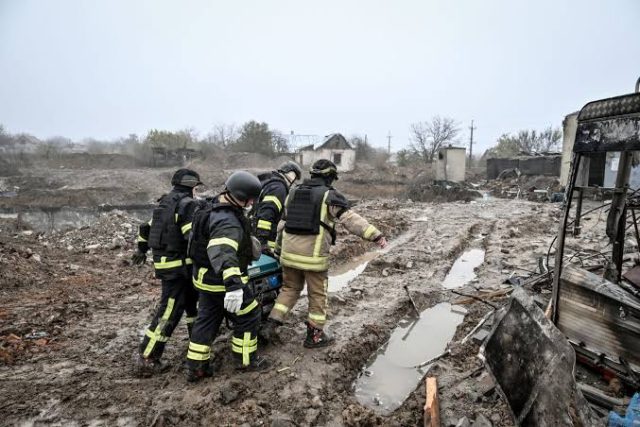
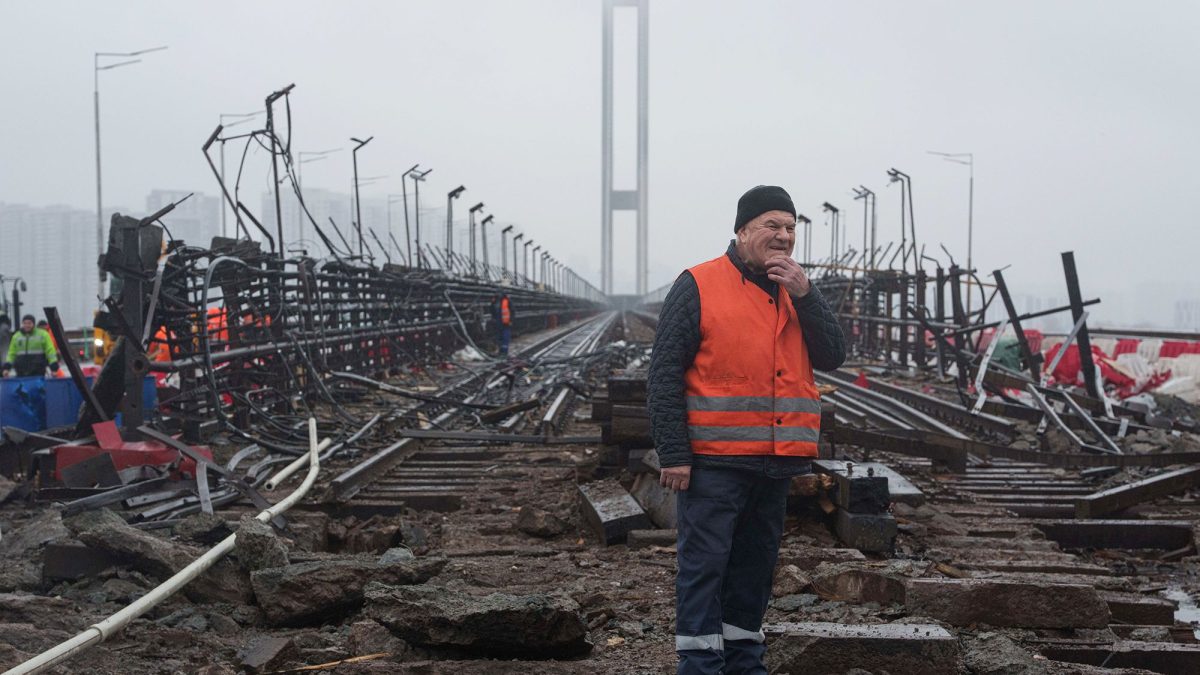
That fear is not abstract. While the bridge story dominated headlines, Kyiv itself was under attack. Mayor Vitaliy Klitschko said the city suffered "damage to critical infrastructure systems", with disruption to heating and water supplies. Zelensky said four ballistic missiles targeted the Southern (Pivdennyi) Bridge and three more were fired at the Northern (Pivnichnyi) Bridge. Eight major bridges span the Dnipro River in the capital, and an estimated three million residents rely on them to move between the western and eastern parts of the city. Klitschko later said traffic had partially resumed on both bridges after they were closed. Some above-ground metro services were also damaged, and in the central Cherkasy region three people were injured in a Russian missile attack, according to local officials.
The military consequences are still being assessed. Moscow uses Crimea as a base, with airbases, troop concentrations, training grounds and artillery stockpiles, and from the peninsula it carries out strikes on the rest of Ukraine and resupplies troops in the south. The bridge provided a road and rail route for soldiers heading to the front. Ukraine has long targeted it but struggled to close it for good. The BBC's analysis says that although it is too early to speak of a complete blockade, the risk of a serious transport and logistics crisis for the Russian military has increased significantly.
Russia does have alternatives, but each has limits. A land corridor still runs through the occupied parts of the Zaporizhzhia and Kherson regions, although Ukraine has been systematically striking transport routes across northern Crimea, as well as bridges and crossings near Chongar, which has already caused problems with the delivery of fuel and other supplies, including military cargo. A ferry crossing over the Kerch Strait could partly compensate for the loss of the bridge, but its capacity is very limited and anything moving on the Black Sea has become vulnerable, since Ukrainian naval and aerial drones operate extensively in the area. The BBC also reported that debris from the arch may have blocked the shipping channel, which would make it harder for larger vessels to pass and create further problems for ports in the Sea of Azov, including the occupied cities of Mariupol and Berdyansk.
The timing adds a diplomatic layer. The strike came ahead of a planned meeting in Shenzhen, China, on Thursday between Putin, US President Donald Trump and Chinese President Xi Jinping, a gathering that was meant to put the Russian leader back in the international spotlight. Zelensky had warned of major attacks in the days leading up to it. Analysts quoted by the BBC saw the strike as an attempt by Kyiv to raise the political cost to Putin, in contrast with Ukraine's campaign against oil refineries and depots, which aims to raise the economic cost of the war to Russia. Whether it changes Moscow's calculations in Shenzhen is unclear. Nearly five years into the full-scale invasion, Putin continues to wreak destruction on Ukraine's civilian population, and the bridge collapse does not alter that reality on the ground in the short term.
What is clear is that a structure designed to symbolise permanence is no longer intact. For Russia, rebuilding will mean not only engineering work that experts estimate will take more than a year for full road traffic, but also a decision about how to protect a crossing that has now been shown to be vulnerable. For Ukraine, the operation demonstrates that it can systematically dismantle air defences over weeks and then strike one of the best-guarded targets in the occupied territories. The next few days, as the Shenzhen meeting takes place and Russia decides how to answer, will show whether the collapse of the Crimean Bridge becomes a turning point or one more dramatic chapter in a war that has no settlement in sight.