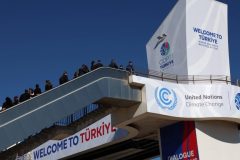
Delegates at the United Nations climate summit in Antalya, Turkiye, are at odds over a contentious draft agreement that calls for a phaseout of fossil fuels and early net zero targets for wealthy nations, and over when the world's top climate science body should publish its next assessment. The 18-page draft "cover decision" was published on Monday by co-host Australia, and by Tuesday it had exposed deep divisions among countries taking part in COP31. The talks are scheduled to end on Friday, but, as AFP and Al Jazeera noted, climate negotiations frequently run into overtime because decisions must be reached by consensus, meaning that even a single country can block the entire process.
The draft is ambitious by design. It includes a broad range of demands, including a call for wealthy nations to reach net zero emissions by 2030 and wording on phasing out fossil fuels, a subject oil-rich countries have long resisted. Its length and scope have made it a lightning rod. Wopke Hoekstra, the European Union's climate envoy, said that the draft as written could make the negotiations "untenable", stating that "the cover decision does not go in the right direction and needs significant change". The EU's concern, according to those reports, is that the text goes too far in some directions and not far enough in others.
Other delegations urged calm. Brazil's environment minister, Joao Paulo Capobianco, said: "It's very easy to draw red lines at the start of the process," adding that deadlocks can be overcome through "an adjustment in the wording" of the draft. Australian Climate Minister Chris Bowen, who is steering the negotiations, acknowledged that the text includes elements "that not all parties agree on" and said there might be "at least one more draft" before the end of the week. The comments suggest that organisers regard the first version as an opening position and not a final offer.
Net zero by 2030 for rich nations is the sharpest edge of the draft. Michael Joseph, the environment minister of the island state of Antigua and Barbuda, said consensus on net zero at COP31 "might be very, very difficult", while adding that he "would love to see a commitment that calls on the phasing out of fossil fuels". A European official who asked not to be named told AFP: "Emerging countries want to impose as many obligations as possible on developed countries. It's tactical." The official described such demands as "obviously unacceptable" and pointed to a bloc of countries that includes Saudi Arabia and India. That is one official's characterisation, and the countries named have not been quoted agreeing with it in the reports.
The second fight is about science, and it centres on Saudi Arabia. The Intergovernmental Panel on Climate Change, the UN's climate science panel, publishes a series of reports every five to seven years that provide the definitive scientific assessment of global warming and inform policy responses. Dozens of European, African and Pacific states want the seventh assessment report to be published before a crucial verification of global carbon-cutting efforts at the next COP33 conference, due in 2028. The IPCC suspended its last meeting after failing to break the impasse, and a new session has been set for December to resolve the issue. Ilana Seid, chair of the Alliance of Small Island States, described the delays as "unjustifiable".
Saudi Arabia has defended its position. On Tuesday, the kingdom's delegation said in a statement that "Saudi Arabia is not seeking to delay climate science". It said it "advocates publication timelines that allow sufficient scientific review, transparency and meaningful participation", but it did not say when it would like the reports to be published. The question looks procedural, but the stakes are real. The timing of the assessment decides whether the best available science is on the table when countries take stock of their progress in 2028, and a delay would push key findings past that moment.
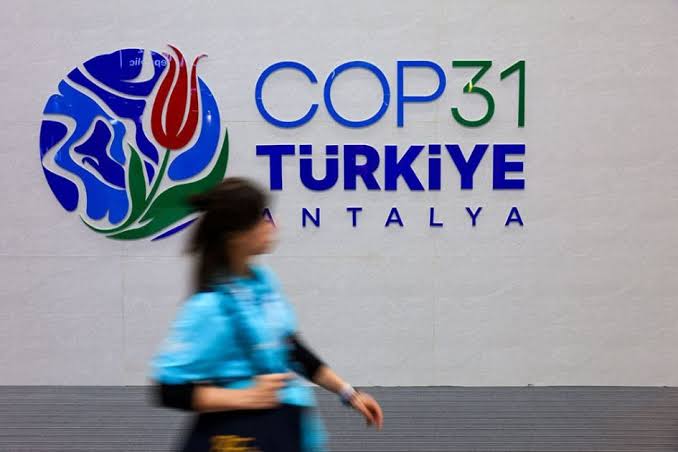
COP31 itself has an unusual structure. It is hosted in Turkiye, in Antalya, with Australia as co-host steering the negotiations, a division of roles reflected in the fact that the draft text was published by the Australian side. The arrangement has put Bowen at the centre of a delicate balancing act between countries that want faster action and those that want a gentler text. Participants have also noticed protest installations around the venue, a reminder that outside the negotiating rooms, activists are pressing for stronger commitments.
Behind the procedural language is a long-running disagreement over who should do more. Rich countries have historically produced most of the emissions that have already warmed the planet, and many poorer and island states argue that the wealthiest should therefore move fastest. Wealthier governments tend to answer that every large emitter must contribute. The draft's call for net zero by 2030 for wealthy nations reflects the first view, while the European official's complaint about obligations reflects the second.
It would be a mistake to treat the draft's most radical lines as the likely outcome. In UN climate processes, first drafts often contain maximal positions that are later narrowed through successive versions, and the experience of previous summits has been that final decisions tend to be less detailed than early texts. The challenge for the presidency is to preserve enough ambition to keep vulnerable island and African states on board while avoiding red lines that would lead major producers to block consensus. Antigua and Barbuda's minister, for example, wants a fossil fuel phaseout but is doubtful about net zero by 2030, a sign that even supporters of strong language are weighing what can realistically be agreed.
The days ahead will show whether the language survives. Observers will watch for a second draft, for movement on the IPCC timeline, and for whether the EU's warning about untenable negotiations translates into a harder line. If the talks fail to close on Friday, they will roll into overtime, a familiar pattern. The December IPCC session offers another opening to settle the science question outside the main negotiations. For countries on the front line of climate impacts, the outcome matters concretely: they want a clear signal on ending fossil fuel use, and they want the science that underpins the global stocktake delivered on time. Whether COP31 produces either will be clearer by the end of the week.