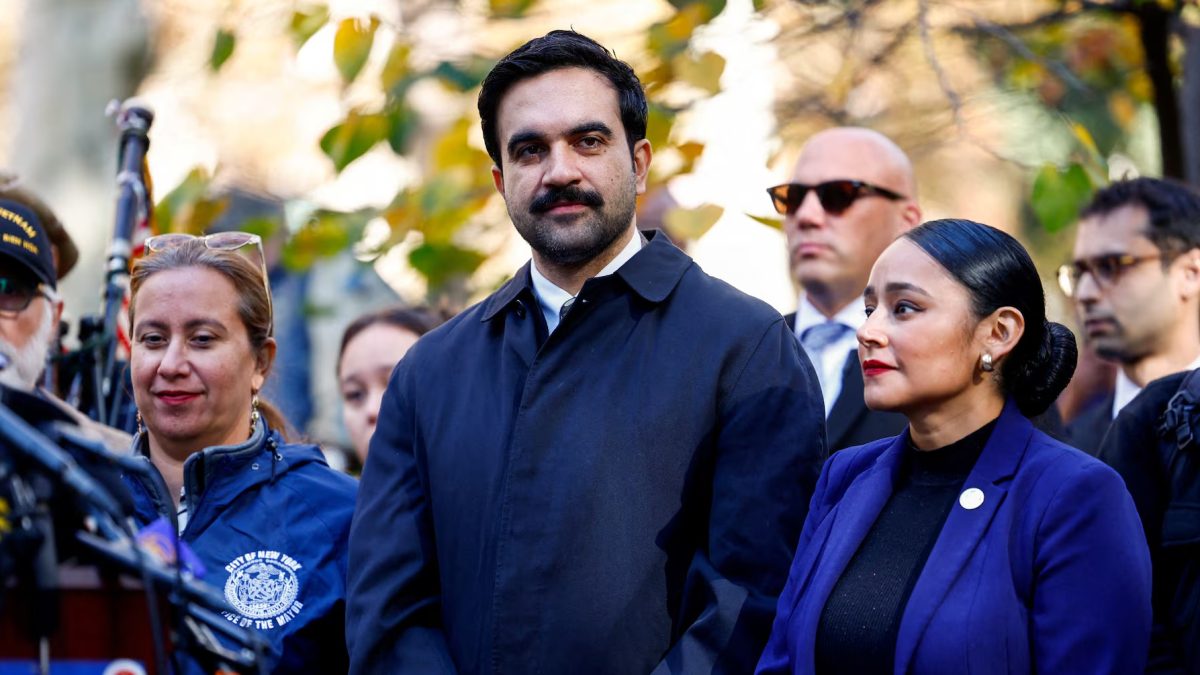
New York City Mayor Zohran Mamdani has unveiled a plan to close the Rikers Island jail complex by 2032, build four new jails and sharply reduce the number of people held in detention in the largest city in the United States. The announcement came on Friday, along with an 88-page report in which Mamdani described Rikers as a product of "deteriorating infrastructure" and said officials had a "moral imperative" to close it. The plan revives a long-promised reform that has been delayed repeatedly, and it will now go to the New York City Council for approval of the updated timeline.
Rikers Island is a sprawling jail complex on a 413-acre island between Queens and the Bronx. Over the years it has earned a variety of grim nicknames because of its dilapidated conditions, including "Gladiator School" and "Torture Island". It has housed a number of high-profile inmates awaiting trial, among them Tupac Shakur, DMX and Harvey Weinstein. At any given time it holds more than 6,500 people. Its reputation for violence, neglect and dysfunction has made it a symbol of the failures of American incarceration.
The idea of closing it is not new. Plans to shutter the facility date back to 2019, when the City Council first voted to close it by this year. Legislation required the jail to be closed by 2027, but the process has been repeatedly delayed, in part because of the logistical difficulty of deciding where to place the inmates. Mamdani blamed lags under former Mayor Eric Adams' administration as well as the Covid pandemic for the delays. The new 2032 date therefore represents an acknowledgement that the legal deadline will not be met, along with a fresh commitment to a concrete path.
Central to the proposal is a network of four smaller jails. Mamdani's office said the city would open one in Brooklyn by 2029, two in the Bronx and Queens by 2031, and one in Manhattan by 2032. The mayor's office argues that the new, smaller facilities will give inmates "access to daylight, fresh air and clean space", leading to better outcomes for detainees. Locating them in the boroughs would also make visits easier for families, since travelling to the remote island can take hours. Supporters say closer ties to family and community improve rehabilitation and reduce the chance of reoffending.
The plan is as much about the size of the system as about buildings. Mamdani hopes to reduce the number of people held from more than 6,500 to 4,100, a goal that has been met with skepticism by the city's correction officers' union. The NYC Correction Officers' Benevolent Association said in a statement: "[B]uilding a new system that puts an arbitrary cap on the City's available jail beds is ill-conceived, irresponsible and jeopardizes the safety of all New Yorkers, including our Officers." It added that the city "cannot keep the jail population at around 4,100 without irresponsibly releasing individuals who committed violent felony charges."
The mayor's team responded that the goal is achievable and that it is the right policy. Dana Kaplan, whom Mamdani appointed as the city's "Close Rikers Czar", told the BBC News channel on Friday that the proposal was not only about getting rid of a decrepit facility. It was also a "generational opportunity" to "build a different type of detention system" and to work out how to detain people more appropriately, she said. "It's actually possible to have fewer people in jail in New York City – and that is what we should be planning for," she added, expressing hope that the plan would lead to "a moment of transformation" for how people are held in the city.
To get the numbers down, the administration says it will work to reduce the number of people held in jail across the city. Measures include offering alternative programmes to detention for some people awaiting trial, making it easier for families to post bail online and trying to speed up the pretrial legal process. Slower court processes are widely seen as one of the main reasons people spend long periods in jail before trial, so shortening that time could have a significant effect on the population. The plan also calls for opening hundreds of beds in therapeutic housing units for prisoners with serious mental health issues.
Some of that work has already begun. Kaplan said the Mamdani administration has opened 100 therapeutic beds at Bellevue Hospital in Manhattan, moving 100 people off Rikers Island. The proposal also involves a large investment of $146 million for mental health and substance use treatment and for vocational and education programming inside and outside the jails. Advocates have long argued that many people at Rikers have serious mental illness or addiction and would be better served in treatment settings than in a cell.
The backdrop to the plan is a facility with deep and well-documented problems. The jail complex has long faced backlash over staffing shortages, crumbling conditions and inmate deaths, including nine this year. Last year, under Adams, a federal judge removed Rikers from the city's control, appointing an independent outside official to make decisions concerning the facility. That extraordinary step reflected a judgment that the city had failed to keep people in custody safe, and it means Mamdani has to balance his closure plan with an ongoing court-supervised effort to improve conditions in the meantime.
The politics are not simple. Council members, including the city's speaker, have indicated that they support the plan, which suggests a smooth path through the legislature, but the details are likely to prove contentious. Building new jails in neighbourhoods has always attracted local opposition, and some residents resist the idea of a detention facility near their homes. Some reform advocates, meanwhile, object to building any new jails at all and want the city to go further in reducing incarceration. The mayor must navigate between those who say the plan goes too far and those who say it does not go far enough.
There is also the matter of public safety, which the correction officers' union has put at the centre of its objections. The union argues that capping jail beds could force the release of people charged with violent felonies. The administration counters that better alternatives, faster trials and improved treatment can reduce the number of people who need to be jailed without compromising safety. The truth will depend heavily on how the court system, prosecutors and judges respond, since decisions on bail and detention are made by many actors beyond City Hall.
For Mamdani, the plan is an early test of his ability to turn a progressive campaign promise into concrete delivery. Closing Rikers has been a goal of New York politicians for years, and each administration has run into the same practical obstacles. The 2032 deadline gives the city six more years, and the mayor will be judged on whether construction begins on time and whether the jail population actually falls. Success would be a landmark change in how America's largest city treats people accused of crimes. Failure would add another chapter to a long history of delay.
The coming months will show how realistic the plan is. The City Council vote is the first hurdle, followed by site approvals and the long process of design and construction for four new facilities. In the meantime, thousands of people will remain in the existing complex, in conditions that officials themselves describe as unacceptable. The new timeline offers a destination, but the journey from "Torture Island" to a smaller, more humane system will test the city's resolve and resources for years to come.