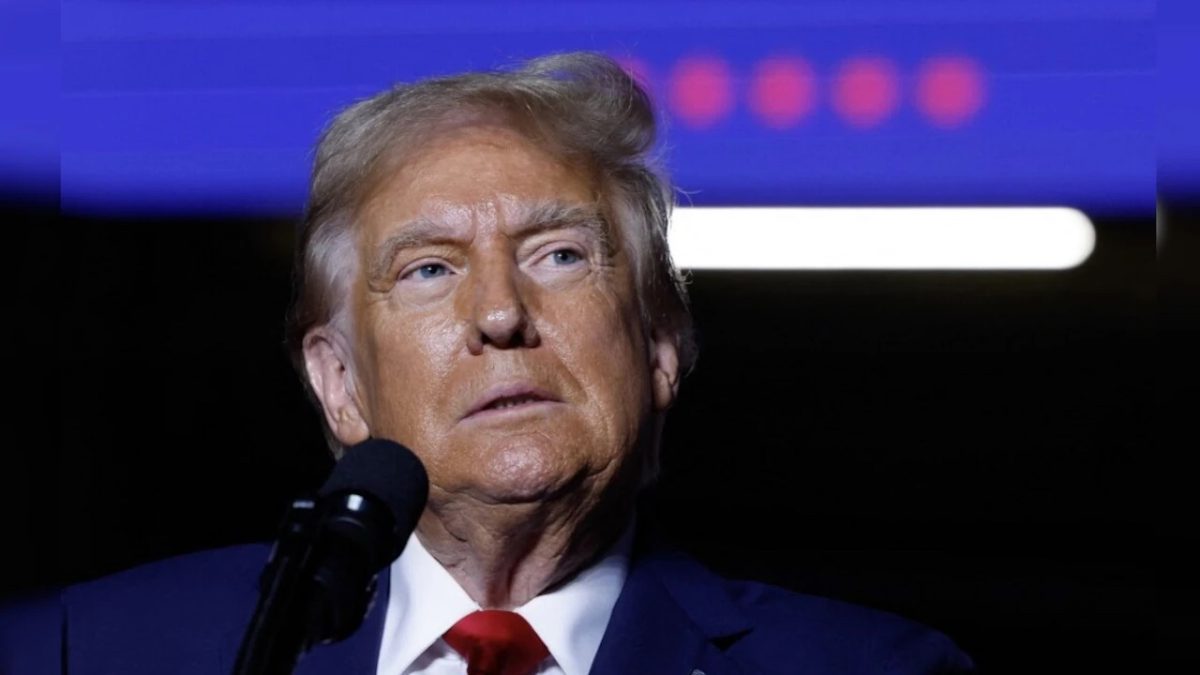
Nine months into the war with Iran, President Donald Trump has fewer options for ending it and appears to have settled on keeping things as they are. NPR reports that he has waved away the need for a deal, writing on Truth Social on Thursday: "We don't need a deal with Iran. Those days have long since passed. We've got their money," a reference to billions of Iranian dollars frozen in overseas accounts. After meeting Qatar's prime minister at the White House this week, he said Gulf Arab allies prefer "the status quo" of continued economic pressure, and that while the United States remains "locked and loaded," an attack at this point "seems to be quite unlikely." The shift in tone is notable, since he threatened quick, intense strikes on Iran only days before two political setbacks at home and in Israel changed the calculation.
Those setbacks narrowed his room to manoeuvre. Israeli Prime Minister Benjamin Netanyahu, whom Mr Trump had backed, is on the cusp of being ousted after Israeli elections, according to NPR, and at home the Republican Party lost its majority in Congress in the midterm elections. Vice President JD Vance blamed the losses on the unpopular war with Iran and on the nature of US relations with Israel. Negotiations are stuck, with Qatar acting as mediator, and Iran remains defiant. Secretary of State Marco Rubio told reporters this week that military action is not needed at this stage because sanctions are doing the job: "The pain that they're feeling is, eventually you have to eat. Eventually you have to be able to pay your own fighters and your own security forces," he said.
There is a case that the pressure strategy is working. According to the US military, a naval blockade barring Iranian ships from carrying oil to countries such as China has cut Iran off from at least $25 billion in revenue so far. The United Arab Emirates, formerly among Iran's biggest trade partners, announced over the summer that it was severing all economic and trade ties with Iran, a major economic blow, after bank accounts in the country were allegedly used by Iran's supreme leader and the Revolutionary Guard to move money. US Central Command has also announced a new operation, dubbed "Iron Gate," with other US agencies, aimed at preventing Iran from using land routes to move advanced weapons across its borders and the Caspian Sea. Washington is also assisting oil tankers through the Strait of Hormuz along a route close to Oman's coast, which has helped Arab states export their oil. Supporters of the approach say it avoids the risks of a larger war while squeezing Tehran's finances.
But the status quo is far from cost-free. Iran has imposed new rules requiring ships to seek permission to navigate the Strait of Hormuz, which was open and free before the war, and Iranian official accounts frequently post videos of attacks on vessels that violate them. Al Jazeera reported on Saturday that Tehran said a tanker hit a naval mine and caught fire, accusing the vessel of operating in a prohibited area. The escort route has helped oil exports but, NPR notes, it does not solve the problem of restoring pre-war production levels of other vital products, including liquefied natural gas, fertiliser and aluminium, nor does it let countries such as Kuwait, Qatar and Bahrain import goods through their ports. The International Monetary Fund says Gulf Arab states are in recession because of the war despite higher oil prices, with the economies of Kuwait, Qatar and Iraq contracting by roughly 16% this year and Bahrain's by 11%.
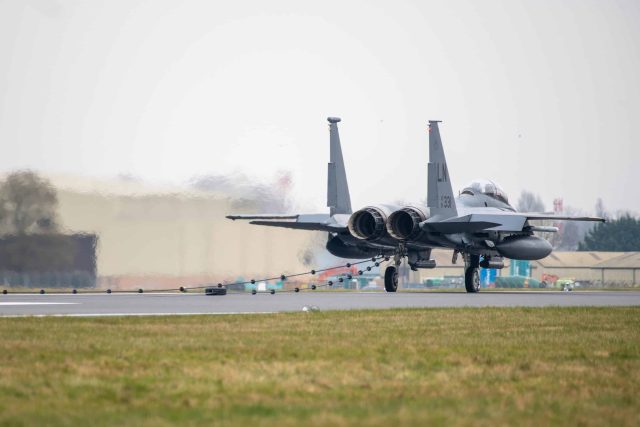
Military risk also remains. The United States is sending a third aircraft carrier with thousands of troops to the region, leaving the door open to another planned escalation. Iran this week unveiled what it says is a new underground missile production site, and the two sides still occasionally trade strikes: Iranian media said on Friday that the United States struck one of its islands in the Strait of Hormuz, where Iran has radars and drone launch sites, and the Revolutionary Guard said it hit back at a US early warning radar in Bahrain. Senior UAE diplomat Anwar Gargash told an audience in Abu Dhabi that the region should "prepare for a prolonged period of uncertainty, in which neither a decisive resolution nor a stable regional order can be taken for granted."
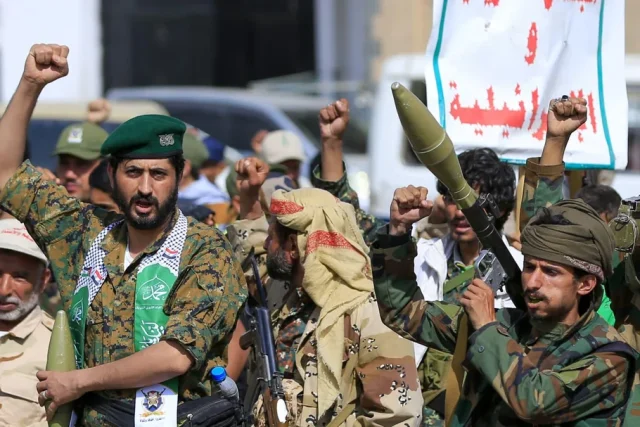
The war has also spread. The conflict with Iran has led to the resumption of all-out war between Saudi Arabia and the Houthis in Yemen, NPR reports. The Houthis, who are supported by Iran though not a direct proxy, say Saudi air strikes have killed scores of people in past months, including nearly 60 last weekend in a village near Sanaa. Saudi Arabia faces daily Houthi missile and drone attacks, including strikes this week on its key East-West pipeline, which carries crude oil around the Strait of Hormuz, and on the Aramco headquarters in Riyadh. The United Nations says some 330,000 Yemenis have been displaced by the renewed fighting. Pakistan, Turkey and Egypt are among countries offering defensive support to Saudi Arabia, and the United States is helping with intelligence on the Houthis.
Diplomacy has hardly moved. Iran says it is prepared for a short-term pause in attacks on ships in the Strait of Hormuz, but insists that seven demands be met before direct talks on its nuclear programme, including lifting sanctions, ending the naval blockade, unfreezing its overseas funds, and a ceasefire on all fronts, including a halt to Israeli attacks in Lebanon and Gaza. "These seven items are on the table. Take it or leave it," a Tehran municipality spokesman told NPR. Mr Rubio called the conditions "absurd." There is also discussion of diluting and moving Iran's enriched uranium abroad, but the head of Iran's Supreme National Security Council, Mohsen Rezaei, told state broadcaster on Wednesday: "We will not remove even a shred of enriched nuclear material from Iran."
Why does it matter? Because a strategy of waiting depends on the assumption that time favours Washington, and the evidence is mixed. Sanctions and the blockade impose pain on Iran, but Gulf allies, shipping lanes and civilians in Yemen are absorbing damage too, and the political pressure on the American president has increased since the midterms. A policy of holding the line leaves little room for error: a mine, a missile or a miscalculation could end the pause quickly.
The outlook is uncertain. Mr Trump has signalled that he does not want a rapid escalation and does not need a deal, which suggests that the standoff could last. Yet the third carrier, the continuing exchanges of fire and the Hormuz incidents mean the situation remains volatile. For the Gulf economies counting their losses and for the Yemenis fleeing renewed fighting, a status quo that continues is not a neutral outcome, and diplomats will be looking for any chance to turn a pause into a process.