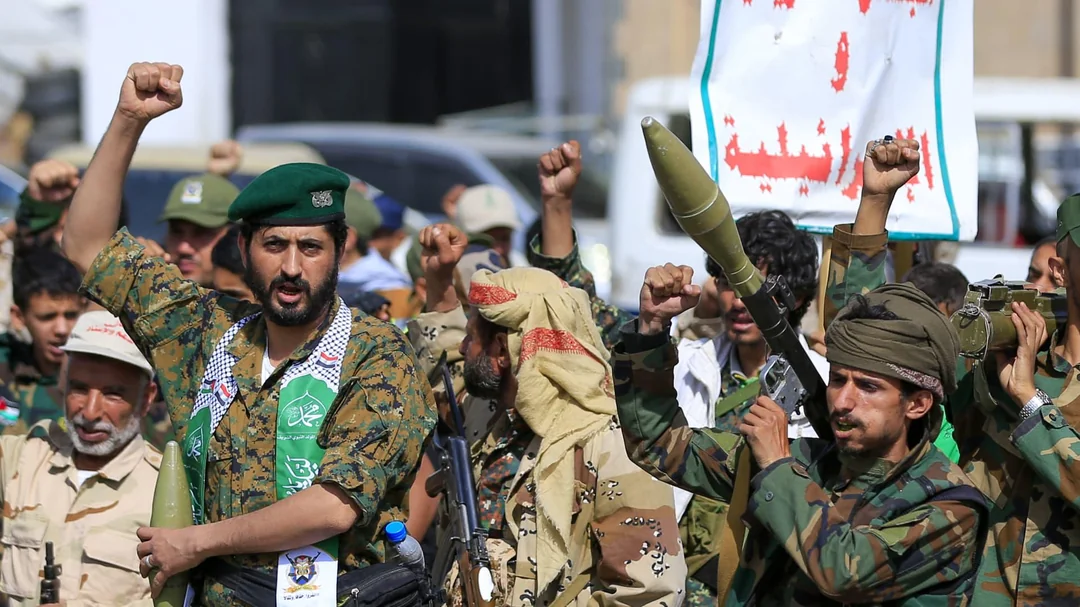
Pro-government forces in Yemen backed by Saudi Arabia have announced that they are withdrawing from the area overlooking the Bab al-Mandab Strait, one of the most strategically important waterways in the world, leaving it under the control of the Iran-backed Houthi movement. Yemen's military said on Sunday that it was redeploying troops from the gateway at the southern end of the Red Sea in order to defend the interim capital, Aden. The Reuters news agency reported a statement from the Southern Armed Forces saying that troops were being withdrawn "from Dhubab Airport and the Bab al-Mandab area" with the aim of "strengthening the front lines and addressing existing threats". Houthi-run media reported later in the day that the group had taken control of the territory, while Saudi Arabia had not commented at the time of the reports.
The withdrawal brings to an end a weeks-long offensive to secure the area near the strait, which the Houthis had seized in a surprise advance in September. At that time the group said it had captured areas including Perim Island, at the mouth of the strait, and the strategic port city of Mokha. The seizure squeezed global oil exports and prompted thousands of people to flee. In early October, pro-government forces said they had "secured" the strait as they tried to retake crucial ground, a claim that now looks like a high-water mark rather than a turning point. The reversal is a significant setback for the Saudi-backed side, which only weeks ago was presenting its campaign around the waterway as a success.
The case that the pullback is a sensible military decision rests on the argument that Aden matters more than the strait. Aden is the seat of the internationally recognised government, formally known as the Presidential Leadership Council, and it is a city of more than a million people, according to DW. Sources quoted by the AFP news agency said Houthi forces are now only about 60 kilometres, less than 40 miles, from Aden. For a government that has lost much of its coastline, defending its last major stronghold is an understandable priority, and the Southern Armed Forces said the redeployment was meant to secure Aden and the neighbouring governorates. The statement also said the forces intend to end the Houthi siege of the southwestern city of Taiz, which has a population of nearly two million and is Yemen's third-largest city. DW reports that the siege is raising fears of famine for residents as well as a possible medical crisis as hospitals face restricted supplies. Stretching thin forces across a long front, in this reading, would have risked losing everything.
The case against is that the retreat hands the Houthis a strategic prize at precisely the moment when the world can least afford it. The Bab al-Mandab Strait connects the Red Sea to the Gulf of Aden and the Indian Ocean, and it is a key corridor for maritime trade and energy shipments. The Houthis have said that they pose no threat to international shipping passing through the waterway, but they have also said they will continue to target vessels from Saudi Arabia. That statement matters because of what has happened to the energy map this year. Saudi Arabia had been relying on the Red Sea for its oil exports since the war between the United States, Israel and Iran effectively closed the Strait of Hormuz, so a hostile force sitting beside the Red Sea's southern exit puts a second route under pressure. The September seizure contributed to a surge in global oil prices, and a more secure Houthi grip on the area could keep that pressure alive.
The human cost of the fighting has already been heavy. The United Nations has estimated that nearly 330,000 people have been displaced in Yemen as the fighting has escalated, and hundreds of people are reported to have been killed. Saudi Arabia responded to the September advance with hundreds of air strikes, while the Houthis launched hundreds of drones and missiles at Saudi cities and infrastructure. Yemen was already the poorest country in the Arab world, as DW notes, and the civil war that began in 2014, when the Houthis ousted the government from the capital, Sanaa, has now lasted for more than a decade. The Houthis control much of the northwest of the country, including Sanaa, and the United States, Canada and several other countries regard them as a terrorist organisation. Any new front around Aden, a port city with more than a million residents, would put a far larger civilian population in the line of fire than a fight over a stretch of coastline.
The wider background explains why a local redeployment carries international weight. The conflict escalated in 2015, after a Saudi-led coalition of Arab states intervened to restore the government's rule. A four-year informal ceasefire began to unravel in July of this year, when the Houthis announced a "maritime embargo" against Saudi Arabia and began missile and drone attacks on Saudi airports, oil facilities and tankers in the Red Sea. The group said it was retaliating for a Saudi blockade of ports and airports in territory it controls, as well as an air strike on Sanaa airport that it blamed on the kingdom. The fighting is fuelled by the wider rivalry between Iran and Saudi Arabia, which means that every shift on the ground in Yemen is read in Riyadh and Tehran as a signal about the regional balance of power, at a time when Gulf energy infrastructure is already under strain from the Iran war.
For shipping companies and energy markets, the immediate question is whether the Houthis will act on their own assurances. The group has drawn a line between Saudi-linked vessels, which it says remain legitimate targets, and the rest of the world's merchant fleet, which it says it will leave alone. Such distinctions are hard to rely on in practice, because the Houthis alone decide where the line falls. If traffic through the strait slows or reroutes, the effect would be felt first in oil and fuel prices and then in the cost of goods shipped between Asia and Europe. It would also add to the pressure on Saudi Arabia, which has leaned on the Red Sea precisely because the Gulf route has been disrupted.
Politically, the withdrawal is likely to intensify the argument over whether Saudi Arabia and its Yemeni partners can turn the tide. The decision by the Southern Armed Forces to concentrate on Aden and its neighbouring governorates suggests that its commanders see the southern heartland as the line that must hold. For the Houthis, the advance is both a military gain and a propaganda victory: they can claim to have taken and held the strait against a Saudi-backed offensive that was announced as successful only a few weeks ago. Whether the group can convert control of the coastline into lasting leverage depends partly on whether it chooses to press on towards Aden, and partly on how Riyadh responds. Saudi Arabia has not commented, and its next move, whether renewed air strikes, a negotiated arrangement or a quieter reinforcement of Aden, will show how seriously it regards the loss.
What is clear is that the strait has become a symbol of how a local war can reach the global economy. The Houthis now hold the shore beside the strait of one of the busiest sea lanes on earth, with a government weakened by a retreat, a region already shaken by the closure of Hormuz, and a civilian population that has been displaced in the hundreds of thousands. The immediate test is Aden, where the defenders now have the troops they pulled back and the attackers have the momentum. The longer-term test is whether diplomacy can revive the informal ceasefire that held for four years before it unravelled this summer, because without it the fighting around the Red Sea's southern gate is likely to keep feeding both the human crisis in Yemen and the strain on world energy markets.