The United States has barred a Fiji-based man from entering the country, accusing him of paying bribes to Fijian citizens to advance Chinese government, business and criminal interests. It is the latest move in a contest for influence across the Pacific islands.
The US Department of State has publicly designated a man based in Fiji for what it calls involvement in corruption on behalf of Chinese actors, Al Jazeera reported, citing the AFP news agency.
The Allegation
The State Department named Zhao Fugang, director of the Overseas Chinese Service Center.
It said in a press release on Wednesday, October 7, that he “abused his public position by paying bribes to Fijian citizens to advance China-based government, business, and criminal interests”.
“His actions constituted significant corruption and adversely affected U.S. interests in Fiji,” it said.
These are allegations made by the US government. The report did not include a response from Zhao.
What the Designation Does
The measure makes Zhao and his immediate family members “generally ineligible for entry into the United States”.
The Embassy’s Statement
The US embassy in Suva, Fiji’s capital, said Zhao’s actions had left the country open to “malign foreign influence facilitated by Chinese government, business, and criminal actors”.
It added: “Public reporting shows an established trend of criminals operating across the Pacific with ties to China.”
What the Centres Are
Beijing says Overseas Chinese Service Centers help its nationals abroad with administrative matters, such as renewing driving licences.
Rights groups allege they are fronts for advancing Beijing’s interests overseas, including the targeting of dissidents.
Part of a Pattern
This is not the first such move this year. In February, the Trump administration sanctioned two leaders from Pacific island nations over alleged corruption tied to China.
The State Department alleged that Hokkons Baules, the president of Palau’s Senate, and Anderson Jibas, a former mayor in the Marshall Islands, had created openings for China to increase its influence in the region.
Why It Matters
The Pacific islands have become a focus of competition between Washington and Beijing. The designation shows the United States using visa restrictions against individuals, rather than governments, as one of its tools in that contest.
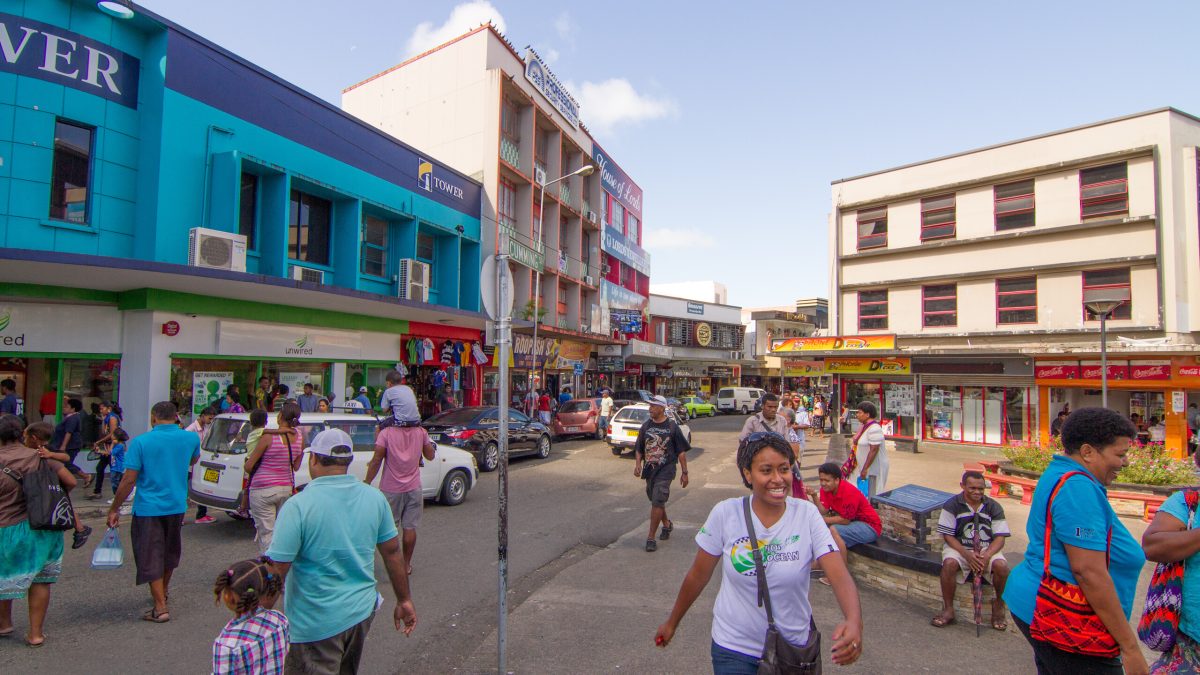
Image: Central Suva, the capital of Fiji (file photo, 2014). Photo by Maksym Kozlenko via Wikimedia Commons, CC BY-SA 4.0.