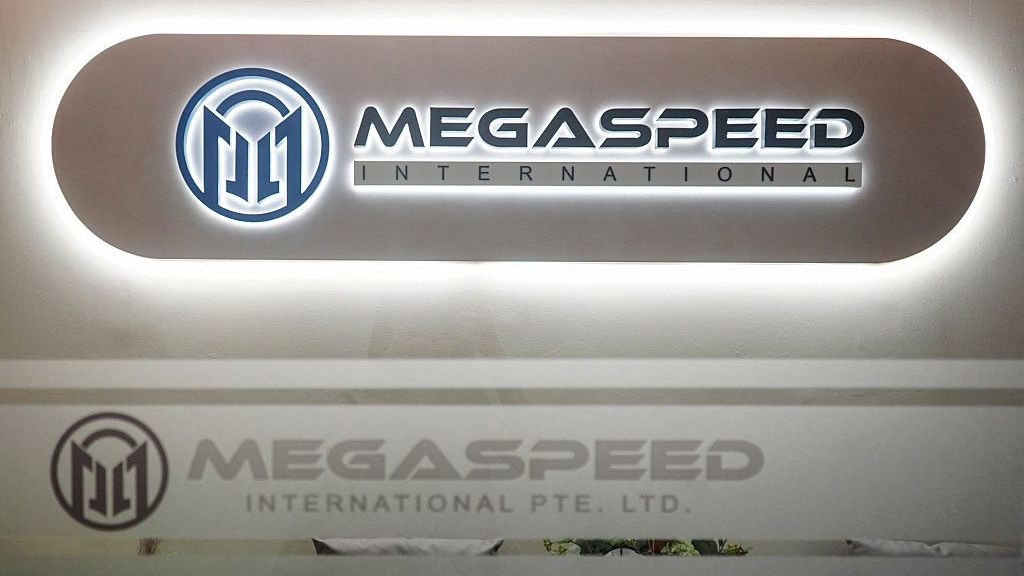
The United States has said it intends to bar a Singapore-based artificial intelligence company from doing business in America, a move that links one of the year's biggest technology scandals to the long-running fight over who controls the world's most advanced AI chips. The Commerce Department announced on Monday, 23 November 2026, that it plans to add Megaspeed Ltd to a list of entities blacklisted from buying or selling goods in the US, according to the BBC. The date on which the ban will take effect was not specified, and the BBC has asked the agency, the White House and Megaspeed for comment.
Megaspeed is mainly a developer of data centres, but its name entered public view only last month, when media reports said a former Megaspeed executive, Alice Huang, had had an affair with Nvidia chief executive Jensen Huang. The two are not related. US intelligence officials believe Alice Huang was working as an asset for Beijing, which created national security concerns and prompted additional scrutiny of the company. China has denied that she is a spy and warned Washington not to use the scandal as a "pretext for imposing a technological blockade" on AI technology.
The Commerce Department says its interest in Megaspeed predates the scandal. It said it had been investigating the company for almost two years, because it suspected Megaspeed was violating US export controls by helping to get Nvidia's chips into the hands of companies within China. China has been blocked from buying such technology since 2022. The concern, which the BBC says has been heightened by the revelations, is that Megaspeed was funnelling Nvidia's advanced AI computer chips to China.
Although based in Singapore, Megaspeed has significant business dealings in China. The BBC reports that Alibaba, the major Chinese online retailer, has been reported to be one of its largest customers. Megaspeed was a known buyer of billions of dollars of Nvidia computer chips, including through its subsidiary Speedmatrix, which has also been added to the Commerce blacklist. That detail shows how the company's structure could have been used: a firm in a third country buys the chips legitimately, and the question for regulators is where the hardware ends up.
To understand why this matters, it helps to understand the role of Nvidia's chips. They were originally designed for use in gaming consoles but in recent years have become crucial to the continued growth of the AI industry. Without enough supply of, or access to, chips capable of processing the huge amounts of data needed to make AI chatbots and models run, AI companies cannot meet or grow demand from people using AI tools. That scarcity has driven up Nvidia's value on the stock market, along with its influence in the AI industry and at the White House.
The blacklisting announcement landed on the same day Nvidia's board reinstated Jensen Huang, a move that US President Donald Trump said he had told the company's board to take. Huang had resigned on 12 November after allegations of a second affair, this one with a Nvidia employee. When he resigned, Nvidia's stock fell by more than 30%, and anxiety about the company's ability to operate without its famed executive appeared to take down shares of other tech companies too. On his reinstatement, the stock rallied, as did several other tech shares, though Nvidia did not climb back to where it had been before the scandal.
The timing raises obvious questions. Lawmakers from both parties have questioned the White House role in Huang's reinstatement, and the same-day blacklisting puts the Megaspeed link back in the spotlight. BBC economics editor Faisal Islam noted that US reports describe splits within the Trump administration between China hawks who want to restrict exports and others who have backed Huang's argument for allowing Chinese access to advanced chips. The Megaspeed decision may be read as a sign that the hawks have won at least this round, or as an attempt to show that the administration is taking export-control enforcement seriously even as it backs the executive at the centre of the affair.
For Nvidia, the case is a compliance headache. In the weeks ahead, Huang and the company face multiple government agency investigations. Huang and Nvidia's chief legal officer are due to appear next for a closed-door briefing with the House Foreign Affairs Committee, and Islam notes that there is still an independent investigation into the company's compliance with export controls. Nvidia's challenge is to demonstrate that it sold chips to customers in good faith and that its systems for checking where products end up are adequate. The case also shows the limits of export controls as a tool. Rules that block shipments to one country can be tested by sales to intermediaries elsewhere, and enforcement depends on regulators spotting patterns in who buys what and where equipment finally goes. The Commerce Department's near two-year investigation suggests the process is slow, and the decision to blacklist both Megaspeed and its subsidiary Speedmatrix indicates that officials want to close off the obvious route of moving purchases from one corporate entity to another.
The Megaspeed announcement makes that argument harder, because the department says it has suspected the firm of violations for almost two years, and Megaspeed was a known buyer of billions of dollars of Nvidia chips.
For China, the case is a political one. Beijing's warning against using the scandal as a "pretext" reflects a belief that Washington is looking for new ways to constrain its technology sector, and the denial that Alice Huang is a spy is an attempt to separate the personal story from the policy dispute. Alibaba's reported role as a major customer of Megaspeed also puts one of China's best-known companies in the frame, although the BBC's reporting characterises this only as a reported relationship rather than a finding of wrongdoing.
For the wider AI industry, the episode is a reminder that supply chains for advanced chips are subject to the same geopolitical pressures as oil or rare earths. Data-centre developers that buy large volumes of chips may now face closer scrutiny of their customers and their purchases. Companies that buy large numbers of chips will need to document where the hardware goes, and exporters will have to judge how much diligence is enough.
Several questions remain open. When will the blacklisting take effect, and what will it mean for Megaspeed's existing contracts? How will Singapore's authorities respond to action against a company based there? And will the congressional investigations produce evidence that goes beyond the allegations now in the public domain? What is clear is that a scandal that began with a personal relationship has become a test of how the United States enforces its technology controls, with consequences for the world's most valuable chipmaker and the AI boom it underpins.